Verified batch consistency, technical specification matching, and international Dangerous Goods certified packaging directly managed by Yanxatech System Industries Limited (YANXA).
Translating polymer rheology, reactive functionality, and cross-linking thermodynamics into scalable manufacturing solutions across critical industrial sectors.
Liquid silicone rubbers (LSR) and reactive carboxylated liquid elastomers (L-XNBR, MLPB) solve harsh environmental sealing in electric powertrains, battery thermal runaway barrier pads, and high-voltage wiring connectors requiring UL94 V-0 flame ratings.
Platinum addition-cure liquid silicones deliver inert, biocompatible performance in cleanroom injection molding. Formulations comply with USP Class VI and ISO 10993 cytotoxicity protocols for fluidic manifolds, respiratory masks, and surgical implants.
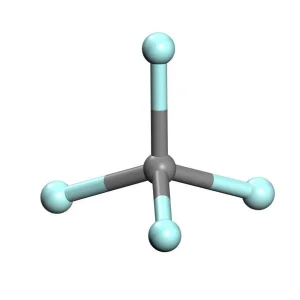
Synergized with ultra-pure gases (Xenon 6N, Argon 6N, CF4) and ceramic flow aids (TCP), our optical-grade liquid silicones provide micro-lens molding, high-refractive-index LED encapsulation, and sub-micron wafer process isolation.
In the contemporary advanced manufacturing ecosystem, the designation Liquid Silicone encapsulates a broad spectrum of reactive organopolysiloxane matrices—principally two-component Liquid Silicone Rubber (LSR), functionalized polydimethylsiloxane (PDMS) fluids, and hybrid liquid elastomer crosslinkers. As procurement engineers and materials researchers evaluate wholesale liquid silicone suppliers, technical due diligence requires a comprehensive understanding of vinyl polymer base architectures, platinum-catalyzed addition kinetics, filler reinforcement chemistry, and the total cost of ownership (TCO) across precision liquid injection molding (LIM) cycles.
Unlike conventional peroxide-cured solid silicone rubbers (HCR) that generate acidic breakdown products such as benzoic acid or 2,4-dichlorobenzoic acid during thermal vulcanization, industrial-grade liquid silicone rubbers utilize an addition-cure (hydrosilylation) mechanism. Two-component systems (formulated as Part A and Part B in strict 1:1 or 10:1 volumetric dispensing ratios) isolate the functional components prior to static mixing:
The hydrosilylation reaction occurs when the mixed material is injected into a heated tool (150°C to 200°C). The thermal energy overcomes the inhibitor complex, allowing the platinum center to catalyze the direct addition of the Si-H bond across the carbon-carbon double bond of the vinyl group (-CH=CH2). Because this reaction is an addition mechanism with no leaving groups, volumetric shrinkage is remarkably low (typically 1.5% to 3.0%), producing parts with exceptional dimensional stability and zero outgassing of organic acid condensates.
| Physical & Rheological Parameter | Standard Testing Protocol | Optical & Medical Grade LSR | Automotive & Industrial Grade LSR | Functional Modifiers (L-XNBR / MLPB) |
|---|---|---|---|---|
| Hardness (Shore A) | ISO 868 / ASTM D2240 | 20 – 70 Shore A | 30 – 80 Shore A | Viscous Liquid (N/A) |
| Viscosity (Shear Rate 10 s⁻¹) | DIN 53019 (Rotational) | 100,000 – 450,000 mPa·s | 150,000 – 600,000 mPa·s | 8,000 – 55,000 mPa·s |
| Tensile Strength | ISO 37 / ASTM D412 | 7.0 – 11.5 MPa | 6.5 – 10.0 MPa | Modified Matrix Reinforcement |
| Tear Strength (Crescent) | ASTM D624 Die B | 35 – 55 kN/m | 25 – 45 kN/m | Crosslink Density Booster |
| Compression Set (22h @ 175°C) | ISO 815-1 Method A | < 12% | < 18% | Imparts Elastic Recovery |
| Thermal Working Window | Continuous Operation | -60°C to +210°C | -50°C to +200°C | -45°C to +180°C |
The global upstream liquid silicone supply chain begins with the Rochow-Müller direct synthesis process, where elemental silicon metal (synthesized via carbothermic reduction of silica in submerged electric arc furnaces) reacts with methyl chloride at 300°C in the presence of copper catalysts. This yield produces crude dimethyldichlorosilane ((CH3)2SiCl2), which is subsequently hydrolyzed to form cyclic siloxanes (principally octamethylcyclotetrasiloxane D4 and decamethylcyclopentasiloxane D5) and linear siloxanediols.
Between 2021 and 2026, global chemical markets experienced severe volatility in siloxane monomers, silicon metal spot pricing, and noble metal catalysts. Sourcing managers must contend with critical macro-commercial parameters:
Supplying technical polymers and specialty gases across the European Union, the United States, Japan, and Southeast Asia requires full documentation traceability. Every commercial lot released by Yanxatech System Industries Limited is accompanied by an auditable compliance dossier:
The versatility of liquid silicone rubber and functionalized liquid polymers is demonstrated in challenging real-world industrial installations:
A tier-1 automotive supplier in Central Europe faced persistent adhesive delamination between PA66/GF30 connector bodies and traditional fluorocarbon seals during thermal shock cycling (-40°C to +150°C). Yanxatech engineered a custom self-bonding Liquid Silicone Rubber (LSR-SB50) containing incorporated organofunctional silane coupling agents. Injected via a multi-cavity rotary tool directly onto the hot thermoplastic substrate without solvent-borne primers, the interface developed cohesive substrate failure (> 5.5 N/mm peel strength per ISO 813), surviving 1,500 hours of continuous hot-oil and coolant immersion without micro-leakage.
In high-modulus epoxy carbon fiber laminates used for nacelle cowlings, standard bisphenol-A epoxies suffered brittle micro-cracking under vibrational fatigue. By incorporating 12 wt% of Yanxatech's Random Carboxy Nitrile Butadiene Rubber (L-XNBR) into the resin system, the carboxyl groups chemically reacted with the epoxy oxirane rings during thermal cure. This created phase-separated sub-micron elastomeric domains that deflected crack propagation, enhancing fracture toughness (KIC) by 140% while preserving the glass transition temperature (Tg > 180°C).
The future trajectory of silicone chemistry is driven by sustainability directives, micro-miniaturization, and extreme thermal management:
Critical answers for process engineers, purchasing agents, and quality control managers evaluating liquid silicone grades, pricing structures, and logistical compliance.
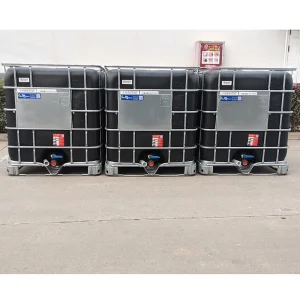
Standard industrial wholesale packaging for two-component LSR consists of matched 20 kg (5.3 gallon) pails with polyethylene liners or 200 kg (55 gallon) steel drums designed for pneumatic hydraulic ram pumping stations (e.g., 2KM, Graco, DOPAG). Typical MOQs start at 400 kg (one paired set of Drum A + Drum B) for custom-formulated durometers, and 40 kg for pilot evaluation runs. Full 20-foot shipping containers accommodate up to 80 drums (16 metric tons) with UN-certified palletization.
Karstedt's platinum catalysts are susceptible to permanent inhibition ("poisoning") when exposed to sulfur compounds (e.g., vulcanized natural rubber), amine-based curing agents, organotin catalysts, or trivalent phosphorus compounds. Yanxatech synthesizes and packs Component A and Component B in segregated, hermetically sealed, nitrogen-blanketed clean packaging lines. When stored unopened in temperate environments (below 30°C), our liquid silicone systems maintain full crosslinking reactivity for 12 months from the date of certification.
Every commercial consignment includes a comprehensive batch-specific Certificate of Analysis (COA) documenting viscosity profiles, durometer, tensile yield, and moisture levels via Karl Fischer titration. For shipments containing our specialty gases (CF4, SF6, Ultra-Pure Xenon) or volatile chemical additives, we supply fully GHS-compliant 16-section Safety Data Sheets (SDS), Technical Data Sheets (TDS), Certificate of Origin (COO), and verified dangerous goods declarations compliant with IMDG and IATA regulations.
Yes. We engineer customized third-stream additive masterbatches for inline dosing at the LIM injection unit (typically dosed at 0.5% to 4.0%). Options include medical-grade pigments compliant with FDA 21 CFR 178.3297, self-bleeding phenyl silicone fluid additives for automotive wire-seal assembly lubrication, and ultra-conductive silver-plated copper or carbon nanotube dispersions for electromagnetic interference (EMI) shielding.
Industrial buyers should submit target technical specifications including preferred Shore A hardness, viscosity limits, mold cycle requirements, regulatory mandates (FDA, UL94, RoHS), and estimated annual volume. Our technical sales engineers review incoming requests within 24 hours to provide formal landed CIF/FOB price schedules and arrange 1 kg to 20 kg pilot trial evaluation kits complete with laboratory COAs.
Complementary high-performance chemical materials, functional modifiers, and dielectric gas precursors manufactured under stringent ISO 9001 quality supervision.
Connect directly with Yanxatech senior polymer synthesis chemists and export logistics directors. Request technical data sheets, SDS packages, or custom formulation tenders tailored to your application.