| Item | Technical Property | ||
|---|---|---|---|
|
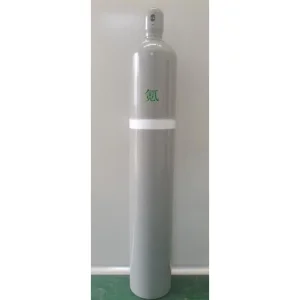
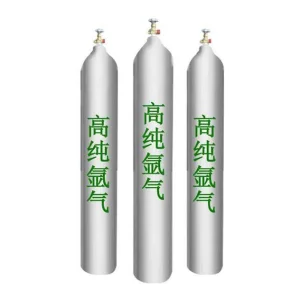
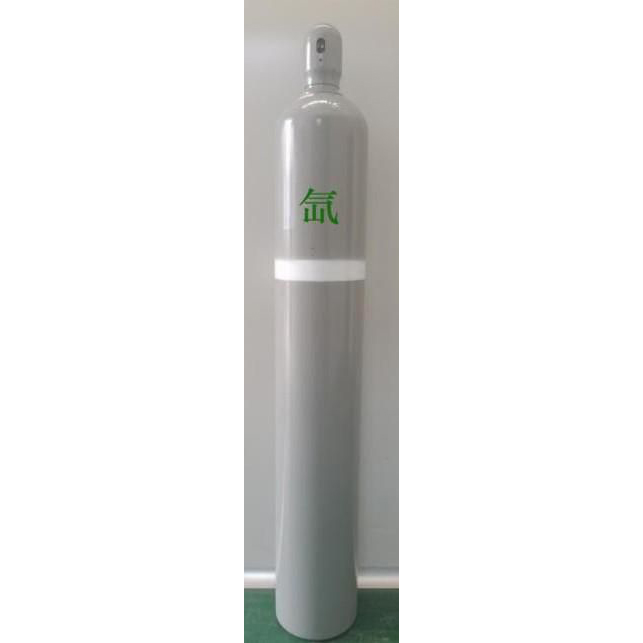
High Purity Xenon
GB/T5828-2006
|
Ultrapure Xenon | ||
| Xenon (Xe) purity (volume fraction)/10-2 ≥ | 99.999 | 99.9995 | 99.9999 |
| Nitrogen (N2) content (volume fraction)/10-6 ≤ | 2.5 | 1.5 | 0.2 |
| Oxygen (O2) content (volume fraction)/10-6 ≤ | 1.5 (O2+Ar) | 0.5 (O2+Ar) | 0.1 |
| Argon (Ar) content (volume fraction)/10-6 ≤ | 0.05 | ||
| Hydrogen (H2) content (volume fraction)/10-6 ≤ | 0.5 | 0.5 | 0.05 |
| Carbon monoxide (CO) content (volume fraction)/10-6 ≤ | 0.2 | 0.1 | 0.05 (CO+CO2) |
| Carbon dioxide (CO2) content (volume fraction)/10-6 ≤ | 0.3 | 0.1 | |
| Methane (CH4) content (volume fraction)/10-6 ≤ | 0.3 | 0.1 | 0.05 |
| Water (H2O) content (volume fraction)/10-6 ≤ | 2 | 1 | 0.1 |
| Krypton (Kr) content (volume fraction)/10-6 ≤ | 2 | 1 | 0.1 |
| Nitrous oxide (N2O) content (volume fraction)/10-6 ≤ | 0.2 | 0.1 | 0.05 |
| Fluoride (C2F6) content (volume fraction)/10-6 ≤ | 0.5 | 0.1 | 0.05 |
| Fluoride (SF6) content (volume fraction)/10-6 ≤ | N/A | N/A | 0.05 |
Mainly used in semiconductor industry, aerospace, electric light source industry, medical treatment, electric vacuum, dark matter research, laser and other fields.
We provide High Purity Xenon compliant with GB/T5828-2006 (available in 99.999% and 99.9995% purity levels) as well as Ultrapure Xenon with a purity rating reaching 99.9999%.
High purity xenon is vital across advanced industries, including semiconductor manufacturing, aerospace propulsion, electric lighting, medical imaging/anesthesia, electric vacuum devices, laser production, and fundamental dark matter physics experiments.
Ultrapure Xenon features a higher base purity (99.9999% vs. 99.999%-99.9995%) and significantly lower allowable trace impurities, limiting critical contaminants such as moisture, oxygen, nitrogen, and hydrocarbons to fractions of a part per million (ppm).
Moisture causes oxidation, equipment corrosion, and contamination in sensitive environments like semiconductor wafer processing and electric vacuum devices, necessitating strict moisture thresholds as low as ≤ 0.1 ppm.
Yes, trace fluorides like C₂F₆ and SF₆ are measured and restricted, with Ultrapure Xenon requiring SF₆ levels to remain below or equal to 0.05 ppm to meet cleanroom and high-precision analytical criteria.