Industrial Polymer Engineering & Global Supply Authority

Liquid Rubber Manufacturers & Suppliers

Specialized Reactive Liquid Polymers, Telechelic Elastomers, and Precision Toughening Modifiers Engineered for Structural Adhesives, Energetic Composites, and High-Performance Formulations.

Featured Reactive Liquid Polymers & Precursors

High-purity liquid synthetic rubbers synthesized for polymer toughening, terminal group reactivity, and demanding thermoset matrices. ISO-certified lot uniformity with comprehensive batch COA analysis.


China Epoxy Modified Liquid Rubber - Epoxidized Polybutadiene (EPB) Manufacturer, Factories
Technical Specs
Wholesale Liquid rubber-hydroxyl terminated butadiene-styrene random copolymer (HTBS) Factories, Quotes
Technical Specs
Wholesale Liquid Rubber-Hydroxyl Terminated butyronitrile Rubber (HTBN) Supplier, Factories
Technical Specs
Wholesale Liquid Rubber - Carboxyl Terminated Nitrile Butadiene Rubber (CTBN) Manufacturers, Suppliers
Technical Specs
China Liquid Rubber-Amino-terminated nitrile butadiene rubber (ATBN) Manufacturer, Quotes
Technical Specs
Wholesale Liquid Rubber - Medium Vinyl Liquid Terminated Hydroxy Polybutadiene Manufacturers, Suppliers
Technical Specs
Wholesale Liquid Rubber - Maleic Anhydride Grafted Polybutadiene (MLPB) Manufacturers, Pricelist
Technical Specs
China Liquid Styrene Butadiene Rubber (LSBR) Manufacturers, Pricelist
Technical Specs
2008
Engineering Since
100%
Pre-Shipment Inspection
<0.05%
Moisture Limit Control
60+
Export Destinations

Commercial and Industrial Status of Liquid Rubber Formulations

How low-molecular-weight reactive elastomers are transforming structural bonding, space-grade polymers, and next-generation composite resins.

The international market for functionalized liquid rubbers has transitioned from basic elastomeric plasticizers into critical macromolecular modifiers. In advanced polymer chemistry, materials such as Carboxyl-Terminated Butadiene-Acrylonitrile (CTBN), Hydroxyl-Terminated Polybutadiene (HTPB/HTBS), and Epoxidized Polybutadiene (EPB) represent indispensable engineering tools. These telechelic polymers possess chemically reactive terminal or pendant functional groups that actively participate in chain extension and cross-linking during thermoset curing.
Historically, solid rubbers posed severe rheological constraints in resin blending, requiring high temperatures, intense shear forces, and volatile organic solvent diluents. Modern manufacturers depend on liquid rubbers having a number-average molecular weight (Mn) generally ranging between 1,000 and 6,000 g/mol. This characteristic enables liquid pouring and homogenous dispersion into epoxy matrices, polyurethane prepolymers, and vinyl esters at ambient or moderately elevated temperatures, entirely eliminating VOC emissions and drastically optimizing process energy metrics.

Thermoset Toughening Dynamics

Cross-linked epoxy networks exhibit inherently high modulus and thermal stability but suffer from brittleness. Reactive nitrile rubbers phase-separate during curing into submicron elastomeric domains (0.1–1.5 μm), arresting micro-crack propagation and boosting fracture toughness (K1c) up to 300% without lowering Tg.

Aerospace & Energetic Binders

Hydroxyl-terminated liquid rubbers (HTPB & HTBS) serve as primary elastomeric binders for composite solid rocket propellants, ballistic warhead liners, and defense pyrotechnics. Their ultra-low glass transition temperature (Tg below -70°C) prevents propellant cracking under cryogenic and altitude cycling.

Automotive Crash Adhesives

In body-in-white (BIW) automotive assembly, ATBN and CTBN-modified epoxy structural adhesives provide unprecedented impact-peel resistance. These polymers absorb severe mechanical deceleration energy during collisions, safeguarding passenger cabins and battery trays in lightweight electric vehicles (EVs).

Technological Roadmap & Market Growth Trends

From anionic polymerization fidelity to sustainable bio-based monomers, examine the technological trajectory dominating the 2025–2035 chemical manufacturing sector.

The international supply chain is pivoting toward ultra-narrow polydispersity indices (PDI < 1.8) and exact telechelic functionality controls. As electronic hardware miniaturizes and automotive standards mandate 20-year structural lifespans, liquid rubber synthesis cannot tolerate random molecular chain cleavage or unreactive mono-functional oligomers.
Polymer Code Functional Group Acrylonitrile / Vinyl Content Viscosity (25°C, mPa·s) Primary Industrial Utility
CTBN 1300x8 / 1300x13 Terminal Carboxyl (-COOH) 17% – 26% ACN 120,000 – 160,000 Structural epoxy toughening, aerospace film adhesives, prepregs
ATBN 1300x16 Terminal Amine (-NH2) 16% – 18% ACN 180,000 – 250,000 Rapid-cure epoxy adducts, low-temperature curing structural pastes
HTPB / HTBS Terminal Hydroxyl (-OH) Random Butadiene-Styrene 4,000 – 9,000 Solid propellant binder, polyurethane elastomers, electrical potting
EPB (Epoxidized PBD) Internal Oxirane Ring Epoxy Equivalent 200–350 8,000 – 25,000 UV-curable coatings, LED encapsulate, halogen-free PCB laminates
MLPB (Maleated PBD) Anhydride Backbone Acid Value 30–80 mg KOH/g 5,000 – 15,000 Rubber-to-metal bonding, polyolefin coupling agent, coil coatings

Low-Moisture Anionic Polymerization

Strict moisture control (<0.05% w/w) during free-radical or living anionic reactions ensures that 99%+ of polymer end chains carry target carboxyl, hydroxyl, or amine termination.

High Acrylonitrile (ACN) Engineering

Tailoring the ACN ratio (up to 26%) regulates polarity, compatibility with various resin systems, resistance to hydraulic oils, jet fuel, and high shear mechanical fatigue.

Bio-Sourced & Recycled Monomers

Transitioning butadiene feedstocks toward bio-ethanol derived bio-butadiene, lowering Cradle-to-Gate carbon footprints for European REACH and US EPA regulatory compliances.

Precision End-Group Customization

Direct synthesis of specialty telechelic grades including mercapto-, methacrylate-, and silane-terminated polymers for fast UV curing and nano-filler functionalization.

Localized Application Scenarios & Heavy Industries

From subsea petroleum umbilicals to semiconductor encapsulants, review real-world chemical deployment sectors.

Semiconductor & PCB Copper Clads

In high-frequency 5G/6G printed circuit boards (CCL laminates), epoxidized and hydroxyl polybutadienes provide ultra-low dielectric constant (Dk < 2.5) and minimal dissipation factor (Df < 0.003). They preserve high signal transmission integrity while relieving soldering thermal stresses.

Aviation Composites & Fairings

Epoxy matrices reinforced with carboxyl-terminated nitrile rubber are cast into carbon fiber prepregs for passenger jet empennages and nacelles. The elastomeric inclusions blunt high-velocity bird strike impacts and prevent internal interlaminar delamination during transonic buffeting.

Civil Infrastructure & Geopolymer Sealants

Liquid styrene-butadiene and hydroxyl copolymers are chemically formulated into moisture-insensitive crack injection resins, polyurethane expanding foams, and bridge joint sealants. Their high chemical resistance prevents salt deicing spallation and underground water leaching.

Macro Industry Solutions: E-E-A-T Sourcing Compliance

Rigorous international export compliance, Dangerous Goods logistics, and audited production standards that safeguard manufacturing continuities.

Batch COA & GPC Traceability

Each production lot is accompanied by a certified Certificate of Analysis detailing Gel Permeation Chromatography (GPC) molecular distribution, carboxyl/hydroxyl value titration, and Brookfield viscosity.

UN-Certified Packaging

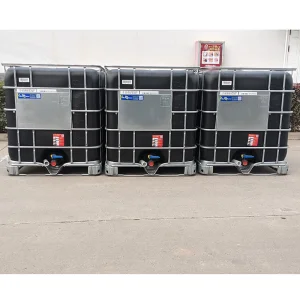
Specialty polymers are packaged in nitrogen-purged 200L epoxy-lined steel drums or 1000L composite IBCs under UN approval standards, protecting sensitive resins from humidity absorption during marine voyages.

ISO 9001 Audited Facilities

Operating under rigorous multi-point Quality Management Systems with retained reference samples for up to 36 months, allowing full downstream accountability for Tier-1 defense and automotive clients.

Global Trade Documentation

Provision of compliant 16-section SDS under GHS standards, REACH pre-registration certifications, Certificate of Origin, and IMDG/IATA dangerous-goods declarations for smooth customs clearance.

Frequently Asked Technical & Sourcing Questions

Authoritative insights into polymer chemistry, stoichiometric blending ratios, curing kinetics, and international supply operations.

How does CTBN liquid rubber toughen epoxy systems without drastically lowering the glass transition temperature (Tg)?
CTBN functions through a chemically triggered Reaction-Induced Phase Separation (RIPS) mechanism. Initially, the carboxyl groups of CTBN are pre-reacted with epoxy resins (such as DGEBA) at 130–150°C using an onium catalyst to synthesize an epoxy-CTBN-epoxy adduct. When this adduct is blended with baseline epoxy and cured with standard hardeners (such as DICY, amines, or anhydrides), the growing epoxy network becomes incompatible with the rubber backbone. The CTBN phases out into spherical elastomeric domains (0.2–1.5 μm in diameter). Because the rubber separates into isolated micro-phases while the remaining epoxy cross-links cleanly, the cured composite acquires massive fracture toughness (crack pinning and shear yielding) while preserving the high glass transition temperature (Tg) of the virgin epoxy matrix.
What is the fundamental performance difference between ATBN and CTBN in structural adhesives?
The fundamental distinction lies in reactivity and room-temperature curing capabilities. CTBN (Carboxyl-Terminated) requires elevated temperatures or tertiary amine catalysts to react with oxirane rings. It is predominantly used in one-component heat-cured paste and film adhesives. ATBN (Amine-Terminated) features active primary and secondary amine end-groups that react directly with epoxy resins at ambient room temperature (20–25°C). ATBN is therefore the premier choice for two-component (2K) cartridge-dispensed construction adhesives, automotive collision-repair formulations, and field-applied composite laminates requiring rapid room-temperature green strength.
Why is Hydroxyl-Terminated Polybutadiene (HTPB/HTBS) widely chosen for propellant binders and electrical potting?
HTPB and HTBS possess an all-carbon elastomeric polybutadiene backbone that provides complete non-polarity, exceptionally high hydrophobicity, and an ultra-low glass transition temperature (Tg below -75°C). When reacted with polyisocyanates (such as IPDI or TDI), they form polyurethane elastomer matrices that demonstrate virtually zero moisture absorption and superior electrical insulation (dielectric strength exceeding 20 kV/mm). For solid propellants, HTPB allows extraordinarily high solids loading (up to 88% ammonium perchlorate and aluminum powder) while maintaining liquid rheology for casting, followed by crack-free viscoelastic flexibility down to stratospheric and space temperatures.
What moisture and storage conditions are required to prevent premature degradation of reactive liquid rubbers?
Reactive liquid polymers must be stored in unopened, tightly sealed containers under dry, nitrogen-blanketed conditions between 10°C and 30°C. Hydroxyl- and amine-terminated rubbers (HTPB, ATBN) are especially sensitive to atmospheric moisture; absorbed water reacts with curing isocyanates or generates micro-foaming during epoxy cures. Epoxidized polybutadiene (EPB) and maleated polybutadiene (MLPB) must be protected from direct sunlight, moisture, and high heat to prevent self-polymerization or anhydride ring hydrolysis. YANXA delivers all liquid rubber grades in nitrogen-purged, sealed UN-spec drums with a verified shelf life of 12 to 24 months.
Can YANXA customize molecular weight (Mn) and vinyl or acrylonitrile (ACN) content for proprietary formulations?
Yes. Through proprietary synthesis reactors, our chemical engineers can tune the target number-average molecular weight (typically from 1,200 to 5,500 g/mol), the acrylonitrile percentage (from 10% to 26% in CTBN/ATBN series for adjusted solubility and oil resistance), and the 1,2-vinyl isomer ratio in polybutadiene structures. High-vinyl variants yield increased cross-link density upon thermal cure, while 1,4-cis/trans balances maximize low-temperature flexibility. Custom sample synthesis and pilot batches with complete Certificate of Analysis (COA) are provided for client validation prior to industrial scale-up.

Complementary Liquid Rubbers, Specialty Polyethers & Inorganic Materials

High-specification polymer building blocks, inorganic salts, and metal powders designed for demanding international formulations and composite structures.

China Liquid Rubber-Random Carboxy Nitrile Butadiene Rubber (L-XNBR) Supplier, Quotes
Technical Specs
China Specialty Polyether-Low Molecular Weight PET Polyether Factory, Factories
Technical Specs
Wholesale Specialty Polyether-High Molecular Weight PET Polyether Pricelist, Quotes
Technical Specs
China Specialty polyether - medium molecular weight PET polyether Supplier, Suppliers
Technical Specs
Wholesale Liquid rubber-hydroxyl terminated butadiene-styrene random copolymer (HTBS) Factories, Quotes
Technical Specs
China Specialty Polyether-Low Molecular Weight PET Polyether Factory, Factories
Technical Specs
All Liquid Rubber Products