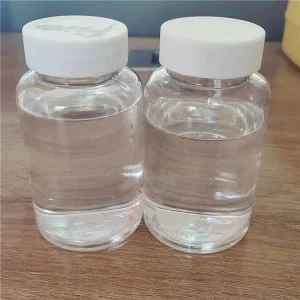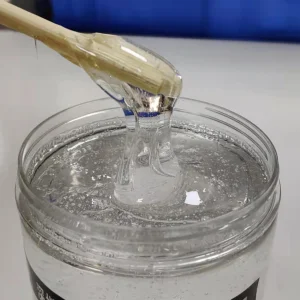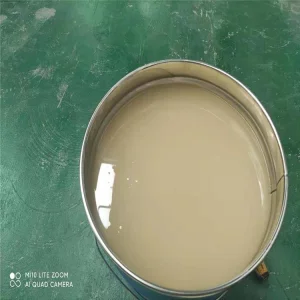
The product has excellent flexibility and can be used in high elongation materials that require high elongation; it can be used in special ultra-low-temperature elastomers and adhesives with low-temperature resistance up to -90℃ or below, and it can also be used in solid TJJ.
| Item | HP type | HT type |
|---|---|---|
| Number average molecular weight | 7000~9000 | 7000~9000 |
| Hydroxyl value, mgKOH/g | 11.8~15.2 | 18.0~23.2 |
| Viscosity (40℃), Pa.s | ≤60 | ≤80 |
| Acid value, mgKOH/g | ≤0.10 | ≤0.10 |
| Water mass fraction, % | ≤0.10 | ≤0.10 |
The product exhibits low-temperature resistance capabilities down to -90℃ or below, making it suitable for special ultra-low-temperature elastomers and adhesives.
It is designed for materials requiring high elongation, ultra-low-temperature resistant adhesives and elastomers, as well as solid TJJ applications.
The primary differences lie in the hydroxyl value and viscosity: the HP type has a hydroxyl value of 11.8~15.2 mgKOH/g and viscosity ≤60 Pa.s (at 40℃), while the HT type features a hydroxyl value of 18.0~23.2 mgKOH/g and viscosity ≤80 Pa.s (at 40℃).
Both the HP type and HT type share the same number average molecular weight range of 7000~9000.
Both HP and HT types maintain an acid value limit of ≤0.10 mgKOH/g and a water mass fraction of ≤0.10%.