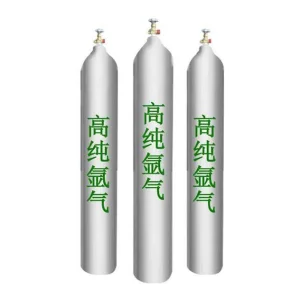
Explore primary gases verified for wafer fabrication etch processes, GIS electrical insulation, inert shielding, and cryogenic research. Immediate quotes provided with full technical datasheets.


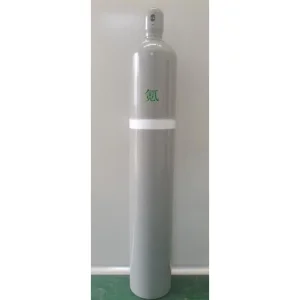

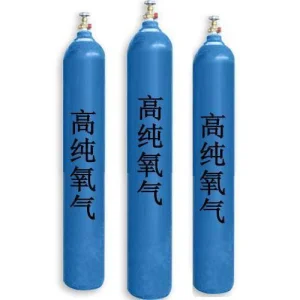

From semiconductor fabrication to heavy electrical infrastructure, the requirements for industrial and specialty gases have shifted from standard commodities to engineered micro-contaminant control.
Modern sub-5nm lithography and 3D NAND dry etching require fluorinated gases like CF4, alongside excimer laser mixtures containing Kr and Ne. Micro-contaminants at the parts-per-billion (ppb) scale lead to wafer yield loss.
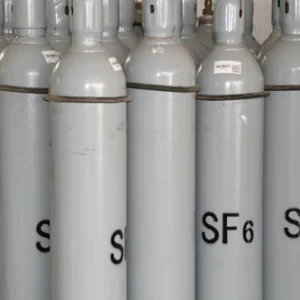
Sulfur Hexafluoride (SF6) remains the premier dielectric medium for Gas-Insulated Switchgear (GIS), circuit breakers, and substations. Global utilities require certified moisture suppression and eco-compliant recovery management.
Hall-effect electric propulsion thrusters require Xenon (Xe) and Krypton (Kr) for satellite orbital raising and station-keeping. Purity consistency guarantees ion engine cathode service longevity in orbit.
Procurement efficiency depends on delivery modalities. We synchronize chemical synthesis, cryogenic distillation, and pressure cylinder asset logistics into a unified sourcing channel.
Every commercial quote accounts for end-use consumption velocity. We configure packaging to eliminate residual waste, demurrage penalties, and boil-off loss across sea-freight routes:
Handling compressed gases requires rigorous safety documentation and valve engineering to prevent ambient cross-contamination during transit:
Navigating price fluctuations in noble gases and fluorine-based chemicals requires direct factory visibility. Below are typical parameters confirmed on every batch Certificate of Analysis (COA).
| Gas Designation | Chemical Formula | Purity Tiers | Critical Impurity Thresholds | Primary Industrial Applications |
|---|---|---|---|---|
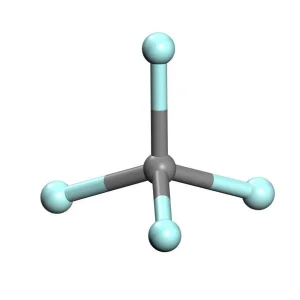
| Carbon Tetrafluoride | CF4 | 5N (99.999%) | O2 < 1 ppm, H2O < 2 ppm, CO+CO2 < 1 ppm | Semiconductor oxide etching, wafer chamber purge |
| Sulfur Hexafluoride | SF6 | 4N5 to 5N | Air < 50 ppm, H2O < 2 ppm, Acidity < 0.1 ppm | GIS electrical substations, particle accelerators |
| High-Purity Xenon | Xe | 5N to 6N | Kr < 0.5 ppm, N2 < 1 ppm, H2O < 0.5 ppm | Spacecraft ion propulsion, excimer lasers, dark matter research |
| High-Purity Krypton | Kr | 5N to 5.5N | Xe < 2 ppm, O2 < 0.5 ppm, Total HC < 0.5 ppm | Insulated architectural glazing, excimer lithography |
| High-Purity Neon | Ne | 5N to 6N | He < 2 ppm, H2 < 0.5 ppm, N2 < 1 ppm | DUV 193nm Argon-Fluoride lasers, cryogenics |
| Electronic Helium | He | 5.5N to 6N | Ne < 1 ppm, O2 < 0.2 ppm, H2O < 0.5 ppm | MRI magnet chilling, wafer carrier gas, leak detection |
| Electronic Grade Argon | Ar | 5N to 6N | O2 < 0.5 ppm, N2 < 1 ppm, Moisture < 0.5 ppm | Single-crystal silicon growth, titanium shielding, sputtering |
The industrial gas sector is advancing toward ultra-low carbon operations, low-GWP dielectric alternatives, and automated closed-loop reclaim ecosystems.
Development of cavity ring-down spectroscopy (CRDS) and trace gas chromatography, guaranteeing metallic ion and halogen impurity levels below 10 parts-per-trillion for 2nm semiconductor nodes.
Formulation of C4-fluoronitrile (C4-FN) and fluoroketone gas mixtures combined with synthetic air to achieve 99% GWP reductions in next-generation high-voltage GIS electrical switchgear.
On-site cryogenic capture systems designed to collect, re-purify, and re-compress Neon and Xenon emissions from photolithography and satellite test chambers with >95% return yield.
Integration of low-power RFID, real-time pressure transducers, and GPS tracking into valve collars to provide continuous tracking of internal cylinder gas consumption and shelf-life stability.
Cross-border distribution of compressed and liquefied gas demands strict adherence to international safety protocols. We eliminate customs delays through turnkey hazardous materials compliance.
Compressed and liquefied gases are categorized as Class 2 dangerous goods. Our export operations are managed in strict adherence to UN Model Regulations, IMDG (maritime), and IATA (air freight):
Pressure vessels must comply with country-specific pressure boundary directives to legally clear customs and undergo refills:
Clear, definitive answers to help your procurement, engineering, and logistics teams evaluate supplier capability, pricing structures, and testing standards.
To provide a firm FOB or CIF quote, our sales engineering desk requires: (1) Gas designation and target analytical purity (e.g., 5N vs. 6N), (2) Required valve connection standard (CGA, DIN, or JIS), (3) Container preference (40L/50L cylinders, 16-cylinder bundles, ton-tanks, or ISO tanks), (4) Total order volume, and (5) Destination seaport for hazardous materials booking calculation.
Every filling cycle includes analytical validation via gas chromatography (GC), Fourier-transform infrared spectroscopy (FTIR), and electrolytic trace moisture analyzers. Every shipment is accompanied by a batch-specific Certificate of Analysis (COA) displaying tested impurity levels (O2, N2, CO, CO2, H2O, and total hydrocarbons). Pre-shipment inspection by third-party auditors like SGS is available upon request.
Yes. We supply pressure vessels configured to the target jurisdiction's regulations, including color-coding compliant with ISO 32 or local national codes. We install certified high-purity diaphragm or tied-diaphragm valves conforming to CGA 580 (inert gases), CGA 590 (SF6/CF4), DIN 477 No. 6, or JIS B 8246, ensuring direct compatibility with your site gas manifold systems.
We operate an export logistics division that manages UN-approved cylinder handling, dangerous goods maritime declarations (IMO/IMDG), and carrier slot reservations. All containers undergo maritime container blocking, bracing, and shrink-wrapped pallet securing to prevent shift and valve impact during oceanic transit.
Because noble gases are produced as fractional byproducts of large-scale cryogenic Air Separation Units (ASU), global market pricing fluctuates based on steel and air separation capacity. We offer both spot-order quotes with fixed pricing windows and index-linked quarterly or annual supply framework agreements to hedge against geopolitical volatility.
Standard inventory gases (Nitrogen, Argon, Oxygen, CF4, SF6) ship within 10 to 15 business days following finalization of valve configurations and cylinder inspection. Synthesized specialty gases, custom noble gas blends, and large-scale cryogenic ISO tank deployments generally ship within 3 to 4 weeks depending on batch analytics and vessel scheduling.
Explore additional high-purity noble gases, specialized chemical intermediates, liquid elastomers, and inorganic salts supplied across international manufacturing supply chains.