
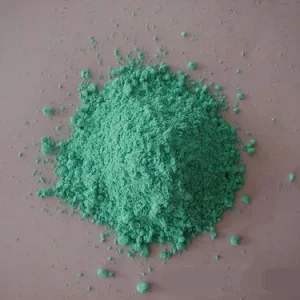
Basic Cupric Nitrate (Nagoya Automotive Catalyst Spec)
Ultra-pure Cu2(OH)3NO3 formulated for automotive airbag inflator formulations, catalytic washcoats, and high-precision copper plating baths in Toyota City clusters.
View Specification & Quote


Continuous batch-synthesized nitrate compounds engineered to the stringent trace-impurity thresholds demanded by Aichi Prefecture's automotive catalyst, lithium battery electrolyte, and electroplating sectors.
Ultra-pure Cu2(OH)3NO3 formulated for automotive airbag inflator formulations, catalytic washcoats, and high-precision copper plating baths in Toyota City clusters.
View Specification & Quote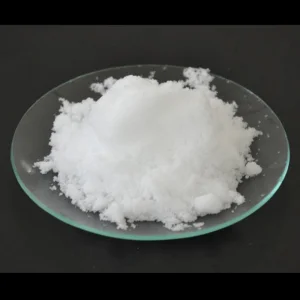
High-solubility Al(NO3)3·9H2O tailored for alumina synthesis, sol-gel thin films, insulating thermal barriers, and aerospace passivation coatings in Tokoname and Kariya.
View Specification & Quote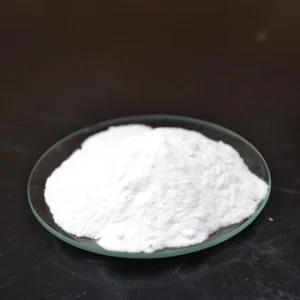
Battery-grade LiNO3 with tightly controlled Fe and Cl impurities, critical for solid-electrolyte interphase stabilization and high-temperature thermal storage in Aichi labs.
View Specification & Quote
Bulk-packaged LiNO3 solutions engineered as alkali-silica reaction (ASR) mitigators and corrosion inhibitors for coastal civil engineering and industrial floor hardening.
View Specification & QuoteThe Greater Nagoya region (Aichi, Gifu, and Mie Prefectures) forms the epicentre of Japan’s industrial economy, having sustained the highest value of manufactured product shipments for over 45 consecutive years. Sourcing chemical precursors here demands more than standard commercial delivery; it requires micro-traceability, strict lot homogeneity, and full compliance with Japan's rigorous METI guidelines.
Nagoya’s tier-1 automotive manufacturing network relies heavily on basic cupric nitrate and aluminum nitrate for three-way catalytic washcoats (TWC), diesel particulate regeneration catalysts, and gas generant propellants in vehicle restraint systems. Every batch requires low chlorate and perchlorate contamination to prevent corrosion in critical stainless steel deployment canisters.
Aichi is at the absolute forefront of solid-state and lithium-sulfur battery commercialization. Lithium nitrate serves as a vital additive for solid electrolyte interphase (SEI) stabilization, inhibiting dendritic growth across lithium-metal anodes. Our factory produces battery-grade LiNO3 with moisture levels consistently below 0.1% and sub-ppm transition metal traces.
Surrounding industrial zones—including Tokoname and Kariya—host leading fine ceramic giants and aerospace contractors. Aluminum nitrate nonahydrate provides an ideal, easily volatilized precursor for sub-micron sintering aids, transparent optical ceramics, high-dielectric capacitor substrates, and aerospace anodization seals.
In an era defined by geopolitical recalibration, fluctuating raw nitric acid indices, and decarbonization mandates, Nagoya-based procurement divisions face intensifying vulnerability when relying exclusively on domestic toll synthesizers. As an established direct manufacturing group with over 15 years of chemical export mastery, YANXA provides an unassailable cross-border procurement pipeline.
Unlike commercial traders or secondary re-packers, our production complexes integrate direct catalytic ammonia oxidation loops and high-purity metal dissolution reactors (electronic copper cathodes, lithium carbonate, and high-purity aluminum hydrate). This end-to-end chemical lineage insulates our Japanese clients from spot-market surges and guarantees uninterrupted supply continuity even during peak global agricultural nitrate consumption seasons.
Japanese industrial specifications are recognized globally as the most rigorous. Our state-of-the-art analytical centers are equipped with Inductively Coupled Plasma Mass Spectrometry (ICP-MS), X-Ray Powder Diffraction (XRD), and laser particle diffraction sizing (Malvern Mastersizer). We explicitly monitor and control trace species that provoke catastrophic failures in downstream electronic and catalytic environments.
| Material Grade | Target Compound | Assay (Purity) | Trace Impurity Profile (Fe / Cl / SO4) | Key Application in Aichi Sector | Nagoya Compliance Status |
|---|---|---|---|---|---|
| Technical/Industrial | Basic Cupric Nitrate | ≥ 98.0% | Fe < 50 ppm, Cl < 100 ppm | Electroplating, Wood Preservation | JIS K 1426 Verified |
| Catalyst / Pyro Grade | Basic Cupric Nitrate | ≥ 99.0% | Fe < 15 ppm, Cl < 20 ppm | Automotive Airbag Inflators, TWC Catalysts | UN Class 5.1 Certified |
| High Purity Crystal | Aluminum Nitrate 9-Hydrate | ≥ 99.5% | Fe < 5 ppm, Heavy Metals < 5 ppm | Ceramic Sintering, Optical Thin Films | METI Compliant |
| Battery Electrolyte Grade | Lithium Nitrate Anhydrous | ≥ 99.9% | Na + K < 20 ppm, Moisture < 0.05% | Solid-State Lithium Batteries, SEI Formulators | Strict Dry-Room Packed |
As Japan’s Ministry of Economy, Trade and Industry (METI) accelerates its Green Growth Strategy toward 2050 carbon neutrality, nitrate production methodologies are transitioning from traditional energy-intensive pathways into sustainable, high-efficiency chemical synthesis paradigms.
Transitioning the foundational nitric acid source to electrolysis-driven green ammonia. This green pathway eliminates scope 1 and scope 2 emissions from downstream inorganic nitrate crystallization, assisting Nagoya manufacturers in fulfilling their Scope 3 greenhouse gas reduction covenants.
Collaborating with high-tech copper foil and printed circuit board (PCB) fabricators across Chubu to re-purify spent copper-nitric pickling streams into ultra-pure basic cupric nitrate and secondary technical salts, drastically cutting raw mineral consumption and effluent disposal overheads.
Developing specialized spray-drying and anti-solvent crystallizers that engineer exact crystal habit, specific surface area (BET), and bulk density. These uniform crystal morphologies facilitate continuous automated pneumatic feeding in smart Nagoya manufacturing lines.
Importing nitrates into the Port of Nagoya requires strict navigation through multi-layered domestic legal statutes. Incompetent documentation frequently results in customs holds, bonded warehouse demurrage, and regulatory sanctions. Our export logistics operations are fully harmonized with Japanese maritime and chemical enforcement agencies.
Solid inorganic nitrates are classified under Japan's Fire Service Act as Class 1 Hazardous Materials (Oxidizing Solids). We supply goods in UN-approved drums (1A2 steel or 1H2 plastic) that comply strictly with Japanese designated storage limit markings, complete with GHS labels printed in Japanese adhering to JIS Z 7253:2019 standards.
Certain copper and metallic salt formulations fall under the Poisonous and Deleterious Substances Control Act (毒劇法). We support registered Japanese chemical importers with fully compliant product chemical registration, METI notification certificates, CAS inventory references, and localized Safety Data Sheets (SDS).
Direct sea shipments from Ningbo/Shanghai to Nagoya Port take merely 2 to 3 days. To avoid deliquescence and cake formation during transit, our products feature vacuum-sealed polyethylene moisture barrier inner liners, paired with non-contaminating industrial silica desiccants for instant operational use upon delivery.
In addition to our flagship nitrate salts, our factory group manufactures high-purity rare gases, fine atomized alloy powders, specialty organometallics, and elastomeric polymers to support advanced research and mass-production across Asia-Pacific.

Ultra-pure organic acid salt utilized in precision electro-ceramic capacitors, conductive metal pastes, and specialized synthesis catalysts.
View Product & Quotes
Functional liquid binder synthesized for advanced polymer insulation, aerospace potting compounds, structural adhesives, and vibration dampening.
View Product & Quotes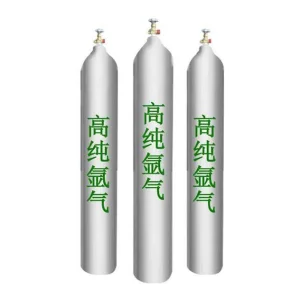
Atmospheric control gas engineered for selective laser melting 3D metal printing, high-temperature ceramic sintering, and semiconductor purging.
View Product & Quotes
Ultra-pure plasma etching fluorocarbon gas for microelectronics fabrication, chamber surface cleaning, and silicon dioxide etching.
View Product & Quotes
Rare specialty gas for aerospace ion propulsion, laser lithography, medical imaging, and advanced optical window manufacture.
View Product & Quotes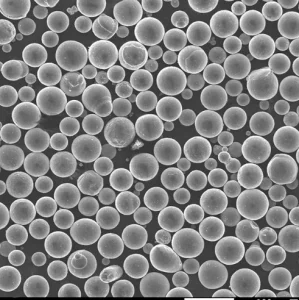
Precisely sized spherical alloy powder engineered for high-energy propellants, thermal spray coatings, and powder metallurgy parts in Aichi.
View Product & Quotes
Industrial and high-purity aluminum nitrate crystallization lots produced for textile mordants, catalyst substrate preparation, and anodizing.
View Product & Quotes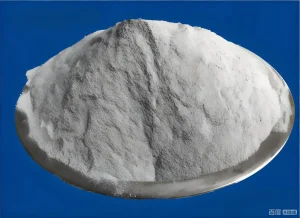
High-aspect leafing and non-leafing metallic aluminum flake flakes tailored for premium automotive body coatings, anti-corrosive paints, and pyrotechnics.
View Product & QuotesComprehensive answers to the operational, chemical, and statutory questions most frequently raised by plant engineers and international procurement leads serving Japan's industrial corridor.
Nitrate salts such as lithium nitrate and aluminum nitrate nonahydrate are highly deliquescent. For all shipments entering Nagoya Port, our packaging utilizes double-layered hermetically heat-sealed poly liners inside UN-approved steel drums or heavy-duty fiber drums. In addition, container-level desiccant bags and floor moisture barriers are installed to prevent condensation during vessel transit through variable marine humidity zones.
Yes. Automotive airbag generant propellants and catalyst washcoat applications demand tight D10, D50, and D90 parameters to ensure controlled combustion rates or uniform slurry dispersion. We provide customized micronization down to D50 = 3–8 microns, or controlled coarse crystalline granular grades per client specification sheets.
Every shipment arrives with a complete batch Certificate of Analysis (COA) specifying detailed ICP-OES trace metal impurity concentrations, Japanese GHS-compliant Safety Data Sheets (SDS per JIS Z 7253), Commercial Invoices, Detailed Packing Lists, Certificate of Origin (COO), and formal UN Dangerous Goods Packaging & Inspection Certificates.
Absolutely. We regularly host technical audits by Japanese trading houses and global engineering buyers. Furthermore, representative pre-shipment samples (250g to 2kg) drawn directly from current bulk lots can be dispatched via certified dangerous-goods courier for full laboratory and line validation prior to executing commercial purchase orders.
Standard manufactured grades maintain continuous inventory buffers. From PO sign-off and DG booking, ocean transit from Shanghai or Ningbo to Kinjo or Meiko terminals in Nagoya Port takes approximately 2 to 3 days. Total door-to-door timeline—including export clearance, sea freight, and Japanese import customs release—typically spans 10 to 14 business days.
All our specialty nitrates and alloy powders comply fully with EU RoHS 3 (Directive 2015/863) and REACH SVHC regulations. In Japan, products comply with the Chemical Substances Control Law (CSCL / 化審法) and have verified METI/MITI official inventory status, guaranteeing zero regulatory friction for Japanese corporate buyers.
Connect directly with our chemical engineering and international logistics desk. Receive custom purity assays, batch COAs, SDS documentation, and CIF Nagoya landed quotes within 24 business hours.