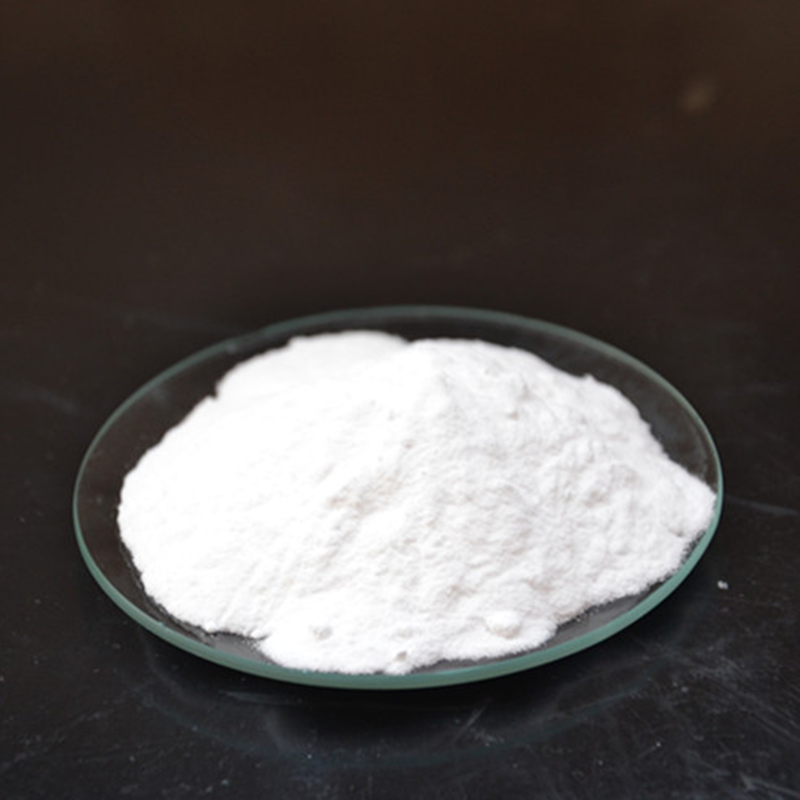
Colorless crystal, easy to absorb moisture. Heating to 600℃ for decomposition. Soluble in about 2 parts of water, soluble in ethanol. The aqueous solution is neutral. The relative density is 2.38. The melting point is about 255℃.
Used in ceramics. Fireworks manufacturing. Molten salt bath. Refrigerator.
Used as analytical reagent, used for preparing phosphor and lithium salt, and also used in ceramic industry.
Used for making pottery, fireworks, heat exchange media, etc.
| Test item | Lithium nitrate trihydrate | Lithium nitrate anhydrous |
|---|---|---|
| Assay ≥ | 98.0% | 99.0% |
| Chloride (Cl) ≤ | 0.01% | 0.01% |
| Sulfate (SO4) ≤ | 0.2% | 0.2% |
| Iron (Fe) ≤ | 0.002% | 0.002% |
It appears as a colorless crystal that is easy to absorb moisture. It has a melting point of approximately 255℃ and a relative density of 2.38.
It is soluble in about 2 parts of water and also soluble in ethanol, forming a neutral aqueous solution.
Decomposition takes place when the substance is heated to approximately 600℃.
The compound possesses strong oxidation properties. Contact, friction, or impact with organic matter can trigger combustion. It is also irritating.
Common uses include pottery and ceramics, fireworks manufacturing, molten salt baths, heat exchange media, refrigerators, and as an analytical reagent for preparing phosphor and lithium salt.
The minimum assay for Lithium nitrate trihydrate is 98.0%, whereas the anhydrous grade provides an assay standard of ≥ 99.0%.