Select certified polymer synthesis modifiers, alloy precursors, and inorganic additives engineered to international standards.



Anhydrous Hydrazine (AH, CAS 302-01-2, molecular formula N₂H₄) is an essential, high-density hypergolic monopropellant and high-reactivity synthesis intermediate. Unlike commercial aqueous hydrazine hydrate solutions (55%–80% N₂H₄·H₂O), anhydrous hydrazine requires moisture removal down to below 0.5%—and often below 0.2% w/w for space propulsion systems (MIL-PRF-26536 Grade Propellant).
Achieving this grade requires overcoming severe physical and chemical constraints: water and hydrazine form a maximum-boiling azeotrope at approximately 120.5 °C containing 68.5 mol% hydrazine (corresponding to the monohydrate form N₂H₄·H₂O, ~64 wt% N₂H₄). Direct atmospheric distillation cannot breach this stoichiometric thermodynamic limit. Compounding this challenge, hydrazine possesses an exothermic decomposition enthalpy (ΔH°d = -50.63 kJ/mol), which is strongly catalyzed by trace heavy metals, rough surface oxides, and local thermal runaway conditions inside the reboiler.
In the binary system N₂H₄–H₂O, the non-ideal hydrogen bonding between amino and hydroxyl radicals creates negative deviations from Raoult's Law. At atmospheric pressure (101.3 kPa), the azeotropic mixture distills at 120.5 °C. When moving to sub-atmospheric vacuum regimes (e.g., 6.7 to 13.3 kPa), the liquid-vapor equilibrium curve shifts, lowering reboiler temperatures below 65 °C. This vacuum suppression reduces thermal stress and ensures safe operation well below the auto-ignition limit of hydrazine vapor (ambient auto-ignition ~24 °C under dry conditions in contact with specific oxidizers, or >270 °C purely thermal in air).
Industrial units utilize entrainers such as aniline, ethylene glycol, or concentrated sodium hydroxide (caustic dehydration). By selectively altering the relative volatility (α₁₂) between water and hydrazine, extractive solvent towers break the azeotropic saddle, stripping out water overhead while drawing concentrated anhydrous hydrazine bottoms or side-streams.
Hydrazine vapors above 4.7% volume in air present severe explosive limits. Advanced Chinese continuous distillation towers use high-vacuum multistage structured packing (e.g., Sulzer DX/BX titanium or electropolished 316L). Operating pressures between 40 and 100 mbar keep liquid phase temperatures strictly under 60 °C, suppressing homogeneous vapor-phase decomposition.
Direct solid desiccants (such as solid NaOH flakes or barium oxide) break the bulk of the hydration sphere before thermal exposure. The decanted organic hydrazine layer—containing 92% to 95% N₂H₄—is then introduced into continuous flash finishing towers, minimizing boiling energy and dwell time within reboiler hot zones.
China’s chemical engineering research institutes and specialized synthesis facilities have driven progressive breakthroughs in anhydrous hydrazine processing. Transitioning from legacy batch-pot dehydration with massive chemical salt waste, the industry has established continuous, energy-efficient, and inherently safe distillation corridors.
| Separation Era | Predominant Separation Mechanism | Typical Purity (N₂H₄) | Energy / Carbon Intensity | Safety Integrity Level (SIL) |
|---|---|---|---|---|
| Generation 1 (Historical) | Batch Caustic Solid Drying + Direct Pot Stills | 96.0% – 97.5% | Very High (Batch waste, extreme salt slagging) | SIL 1 (Manual intervention, high risk) |
| Generation 2 (Standard Industrial) | Continuous Extractive Column (Aniline Entrainer) | 98.5% – 99.0% | Moderate (Solvent recovery reboilers required) | SIL 2 (Automated DCS interlocks) |
| Generation 3 (Current High-Tech) | Dual-Column Vacuum Distillation + Structured Packing | 99.2% – 99.6% | Optimized (Mechanical vapor recompression compatible) | SIL 3 (Triple redundant voting sensors) |
| Generation 4 (Frontier / Roadmap) | Ceramic Pervaporation Membrane + Microchannel Fractionation | > 99.8% (Ultra-pure trace metal < 10 ppb) | Lowest (35% reduction in thermal input) | Inherent Safety (Liquid inventory < 5 liters) |
Inorganic hydrophilic zeolite membranes (e.g., NaA, silicalite, or functionalized graphene oxide) selectively permeate water molecules from the azeotrope without subjecting hydrazine to phase-transition vaporization. This hybrid pervaporation-distillation flow cuts thermal demands by half while eliminating entrainer solvent cross-contamination.
Micro-reactor technology with millimeter hydraulic diameters provides specific surface areas exceeding 5,000 m²/m³. This design enables rapid heat dissipation, preventing local hotspot formation and reducing the holdup of energetic liquid inside the processing train from several tons to just a few kilograms.
All distillation column walls, liquid distributors, and condenser tubings undergo rigorous mechanical and electrochemical polishing to Ra < 0.4 µm, followed by hot nitric acid passivation. This treatment strips active catalytic iron/nickel sites, suppressing wall-induced spontaneous decomposition.
Anhydrous hydrazine acts as both an essential propellant and a key building block in specialty organic chemical manufacturing. The table below outlines downstream applications, their required specifications, and technical performance demands.
Serves as a storable monopropellant across catalytic thrusters (e.g., Shell 405 / iridium-aluminosilicate catalysts) and as a hypergolic bipropellant with dinitrogen tetroxide (N₂O₄). Requires ultra-low non-volatile residues (< 0.005%) and trace aniline limits to prevent catalyst bed fouling and sintering.
An essential bifunctional nucleophile for triazole rings, heterocyclic active pharmaceutical ingredients (APIs), anti-tuberculosis medications (Isoniazid), and agrochemical herbicides. Anhydrous conditions prevent moisture-induced side reactions and maximize synthesis yields.
Used as a chain extender in polyurethanes, high-performance polyimides, and azodicarbonamide blowing agents. Water-free purity prevents premature isocyanate hydrolysis, eliminating uncontrolled gas bubbling and structural voids in precision elastomeric matrices.
Employed in pressurized water reactor (PWR) primary and secondary loops for dissolved oxygen scavenging at temperatures exceeding 280 °C. The absence of minerals and chlorides prevents stress-corrosion cracking (SCC) across critical Inconel steam generator tubing.
China's production ecosystems offer a comprehensive supply chain advantage, integrating raw upstream feedstocks—such as ammonia and chlorine via the Raschig and hydrogen peroxide pathways—with automated chemical parks and smart monitoring networks.
Modern Chinese continuous distillation units operate under Safety Instrumented Systems (SIS) adhering to IEC 61508 / SIL-3 standards. Multi-point infrared gas spectrometry, nitrogen-blanketed vapor spaces, and burst-disk automated rupture suppressors guarantee sub-second emergency response times.
Industrial installations are co-located within dedicated Tier-1 chemical parks (e.g., Jiangsu, Shandong, and Ningxia chemical corridors). Direct pipeline deliveries of high-purity liquid ammonia, hydrazine hydrate, and inert utility gases minimize transit risks and volatile transportation surcharges.
Operating continuous 1,000-to-5,000 MT/year distillation trains allows Chinese manufacturers to offer predictable pricing. High production capacities and steady-state thermal recovery systems reduce utility expenses by up to 30% compared to smaller regional batch operations.
Procurement teams evaluating Chinese distillation manufacturers must move beyond generic purity percentages. Precise chemical assay limits, dissolved gas maximums, trace transition metal thresholds, and validated packaging standards dictate field performance and prevent catalytic auto-decomposition.
| Analytical Parameter | Propellant Grade (Standard Monopropellant) | Propellant Grade (High-Purity Low-Aniline) | Analytical Verification Method |
|---|---|---|---|
| Hydrazine (N₂H₄) Assay | ≥ 98.5% by weight | ≥ 99.5% by weight | Direct Iodate Acid Titration / GC-TCD |
| Water Content (H₂O) | ≤ 1.0% by weight | ≤ 0.30% by weight | Karl Fischer Coulometric Moisture Titration |
| Particulate Matter / Residue | ≤ 10 mg/L (filtered through 10 µm) | ≤ 3.0 mg/L (filtered through 0.45 µm) | Gravimetric Membrane Filter Technique |
| Aniline Concentration | ≤ 0.5% by weight | ≤ 0.005% (50 ppm) max | High-Performance Liquid Chromatography (HPLC) |
| Trace Iron (Fe) | ≤ 5.0 ppm | ≤ 0.5 ppm | Inductively Coupled Plasma Mass Spectrometry (ICP-MS) |
| Chloride (Cl⁻) | ≤ 5.0 ppm | ≤ 1.0 ppm | Ion Chromatography (IC) |
| Non-Volatile Residue (NVR) | ≤ 0.05% max | ≤ 0.005% max | Vacuum Evaporation Residue Analysis |
Anhydrous hydrazine is regulated under UN 2029 (HYDRAZINE, ANHYDROUS, Class 8, Sub-risk 6.1 and 3, Packing Group I). True TCO includes demurrage mitigation, passivated vessel lease terms, port handling surcharges, and hazardous materials ocean-freight compliance. Standard drums must use UN 1A1/X-certified 304L or 316L stainless steel drums with internal electropolishing and PTFE/Kalrez gasket seals. Dedicated ISO tank containers must feature helium leak checks and high-purity nitrogen blankets (> 0.03 to 0.05 MPa positive pressure) throughout international transit to prevent atmospheric exposure.
Given its dual-use potential and dangerous goods profile, international logistics requires experienced supply chain management. Chinese export protocols combine regulatory compliance, factory-gate audit trails, and certified port transit handling.
Anhydrous hydrazine may be subject to dual-use non-proliferation tracking and bilateral commercial clearances. Established Chinese manufacturers maintain clean compliance track records with the Ministry of Commerce (MOFCOM), managing legal export declarations and handling End-User Certificates (EUC) smoothly.
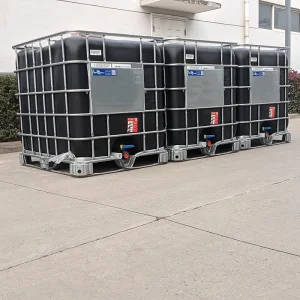
Shipments leave manufacturing facilities in UN-approved 1A1 stainless-steel drums (50L, 200L) or specialized ISO tank containers. Vessels undergo strict inner-surface pickling, passivation, and inert argon/nitrogen pressurization before filling to prevent oxidation and moisture ingress.
Cargo is routed through dedicated hazardous chemical handling docks (such as Shanghai, Ningbo, and Qingdao Class-A hazmat berths). Direct factory-to-berth escorts by licensed Class 8/6.1/3 transport carriers eliminate demurrage delays and ocean-freight hold-ups.
Detailed answers addressing engineering parameters, safe handling protocols, and procurement logistics for industrial and propellant buyers.
Complementary industrial inputs engineered for demanding aerospace, electronic manufacturing, and polymer composite environments.