


Specification-grade chemicals, engineered gas atomized powders, and specialty reagents manufactured under strict ISO 9001 and verified through lot-specific analytical certificates.
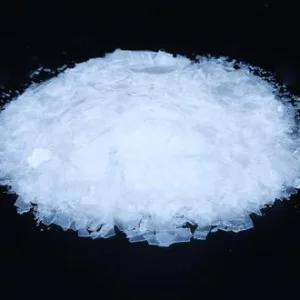

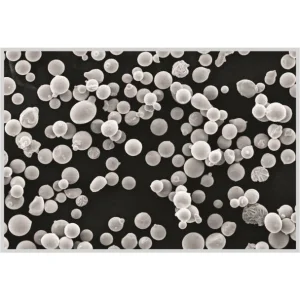



Basic Cupric Nitrate (CAS 12158-75-7), structurally identified as dicopper trihydroxide nitrate [Cu₂(OH)₃NO₃] or rouaite/gerhardtite polymorphic structures, serves as a high-density catalyst intermediate, automotive airbag gas-generant oxidizer, wood preservative, and fine-chemical precursor worldwide.
Across the North American, European, and Asia-Pacific manufacturing ecosystems, industrial procurement teams face persistent friction when securing consistent, low-impurity Basic Cupric Nitrate. Unlike standard cupric nitrate trihydrate or hexahydrate [Cu(NO₃)₂·3H₂O / Cu(NO₃)₂·6H₂O]—which are highly deliquescent, corrosive, and challenging to store—Basic Cupric Nitrate (Dicopper Hydroxide Nitrate) offers exceptional chemical stability, non-hygroscopic physical profiles, and superior thermal decomposition behaviors.
This technical whitepaper provides corporate sourcing executives, plant chemical engineers, and materials scientists with rigorous specifications, production chemistry insights, cost modeling benchmarks, and verified auditing frameworks essential for onboarding Chinese manufacturing partners.
Comprehensive crystallographic, chemical, and purity criteria defining premium industrial-grade and automotive gas-generant grade Basic Cupric Nitrate from Tier-1 Chinese chemical manufacturing facilities.
| Analytical Parameter | Technical / Industrial Grade | Pyrotechnic / Airbag Inflator Grade | Analytical Testing Methodology |
|---|---|---|---|
| Chemical Nomenclature | Dicopper Trihydroxide Nitrate / Basic Copper Nitrate | Dicopper Nitrate Hydroxide (Monoclinic Rouaite) | IUPAC Standard / XRD Identification |
| Molecular Formula & Weight | Cu₂(OH)₃NO₃ / 239.58 g/mol | Cu₂(OH)₃NO₃ / 239.58 g/mol | Stoichiometric Mass Calculation |
| CAS Registry Number | 12158-75-7 | 12158-75-7 | CAS Substance Identifier |
| EINECS Registry Number | 235-300-8 | 235-300-8 | EC Compliance Inventory |
| Total Copper (Cu) Assay | ≥ 53.50% | ≥ 55.00% to 56.20% | Iodometric Titration / ICP-OES |
| Basic Salt Purity | ≥ 98.0% | ≥ 99.2% | Potentiometric Titration |
| Chloride (Cl⁻) Content | ≤ 0.05% (500 ppm) | ≤ 0.005% (50 ppm) | Turbidimetric / Ion Chromatography |
| Sulfate (SO₄²⁻) Content | ≤ 0.05% (500 ppm) | ≤ 0.01% (100 ppm) | Barium Sulfate Gravimetry / IC |
| Iron (Fe) Impurity | ≤ 0.02% (200 ppm) | ≤ 0.003% (30 ppm) | Atomic Absorption Spectrometry (AAS) |
| Lead (Pb) & Heavy Metals | ≤ 0.005% (50 ppm) | ≤ 0.001% (10 ppm) | ICP-MS Environmental Vector |
| Moisture (Loss on Drying) | ≤ 0.50% (105°C, 2h) | ≤ 0.20% (105°C, 2h) | Thermogravimetric Analysis (TGA) |
| Particle Size Distribution (D50) | 20 – 45 μm | 5 – 15 μm (Micronized / Spheroidized) | Laser Diffraction (ISO 13320:2020) |
| Bulk Density | 0.75 – 1.10 g/cm³ | 0.85 – 1.25 g/cm³ | Scott Volumeter Tapped Density |
Critical Engineering Differentiator: Standard cupric nitrate [Cu(NO₃)₂] liquefies in atmospheric humidity at room temperature (critical relative humidity < 30%), causing severe caking, piping erosion, and dosing inaccuracy. In stark contrast, Basic Cupric Nitrate [Cu₂(OH)₃NO₃] exhibits a water solubility of less than 0.01 g/100 mL at 20°C, maintaining free-flowing dry particulate behavior even in high-humidity industrial manufacturing halls.
From pyrotechnic vehicle safety assemblies to chemical synthesis and timber preservation, examine how modern manufacturing operations integrate Chinese basic cupric nitrate.
Widely utilized in conjunction with basic copper nitrate fuel blends and non-azide propellant formulations (e.g., guanidine nitrate, 5-aminotetrazole) to yield clean, non-toxic nitrogen inflating gas within 30 milliseconds.
Serves as the high-purity inorganic precursor for co-precipitated copper-zinc-alumina catalysts (Cu/ZnO/Al₂O₃) applied in methanol synthesis, water-gas shift (WGS) reactions, and hydrogenation.
A preferred green alternative to legacy chromated copper arsenate (CCA) and alkaline copper quaternary (ACQ) systems, utilized in micronized copper formulation technology.
Delivers brilliant spectral blue and cyan emissions in signaling devices, civil fireworks, and specialized maritime rescue flares without introducing chlorine smoke.
Deployed in chemical copper deposition, PCB micro-etching passivation, and architectural metal antiquing patinas (verdigris restoration).
Used by advanced glassmakers and ceramic glaze facilities to formulate heat-resistant black, green, and turquoise underglaze pigments.
Understanding how leading Chinese basic copper nitrate producers control reaction stoichiometric balance, precipitation kinetics, mother liquor washing, and continuous pneumatic flash drying.
Most premier manufacturing facilities across Jiangsu, Shandong, and Sichuan provinces execute production via the controlled neutralization of purified copper nitrate solutions utilizing stoichiometric alkaline reagents such as sodium hydroxide (NaOH), sodium carbonate (Na₂CO₃), or urea under tightly governed thermodynamic conditions:
Primary Chemical Reaction Mechanism:
2 Cu(NO₃)₂ (aq) + 3 NaOH (aq) ➔ Cu₂(OH)₃NO₃ (s)↓ + 3 NaNO₃ (aq)
Alternate Carbonate Route: 2 Cu(NO₃)₂ + Na₂CO₃ + 2 H₂O ➔ Cu₂(OH)₃NO₃↓ + 2 NaNO₃ + CO₂↑ + HNO₃ (buffered)
During our factory audits in China, our metallurgical engineering teams evaluate four mission-critical process parameters that distinguish Tier-1 basic cupric nitrate from sub-par commodities:
Precipitation must take place within an exact pH threshold (pH 4.2 to 5.4) at elevated temperatures (65°C to 80°C). Deviations below pH 3.8 retain unreacted soluble Cu²⁺ ions in the mother liquor, drastically cutting yield. In contrast, local over-alkalization (pH > 6.2) triggers irreversible dehydration of cupric hydroxide into black cupric oxide (CuO) impurities, ruining color purity and airbag decomposition rates.
Byproduct sodium nitrate (NaNO₃) and residual trace chlorides (Cl⁻) adhere to the nascent crystalline surfaces. High-end Chinese export factories utilize automated horizontal vacuum belt filters or multistage centrifuge cascades with demineralized water (conductivity < 5 μS/cm). Counter-current displacement washing reduces residual sodium to under 50 ppm and chloride to trace levels.
Basic copper nitrate begins initial thermal decomposition into copper oxide at approximately 200°C to 220°C. Advanced Chinese factories have abandoned outdated static tray ovens in favor of low-temperature closed-circuit pneumatic flash dryers or vacuum rotary paddle dryers operating between 95°C and 115°C, ensuring crystal moisture drops below 0.2% without thermal degradation.
For automotive inflator applications, raw basic copper nitrate cakes are crushed and subjected to fluidized bed opposed-jet milling under dry nitrogen blankets. Laser diffraction sizing ensures a narrow span ratio [(D90 - D10) / D50 < 1.4], preventing segregation or agglomeration during downstream automated tablet pressing.
Transparent benchmark pricing, tier breakdowns, and mathematical correlation with London Metal Exchange (LME) and Shanghai Futures Exchange (SHFE) copper cathode dynamics.
The manufacturing cost structure of Basic Cupric Nitrate in China is overwhelmingly pegged to the price of refined electrolytic copper cathode (Grade A 99.9935%). Copper mass accounts for approximately 53.5% to 56.5% of the molecule's molecular weight. Consequently, direct raw copper input represents approximately 68% to 76% of total ex-factory production expenses, with the balance distributed across nitric acid, neutralizing alkalis, deionized water, energy, labor, regulatory compliance, and profit margins.
| Order Volume Tier | Grade Classification | Standard Packaging | Estimated FOB Qingdao / Shanghai Price (USD/MT) | Lead Time to Vessel Loading |
|---|---|---|---|---|
| Sample / Pilot Lot (100 kg – 1 MT) | Technical Grade (Cu ≥ 53.5%) | 25 kg UN Multiwall Fiber Drums | $5,200 – $6,100 / MT | 5 – 7 business days |
| LCL Batch (2 MT – 5 MT) | Technical / Industrial Grade | 25 kg Bags on Pallets (Heat Treated) | $4,600 – $5,200 / MT | 10 – 14 business days |
| Single FCL (1 × 20'GP, ~18–20 MT) | High Purity Industrial Grade | 25 kg PP Woven Bags with PE Liner | $4,100 – $4,650 / MT | 15 – 20 calendar days |
| Multi-Container (40 MT – 100 MT) | Standard Technical Grade | 1,000 kg Jumbo Big Bags (UN Certified) | $3,850 – $4,250 / MT | 25 – 30 calendar days |
| Automotive Airbag Grade (5 MT – 20 MT) | Jet-Milled Micro-Powder (D50: 8–12 μm) | 25 kg Sealed UN Steel Drums with Desiccant | $5,800 – $7,200 / MT | 20 – 25 calendar days |
| Annual Contract (> 200 MT/year) | Customized Granulometry / High Purity | Customized Buyer Branding & Pallet Specs | Formula Index Linked (LME/SHFE + Premium) | Scheduled Monthly Line Releases |
Formula-Pricing Hedging Mechanism for Global Buyers: For contract volumes exceeding 100 MT annually, premier Chinese factories offer monthly dynamic pricing linked to the Shanghai Metals Market (SMM) or LME 3-month copper averages: P = (P_Cu × 0.555) + C_Processing + Shipping_Allowance. This eliminates supplier risk and guarantees supply security amid macroeconomic raw copper volatility.
Navigating maritime shipment protocols under the International Maritime Dangerous Goods (IMDG) Code, hazardous chemical declarations, and regional regulatory inventories.
Unlike neutral copper nitrate trihydrate (UN 3085, Class 5.1 Oxidizer with subsidiary Class 8 Corrosive risks), Basic Cupric Nitrate is commonly classified under UN 3077 (Environmentally Hazardous Substance, Solid, N.O.S., Class 9, PG III) or conditionally exempted in specific non-oxidizing crystallite preparations subject to official UN Test Series 1(a) and Test O.1 certification.
Legitimate export from Chinese ports requires standard Dangerous Goods Packaging Performance Inspection Certificates (危包证, Wei Bao Zheng) issued by China Customs (GACC). Compliant factories must possess active CIQ inspections, standardized GHS SDS in 16 sections, and certified seaworthy palletization.
For export into the European Union and the United States, materials must comply with EU REACH registration dossiers (tonnage band coverage) and US EPA TSCA Active inventory status. Basic copper nitrate requires aquatic toxicity reporting (H410: Very toxic to aquatic life with long-lasting effects) with strict secondary containment packaging.
A structured 6-point verification framework deployed by global procurement managers during on-site chemical manufacturing evaluations in China.
Verify that the factory is situated inside an officially sanctioned Provincial Chemical Industrial Park (化工园区). Chinese environmental authorities mandate that wet chemical syntheses producing nitrogenous wastewater possess zero-emission closed-loop MVR evaporators and denitration plants. Unlicensed rural workshops risk sudden governmental environmental shutdowns.
Qualified factories must operate an independent analytical laboratory equipped with Inductively Coupled Plasma Optical Emission Spectrometry (ICP-OES), Laser Diffraction Particle Sizers (Malvern Mastersizer), and Karl Fischer moisture titrators. Relying entirely on off-site third-party testing leads to undetected batch variations.
The acidic reaction of nitric acid and copper scrap or oxide generates extreme corrosive environments. Verify that primary crystallizers and digestion vessels are glass-lined (enamelled) or titanium-grade (Grade TA2), rather than bare stainless steel (304/316L), which leaches iron, chromium, and nickel impurities into the final crystal matrix.
Advanced facilities recover byproduct sodium nitrate or ammonium nitrate from spent mother liquors through fractional crystallization or membrane separation, marketing the byproduct as agricultural fertilizer. This closed economic loop insulates the supplier from hazardous waste disposal penalties.
Emerging research and industrial initiatives driving the decarbonization and precision crystallization of copper nitrate salts through 2030.
Integration of ultra-pure copper scrap derived from discarded electric vehicle battery busbars and semiconductor printed circuit board (PCB) etching effluents. Closed-loop hydrometallurgical leaching avoids virgin mining emissions.
Direct electrochemical dissolution of metallic copper anodes in neutral nitrate electrolytes. Eliminates caustic soda additions and completely bypasses high-salinity sodium nitrate waste streams.
Transitioning from massive 10,000-liter batch reactors to continuous flow microchannel reactors. Delivers sub-micron particle distributions (D50 < 2 μm) required for military and aerospace propulsion with zero batch variation.
In-depth responses resolving engineering questions, trade terms, analytical standards, and warehouse safety protocols.
Explore our parallel product lines engineered to serve automotive, aerospace, semiconductor, metallurgical, and specialty organic polymer syntheses globally.








