

High-purity chemical additives, electronic-grade dielectric gases, and strategic organometallic precursors supplied by Yanxatech System Industries Limited.



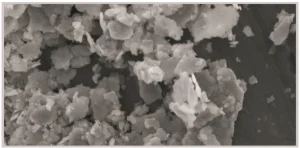

A critical thermodynamic assessment of Auric Nitrate [Au(NO₃)₃] compounds in advanced oxidation processes, heterogeneous nanocatalysis, and semiconductor metallization.
Gold (III) Nitrate serves as a premium chloride-free alternative to Chloroauric Acid (HAuCl₄). In sensitive catalytic deposition and semiconductor plating, residual halogen ions cause micro-corrosion and catalyst poisoning. China manufacturing facilities leverage crystallization under controlled nitric acid vapors to maintain low trace-element profiles (<10 ppm heavy metals).
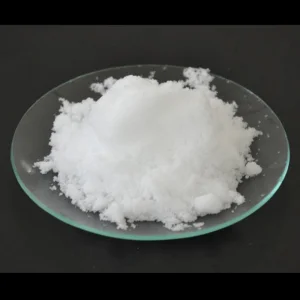
Auric Nitrate displays exceptional hygroscopic sensitivity, thermally decomposing toward auric oxide (Au₂O₃) and metallic gold when exposed to elevated temperatures. Chinese precision manufacturing hubs operate class-10,000 clean conditioning rooms under controlled dew points (< -40°C) to yield consistent, high-assay golden-yellow crystalline hydrates.
Supported gold nanoparticles synthesized via Auric Nitrate precursors provide unique catalytic behavior in low-temperature carbon monoxide (CO) oxidation, volatile organic compound (VOC) abatement, and selective hydrogenation. The absence of coordinating halides enables complete reduction to metallic Au⁰ at lower calcination profiles.
| Physicochemical Parameter | Industrial Grade (Catalyst Standard) | Electronic Grade (Semiconductor/Optical) | Testing Protocol / Verification |
|---|---|---|---|
| Gold Content (Au Assay % w/w) | ≥ 51.5% | ≥ 52.8% (Stoichiometric Baseline) | Gravimetric / ICP-OES Analysis |
| Trace Chloride (Cl⁻) | < 50 ppm | < 5 ppm (Halide-Free Certified) | Ion Chromatography (IC) |
| Iron (Fe) Impurity | < 15 ppm | < 2 ppm | ICP-MS High Resolution |
| Nitric Acid Insolubles | < 0.02% | < 0.005% | Membrane Filtration / Gravimetry |
| Physical Morphology | Microcrystalline powder / deliquescent | Fine granular crystal / vacuum hermetic | Optical Metrology & XRD |
An empirical evaluation of cost models, raw gold hedging resilience, and environmental infrastructure driving export predominance.
China's precious metal synthesis ecosystem integrates chemical synthesis directly with domestic precious metal refineries (Shanghai Gold Exchange partners). This bypasses multi-tier intermediaries, reducing handling markups and guaranteeing raw stock reliability during sudden precious-metal market spikes.
Unlike legacy batch laboratories producing gram-scale gold salts, certified Chinese chemical factories run continuous nitration plants with enclosed vacuum-distillation crystallization towers. This infrastructure handles multi-kilogram batches with thermal runaway prevention, ensuring minimal batch-to-batch assay deviation.
Nitration processes inevitably release NOₓ emissions. Advanced facilities in China operate closed-loop dual-stage sodium hydroxide/hydrogen peroxide catalytic scrubbers, converting effluent streams into reusable inorganic byproducts while staying well inside national GB 31573-2015 emission boundaries.
As strong oxidizers (Class 5.1, UN 1477), gold nitrates demand stringent logistics handling. Chinese supply pipelines incorporate UN-approved high-density polyethylene (HDPE) vapor-barrier bottles housed inside fire-retardant outer containers with temperature dataloggers, facilitating seamless IMDG sea and IATA air customs passage.
From optoelectronic layer formation to catalytic green chemistry conversions, high-purity auric precursors fulfill stringent processing criteria.
In next-generation wafer-level packaging and micro-LED architectures, gold nitrate is utilized in wet-chemical immersion baths to deposit ultra-thin, low-resistance barrier films. The absolute elimination of chloride traces mitigates stress-corrosion cracking across microscopic copper-aluminum interconnects.
Pharmaceutical research teams employ gold nitrate as a mild, Lewis-acidic catalyst for cross-coupling reactions, selective alkyne activations, and oxidative esterification without decomposing stereospecific heterocyclic intermediates. Its high solubility in polar solvents accelerates turnover frequency.
Medical diagnostics facilities utilize non-chloride auric nitrates to synthesize monodisperse colloidal gold particles for lateral-flow in-vitro test strips. The absence of competing halides ensures predictable kinetic growth, generating strict spherical uniformity with controlled surface plasmon resonance.
Addressing high-intent search inquiries from procurement engineers, chemical synthesis researchers, and overseas supply chain directors.
While Chloroauric Acid (HAuCl₄·xH₂O) contains high molar percentages of coordinating chloride ligands, Gold (III) Nitrate [Au(NO₃)₃] is prepared through halide-free nitration routes. This prevents chloride contamination in catalyst synthesis, reducing metal corrosion on semiconductor substrates and eliminating catalyst sintering risks during thermal calcination.
Gold (III) Nitrate decomposes under moisture and thermal variance. Reliable Chinese manufacturers seal crystalline lots under dry argon inside fluorinated bottles, enveloped in multi-layer aluminum-barrier vacuum bags. Cold-chain shipping options with calibrated temperature/humidity dataloggers are standard for transatlantic delivery.
Every export shipment includes a batch-specific Certificate of Analysis (COA) cross-verified by ICP-MS, GHS-compliant Safety Data Sheets (SDS), Technical Data Sheets (TDS), Packing Declarations, and Dangerous Goods Declarations (UN 1477, Class 5.1 Oxidizing Solid, Packing Group II). REACH registration documentation is provided for European destinations.
Yes. Due to the hygroscopic and deliquescent nature of pure crystalline Au(NO₃)₃, industrial buyers often request pre-dissolved, stabilized auric nitrate solutions in specified nitric acid concentrations (e.g., 5% to 20% dissolved Au w/w). This eliminates local dissolution handling risks and prevents hydrolysis.
For qualified industrial research facilities and commercial production lines, representative trial samples (typically 5g to 25g) are available accompanied by full assay profiles. Standard commercial production lot batches typically range from 500g to 50kg+, with gold-hedging contracts aligned directly with LBMA or SGE benchmark prices.
Additional industrial-grade compounds, metal powders, and high-purity nitrates manufactured and exported from China.