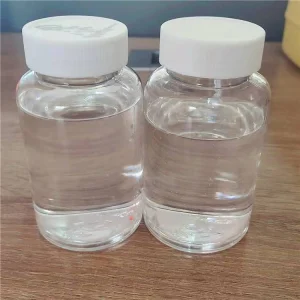
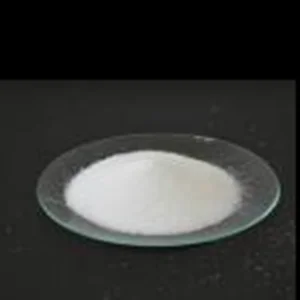
Direct supply line featuring batch-audited inorganic salts, ultra-pure gases, and metal powders produced to rigorous international quality specifications.






Tribasic Calcium Phosphate (chemical formula Ca3(PO4)2, CAS No. 7758-87-4 / 12167-74-7) represents one of the most versatile, thermodynamically stable inorganic mineral salts utilized across modern manufacturing.
Tricalcium phosphate transitions through specific structural phases depending on thermal exposure. The low-temperature β-phase (β-TCP, rhombohedral structure) is thermodynamically stable up to approximately 1120°C. It is universally specified for food-grade anti-caking, excipients, and conventional mineral fortifiers due to its biological stability.
Above 1120°C, an allotropic conversion produces α-TCP (monoclinic system), stable up to 1470°C. α-TCP demonstrates accelerated ionic dissolution rates, rendering it indispensable for bioactive bone cement formulations, self-setting orthopedic matrices, and specialized biomimetic bone grafting composites where bioresorption is required.
Practically insoluble in pure aqueous media at neutral to basic pH (solubility product Ksp ≈ 2.07 × 10⁻³³ at 25°C), TCP functions as an outstanding dry suspension stabilizer and anti-caking barrier. However, in dilute acidic environments (pH < 5.5), TCP dissolves cleanly, releasing bioavailable Ca2+ and orthophosphate PO43- ions.
This pH-dependent ionization behavior enables TCP to act as an internal neutralizer in food products, an enteric tablet diluent in pharmaceutical processing, and an osteoclastic remodeling substrate in mammalian tissue regeneration matrices.
A comprehensive examination of operational applications where precision particle morphology, trace impurity boundaries, and purity grades govern material integration.
Registered as food additive E341(iii) under European Commission norms and FCC codex, TCP is deployed primarily as an ultra-pure anti-caking agent, dry-mix flow conditioning powder, and mineral fortification agent. In hygroscopic powdered formulations (dairy creamers, protein isolate blends, drink mixes, table salt), micro-pulverized TCP forms a high-surface-area hydrophobic coating around individual particles, absorbing atmospheric moisture without clumping.
It acts as a buffer in processed cheese production, stabilizes beverage emulsions, and balances acidity during commercial leavening processes.
In solid dosage form manufacturing conforming to USP, EP, and BP compendial monographs, Tribasic Calcium Phosphate serves as an inorganic binder and direct compression diluent. Due to its brittleness under mechanical stress, TCP undergoes plastic deformation during high-speed rotary tablet compression, generating high mechanical tablet hardness while maintaining rapid disintegration times.
Additionally, its biocompatible nature makes it an active ingredient in chewable calcium antacid tablets, mineral supplements, and pH-buffering drug delivery vectors.
Biphasic Calcium Phosphate (BCP) bioceramics utilize precise stoichiometric combinations of Hydroxyapatite (HA) and β-Tricalcium Phosphate (β-TCP). When implanted into osseous defects, the β-TCP phase provides controlled bioresorption, liberating calcium and phosphate ions that stimulate osteoblastic migration, while HA maintains structural integrity.
TCP is the foundation for injectable bone cements, dental polishing pastes, bio-glass formulations, and remineralizing agents in high-end oral healthcare therapeutics.
In chemical engineering, micronized TCP functions as an inorganic Pickering stabilizer during the suspension polymerization of expandable polystyrene (EPS), SAN, and methyl methacrylate polymers. It prevents the coalescence of organic monomer droplets throughout agitated exothermic polymerization cycles.
In engineering thermoplastics and specialty masterbatches, TCP acts as a white opacifying pigment, an inorganic fire-retardant synergist, and an eco-friendly acid scavenger replacing hazardous lead stabilizers.
Technical ceramics require high-purity tricalcium phosphate for the formulation of translucent bone china, structural porcelain, and technical phosphate glasses. During the thermal vitrification process at 1200°C - 1300°C, TCP flux reactions lower sintering temperatures while enhancing mechanical fracture toughness and optical whiteness.
In metallurgy, powdered TCP acts as a mold-release parting agent, a component of precision investment casting investments, and a metal refining slag modifier.
As feed-grade tricalcium phosphate, the salt provides monogastric livestock, aquaculture species, and poultry with an optimal Ca:P ratio (approximating 2:1) free from fluorine hazards (F < 0.18%). Its high biological availability outstrips crude rock phosphate derivatives.
Additionally, modern horticultural applications utilize micro-granulated TCP as a controlled slow-release phosphorus matrix that resists soil aluminum/iron fixation in low-pH soils.
How state-of-the-art Chinese synthesis operations integrate upstream raw materials, automated continuous processing, and green chemical engineering to provide reliable supply pipelines for multinational buyers.
China commands over 40% of the world’s high-grade sedimentary phosphate rock reserves across Yunnan, Guizhou, Hubei, and Sichuan provinces. Leading Chinese manufacturing clusters capitalize on complete vertical integration, combining upstream elemental yellow phosphorus (P4) thermal furnaces with high-purity thermal-process phosphoric acid (H3PO4) generation.
Unlike third-party re-processors who rely on volatile merchant acid markets, direct Chinese producers operate uninterrupted synthesis cascades. The wet synthesis pathway reacts ultra-refined food/electronic grade phosphoric acid with chemical-grade calcium hydroxide (slaked lime, Ca(OH)2) or calcium carbonate under continuous stoichiometric control, ensuring stable Ca/P molar ratios without lot-to-lot variances.
Modern Chinese TCP facilities employ Distributed Control Systems (DCS) and SCADA networks to supervise every stage of the precipitation, hydrocyclone separation, and drying cycle. Real-time online turbidimeters, pH sensors, and laser diffraction analyzers govern the continuous neutralization vessel:
3 Ca(OH)2 + 2 H3PO4 → Ca3(PO4)2 ↓ + 6 H2O
Through automated flash spray drying and proprietary jet-milling grinding technologies, Chinese plants deliver tailored particle size distributions (PSD)—ranging from standard 200-mesh/325-mesh fine powders to super-micronized D50 ≤ 2.5 μm grades—without mechanical iron contamination.
| Analytical Parameter | Food Grade (FCC / E341iii) | Pharma Grade (USP / EP) | Polymer Suspension Grade | Technical / Ceramic Grade |
|---|---|---|---|---|
| Assay (as Ca content) | 34.0% – 40.0% | 34.0% – 40.0% | ≥ 36.5% | ≥ 35.0% |
| Loss on Ignition (800°C) | ≤ 8.0% | ≤ 8.0% | ≤ 5.0% | ≤ 3.0% |
| Heavy Metals (as Pb) | ≤ 1.0 ppm | ≤ 1.0 ppm | ≤ 10 ppm | ≤ 30 ppm |
| Arsenic (As) | ≤ 1.0 ppm | ≤ 1.0 ppm | ≤ 3 ppm | ≤ 10 ppm |
| Fluoride (F) | ≤ 50 ppm | ≤ 50 ppm | ≤ 100 ppm | ≤ 500 ppm |
| Standard Particle Size | 325 mesh (99% pass) | Custom D50 (5–20 μm) | Superfine D50 ≤ 3.0 μm | 200 mesh (98% pass) |
| Quality Certification Status | ISO 22000 / Kosher / Halal | GMP / USP / EP / CEP | RoHS / REACH Compliant | ISO 9001 Certified |
Technical evaluation metrics and audit protocols for international supply managers procuring Chinese Tribasic Calcium Phosphate.
Regulatory authorities including the US FDA, European Food Safety Authority (EFSA), and WHO have systematically lowered acceptable trace limits for heavy metals. Enterprise buyers must verify that their supplier utilizes thermal-process phosphoric acid, as wet-process agricultural acid contains residual cadmium (Cd) and uranium/thorium radioisotopes.
Every export batch must include validated ICP-MS (Inductively Coupled Plasma Mass Spectrometry) testing verifying Pb < 1 ppm, As < 1 ppm, Cd < 0.5 ppm, and Hg < 0.1 ppm.
Bulk density and particle size distribution (PSD) dictate performance across high-speed packaging lines. For pharmaceutical compression, a narrow granulometric span prevents die segregation and ensures tablet weight uniformity. In food powdered drinks, coarse particles cause gritty mouthfeel, requiring a micro-pulverized 325-mesh or 400-mesh cut.
Qualified Chinese manufacturers provide laser diffraction Malvern Mastersizer data (D10, D50, D90) alongside standard sieve retention data.
Beyond competitive FOB/CIF quotation structures, international supply chain integrity demands exhaustive technical qualification dossiers: GHS-formatted Safety Data Sheets (SDS), Technical Data Sheets (TDS), Lot-specific Certificates of Analysis (COA), ISO 9001/22000, FSSC 22000, Kosher, Halal, Non-GMO declarations, and EU REACH compliance documentation.
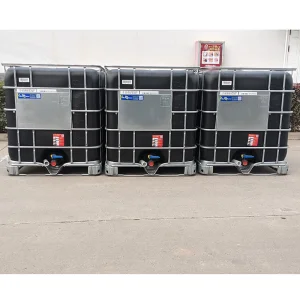
Our direct export protocols integrate third-party pre-shipment inspections (SGS/Bureau Veritas) to guarantee container integrity prior to port departure.
Connect with our chemical engineering team to receive customized product data sheets, mill test certificates, sample evaluation kits, and real-time FOB/CIF pricing for all commercial grades.
Technical and procurement queries answered by industrial inorganic chemical specialists.
Explore complementary technical compounds and performance materials produced under ISO-audited factory standards.