


Engineered to exact physical-chemical thresholds with comprehensive COA verification, UN-rated containment, and complete multi-industry compatibility.





A rigorous examination of powder metallurgy dynamics, inert gas atomization yield mechanisms, and shifting international trade matrices.
Unlike conventional mechanical milling, ultrasonic and inert argon-gas atomization processes produce bulk magnesium powders with perfectly spherical sphericity indices (>0.92) and low internal microporosity.
Global industrial supply chains rely on localized, stable upstream magnesium ingot reduction infrastructure. Pidgeon-process optimizations coupled with green ferrosilicon refining give distinct advantages in continuity.
Magnesium's electropositive character demands specialized micro-encapsulation techniques to prevent exothermic reaction during bulk container transoceanic transit.
Analyzing vertical integration, energy cost differentials, and high-capacity atomization throughput that empower international buyers.
By operating downstream powder fabrication proximal to primary dolomite mining and ferrosilicon reduction hubs in Shanxi and Shaanxi, our facilities bypass double-melting thermodynamic inefficiencies, ensuring ultra-competitive factory-gate costs and massive single-batch capacity.
Every industrial run undergoes real-time laser diffraction size analysis (Malvern Mastersizer), multi-point Inductively Coupled Plasma (ICP-OES) impurity verification (tracking Fe, Si, Cu, Ni, Cl limits), and specialized tapped density quantification prior to bulk packing.
Magnesium metal powders fall under Dangerous Goods Class 4.3 (Substances which in contact with water emit flammable gases). Our direct-rail-to-berth dangerous cargo container corridors at major export terminals minimize handling delays, customs friction, and international transit times.
Comprehensive technical metrics designed to guide procurement directors, metallurgical engineers, and R&D formulators.
| Grade Classification | Typical Morphology | Assay (Active Mg) | Key Impurity Thresholds | Standard Particle Spectrum | Primary Industrial Sector |
|---|---|---|---|---|---|
| Spherical 3D-AM-01 | Gas Atomized Spherical | ≥ 99.80% | Fe < 0.04%, Cl < 0.005% | 15 - 53 μm / 20 - 63 μm | Aerospace Additive Mfg |
| De-S Desulfurization | Coarse Granular / Flake | ≥ 90.0% – 97.0% | Active flux blend | 0.2 mm – 1.6 mm (10-70 Mesh) | Blast Furnace Steelmaking |
| Energetic Pyrotech P-4 | Irregular / Needle-Milled | ≥ 99.20% | H2O < 0.15%, Cu < 0.01% | 45 - 150 μm (100-325 Mesh) | Flares & Energetic Synthesis |
| Chemical Synthetics Grignard | Shavings / Micro-Chips | ≥ 99.90% | Low moisture, minimal oxide skin | 0.5 mm – 3.0 mm controlled | Pharma Intermediates |
| Al-Mg Master Alloy | Pre-Alloyed Spherical | Al:Mg (50:50 / 60:40) | Si < 0.10%, Fe < 0.08% | 38 - 120 μm | Thermal Spray & Metallurgical |
Translating intrinsic high electrochemical potential, rapid combustion enthalpies, and lightweight properties into engineering solutions.
In contemporary oxygen converter steelmaking, bulk magnesium powder injected alongside calcium carbide acts as a deep desulfurizer. It reacts selectively with dissolved sulfur to drive concentrations down to ultra-low thresholds (< 0.001%), reducing slag volume and cycle times.
High-sphericity magnesium alloy powders (such as AZ91D, WE43) are unlocking biocompatible, bioresorbable medical implants and ultra-lightweight structural lattices for space exploration. Their high strength-to-weight ratio offers transformative mass reduction in uncrewed aerial systems.
Pharmaceutical synthesis depends upon reactive magnesium turnings and micro-granules for classic Grignard (R-Mg-X) organometallic reactions. Clean, unoxidized surfaces with minimal transition metal impurities yield predictable initiation kinetics without thermal runaway hazards.
How multinational supply chains are mitigating geopolitical concentration risk and securing guaranteed physical throughput.
European and North American buyers are accelerating Scope 3 emission audits. Production facilities adopting clean-energy electricity, carbon-capture scrubbing during calcination, and closed-loop argon atomization are establishing priority access across defense and commercial contracts.
Following post-2021 market volatility, global procurement officers are shifting from fragile Just-In-Time (JIT) methods toward managed safety stockpiles. Warehousing unpassivated and passivated powders under controlled moisture guarantees continuous blast furnace and production uptime.
Quality departments require end-to-end documentation: full chemical characterization, strict particle distribution curves, and non-destructive testing reports. Complete traceability back to the parent ingot melt protects high-reliability defense and aerospace programs.
Direct technical and operational answers to support engineering trials, compliance verification, and international contract tenders.
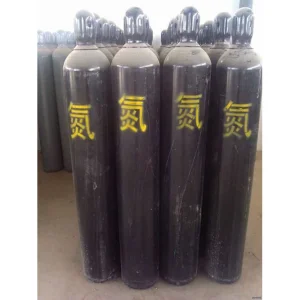
Bulk magnesium powder is packaged in UN-certified steel drums (typically 50 kg or 100 kg net capacity) lined with hermetically sealed heavy-duty polyethylene inner bags. Containers are nitrogen-purged before sealing to keep oxygen and moisture levels well below reaction thresholds, in full accordance with IMDG and IATA regulations.
Yes. By fine-tuning gas nozzle design, atomization pressures, and classifier cut points, we customize particle size distributions across narrow or wide spans (e.g., 20-63μm for additive manufacturing or 100-325 mesh for pyrotechnics). We also supply passivated coatings (stearic, paraffin, or polymer films) to slow combustion or oxidation rates.
Each commercial batch is shipped with a comprehensive Certificate of Analysis (COA) specifying active metallic magnesium content, iron/chloride impurities, sieve fractions, tap density, and moisture content. We also provide compliant 16-section GHS Safety Data Sheets (SDS), technical data sheets (TDS), certificates of origin, and independent inspection reports (SGS/BV) upon request.
For standard desulfurization and pyrotechnic grades, standard MOQs start at 1,000 kg (1 metric ton) with dispatch within 10 to 18 business days. Specialized spherical alloy powder runs or custom-milled particle distributions generally involve minimum test batches of 200 kg to 500 kg, supported by small sample allotments for preliminary line validation.
Complementary specialty chemicals, atomized alloy powders, and electronic gases produced to precise international standards.







