Integrate ultra-consistent chemical raw materials directly from verified continuous-reaction production facilities.
A deep engineering dive into Chromium(III) Nitrate Nonahydrate [CAS No. 7789-02-8 / 13548-38-4], its molecular stability, and stringent threshold metrics for critical applications.
Chromic Nitrate Nonahydrate manifests as dark-violet monoclinic or dark-purple hygroscopic crystals. Synthesized via controlled digestion of analytical-grade chromium hydroxide or high-purity chromium metal with semiconductor-grade nitric acid, our crystallizers yield a uniform lattice that eliminates occluded mother liquor.
Assay: ≥ 98.5% to ≥ 99.5% Ultra-PureHeterogeneous catalyst manufacturers and modern passivation formulators operate under strict contamination caps. We subject raw solution streams to multi-stage ion exchange and ultra-filtration, systematically purging heavy metals like Lead (Pb), Cadmium (Cd), Iron (Fe), and trace Halogens (Chloride, Sulfate).
Fe ≤ 20 ppm | Cl⁻ ≤ 10 ppm | SO₄²⁻ ≤ 50 ppmRecognizing the risks associated with melting point transitions (36-37°C) during oceanic transit through tropical zones, our production lines supply both temperature-conditioned solid crystals and stabilized aqueous solutions (typically 35% to 50% w/w) engineered to eliminate dissolving steps on client production lines.
Solid Granules & Precision Aqueous Concentrates| Parameter / Quality Metric | Industrial Grade Standard | Catalyst Grade (Ultra-Pure) | Chromic Nitrate Solution (50%) |
|---|---|---|---|
| Assay [Cr(NO₃)₃·9H₂O] | ≥ 98.0% | ≥ 99.5% | 50.0% ± 0.5% (as Cr(NO₃)₃) |
| Chromium Content (Cr) | ≥ 12.7% | ≥ 12.95% | ≥ 10.9% |
| Iron (Fe) Contamination | ≤ 50 ppm | ≤ 10 ppm | ≤ 15 ppm |
| Chloride (Cl⁻) Threshold | ≤ 50 ppm | ≤ 5 ppm | ≤ 8 ppm |
| Sulfate (SO₄²⁻) | ≤ 100 ppm | ≤ 20 ppm | ≤ 30 ppm |
| pH (5% aq. solution at 20°C) | 2.0 – 3.0 | 2.2 – 2.8 | 1.5 – 2.5 |
| Water-Insoluble Matter | ≤ 0.01% | ≤ 0.002% | N/A (Clear homogeneous liquid) |
Bridging heavy industry transitions with REACH-compliant, high-reactivity trivalent chromium formulations.
Chromic Nitrate serves as the premium precursor for chromium oxide (Cr₂O₃) catalysts supported on alumina or silica. Used extensively in catalytic dehydrogenation of light alkanes (isobutane, propane) into polymer-grade olefins, our precursor guarantees even pore dispersion, active metal distribution, and minimized catalyst deactivation rates.
Global environmental mandates (RoHS, REACH) have banned toxic hexavalent chromium (Cr⁶⁺). YANXA Chromic Nitrate acts as the central active agent in trivalent chromium passivation formulations for zinc, zinc-nickel, and aluminum alloys, delivering over 720 hours of neutral salt spray (ASTM B117) resistance without carcinogenic risks.
Modern printing, wool dyeing, and leather finishing lines deploy our solution as a clean trivalent chromium cross-linking mordant. It generates insoluble color lakes directly within fiber bundles, delivering washing, light, and friction fastness without generating heavy sludge waste streams.
Upon calcination above 700°C, Chromic Nitrate breaks down into sub-micron Cr₂O₃ pigment crystallites, conferring exceptional thermal and chemical resistance to ceramic frits, architectural tiles, heat-resistant coatings, and high-performance optical glass coloration matrices.
How automation, real-time batch monitoring, and strategic vertical integration shield our international partners from supply disruptions.
Our production nodes utilize Distributed Control System (DCS) architectures to continuously calibrate crystallization temperatures, cooling ramp speeds, and acid evaporation rates. This eliminates human error, suppresses fine agglomeration, and stabilizes the hydration number (9H₂O) down to narrow tolerances.
By securing direct upstream links to raw chromium ore refineries and managing on-site nitric acid generation loops, YANXA isolates its production schedule from commodity price spikes and regional raw-material shortages, guaranteeing constant bulk output year-round.
Our plant operates within national chemical clusters meeting Class-A environmental performance benchmarks. Closed-loop acid gas scrubbing systems recapture NOₓ emissions, recycling them into high-efficiency scrubbing systems, ensuring sustainable continuity free from forced regulatory shutdowns.
Overcoming the complexities of Class 5.1 Oxidizing Agents and regulated transit with rigorous engineering documentation and global compliance.
Classified under UN 2720, Class 5.1 (Oxidizing Substances), Packing Group III, Chromic Nitrate requires strict anti-moisture, puncture-proof barrier vessels. We supply UN-certified composite fiber drums with hermetically sealed LDPE liners, heavy-duty steel drums, or 1000L UV-stabilized IBCs tailored to long-haul oceanic shipping.
Every export shipment is accompanied by a batch Certificate of Analysis (COA) cross-verified through ICP-OES and titration analytics. We furnish 16-section Safety Data Sheets (SDS) authored in accordance with EU REACH, US TSCA, OSHA HazCom, and regional languages to smooth port clearance.
Chromic Nitrate Nonahydrate features a low melting threshold (36-37°C), making it prone to deliquescence in tropical shipping lanes. YANXA coordinates refrigerated reefer containers or specialized thermal insulation blankets to ensure zero phase transformation from terminal departure to final receiving docks.
Anticipating the technological demands of emerging clean energy systems, electronics packaging, and ultra-durable nanotechnology coatings.
As solid-state battery electrolytes and high-temperature cathode architectures evolve, our R&D team is developing electronic-grade, sub-micron Chromic Nitrate crystalline derivatives designed for homogeneous sol-gel doping in lithium-ion and sodium-ion ionic conductive scaffolds.
Developing ultra-low halogen volatile organic chromium complexes derived from anhydrous chromic nitrate precursors. These target precision Atomic Layer Deposition (ALD) for extreme ultraviolet (EUV) optical pellicles and barrier layers in advanced node semiconductor fabrication.
Transitioning toward low-carbon synthesis routes powered by utility-scale solar thermal arrays and localized hydrogen fuel loops. Our 2026-2030 roadmap targets an audited 35% reduction in embodied cradle-to-gate carbon intensity per ton of manufactured nitrate salt.
Direct technical clarity for procurement executives, process engineers, and regulatory officers.
Catalyst-grade chromic nitrate maintains ultra-low levels of catalyst poisons—specifically Chloride (Cl⁻ < 5-10 ppm), Sulfate (SO₄²⁻ < 20 ppm), and total alkali/heavy metals (< 20 ppm). These thresholds prevent premature active site poisoning and preserve pore volume during alumina/silica calcination.
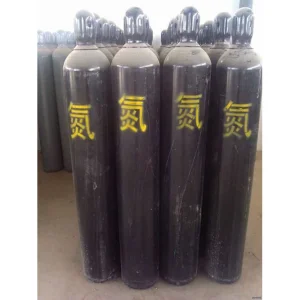
Because Chromic Nitrate Nonahydrate melts at 36-37°C and absorbs ambient atmospheric moisture quickly, we deploy triple-barrier packaging featuring multi-ply nitrogen-purged hermetic liners, desiccant blankets, and climate-controlled reefer containers upon request for trans-equatorial maritime routes.
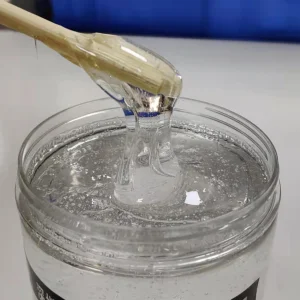
Yes. Many large-scale surface finishing and catalyst plants prefer our standardized 35% to 50% aqueous solutions. Sourcing direct solution eliminates localized heat-of-solution challenges, minimizes airborne dust exposure in handling facilities, and simplifies automated plant metering.
Every commercial lot is issued a formal Certificate of Analysis (COA) specifying real batch test data (not nominal ranges). We provide GHS-compliant 16-section Safety Data Sheets, TDS, Dangerous Goods declarations (IMDG/IATA), and arrange third-party pre-shipment inspections (e.g., SGS, Intertek) upon buyer request.
Discover our complementary production streams across specialty gases, synthetic liquid rubbers, and inorganic compounds.