



Direct manufacturer supply chain covering certified ultra-pure noble gases, specialized chemical precursors, and high-performance engineering compounds with verified batch traceability.
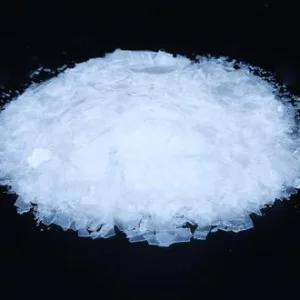






Freon-14, chemically designated as Carbon Tetrafluoride (CF4) and refrigerant R-14 (CAS No. 75-73-0), stands as a pillar chemical across sub-10nm semiconductor fabrication, deep-cryogenic thermal stabilization, and plasma-mediated surface engineering.
Within semiconductor manufacturing, Freon-14 provides reactive fluorine radicals upon RF plasma dissociation. It exhibits distinct selectivity when etching silicon dioxide (SiO2), silicon nitride (Si3N4), and refractory silicides. By dynamically altering the volumetric gas blend ratio with Oxygen (O2) or Argon (Ar), fabs achieve vertical sidewall profiles essential for 3D NAND and FinFET architectures.
Classified under ASHRAE as Refrigerant R-14, Carbon Tetrafluoride operates as an effective low-temperature refrigerant for cascaded cryogenic systems. Its phase properties enable steady thermodynamic heat absorption between -120 °C and -150 °C, providing critical thermal management for medical cold storage, aerospace sensor calibration, and space simulation testing shrouds.
In Chemical Vapor Deposition (CVD) equipment lines, residual dielectric coatings accumulate along reactor quartz walls. Remote plasma chambers energized with CF4 gas matrices break down stubborn silicon films into volatile silicon tetrafluoride (SiF4) gas, which is extracted safely without inducing physical chamber wall abrasions or compromising micro-vacuum seal integrity.
The global commercial distribution of Freon-14 has migrated from conventional refrigerant supply channels to specialized, highly regulated electronic chemicals networks. Navigating supply constraints requires deep insight into geopolitical upstream feedstocks, multi-ton synthesis capabilities, and stringent analytical auditing.
The core baseline synthesis of CF4 relies entirely on anhydrous hydrogen fluoride (AHF) converted from acid-grade fluorspar (CaF2). With key processing clusters situated throughout China, direct procurement relationships with integrated domestic manufacturers mitigate raw material escalations, ensuring uninterrupted production schedules throughout fluctuating global mineral output cycles.
Crude carbon tetrafluoride syntheses inevitably yield micro-contaminants including carbon monoxide (CO), carbon dioxide (CO2), trace moisture, and hexafluoroethane (C2F6). Elevating crude 99% CF4 to 5N (99.999%) and 5.5N (99.9995%) requires cryogenic low-temperature fractional distillation towers paired with proprietary molecular sieve beds capable of scrubbing moisture below 0.5 ppm.
Due to the hyper-concentration of high-density wafer fabs throughout Taiwan, South Korea, Japan, Europe, and the United States, procurement directors increasingly mandate multi-regional redundancy. Sourcing directly from verified Chinese industrial gas hubs under long-term supply framework contracts circumvents unexpected supply bottlenecks caused by third-party broker markups.
| Analytical Parameter | Technical Refrigerant Grade (R-14) | Electronic Grade 4N (99.99%) | Semiconductor VLSI Grade 5N (99.999%) | Analytical Instrumentation Method |
|---|---|---|---|---|
| Assay Purity (CF4 Minimum) | ≥ 99.0% | ≥ 99.99% | ≥ 99.999% | Gas Chromatography (GC - TCD / FID) |
| Moisture (H2O Content) | ≤ 15.0 ppmv | ≤ 2.0 ppmv | ≤ 0.5 ppmv | Cavity Ring-Down Spectroscopy (CRDS) |
| Oxygen + Argon (O2 + Ar) | ≤ 50.0 ppmv | ≤ 5.0 ppmv | ≤ 1.0 ppmv | Trace Gas Chromatography with PDD |
| Nitrogen (N2) | ≤ 150.0 ppmv | ≤ 15.0 ppmv | ≤ 2.0 ppmv | Helium Ionization Detection (HID-GC) |
| Carbon Dioxide (CO2) | ≤ 20.0 ppmv | ≤ 2.0 ppmv | ≤ 0.5 ppmv | Non-Dispersive Infrared Spectroscopy (NDIR) |
| Other Halocarbons (C2F6, CHF3) | ≤ 200.0 ppmv | ≤ 10.0 ppmv | ≤ 1.0 ppmv | GC-MS Trace Halocarbon Profile |
| Acidity (as HF) | ≤ 1.0 ppmw | ≤ 0.1 ppmw | ≤ 0.05 ppmw | Ion Chromatography (IC) |
Freon-14 is regulated under international dangerous goods protocols as a non-flammable, non-toxic compressed gas (UN 1982, Class 2.2). Flawless international shipping requires strict adherence to pressurized cylinder regulations, environmental F-gas registries, and port customs procedures.
Shipments are configured in seamless manganese or chromium-molybdenum steel cylinders certified under DOT-3AA (North America), ISO 9809-1/TPED (Europe), and GB5099 standards. Cylinders undergo hydrostatic proof testing at 250 bar to ensure total mechanical containment.
Every commercial delivery includes lot-specific Certificates of Analysis (COA) cross-verified against pre-shipment tests. We provide fully compliant 16-section Safety Data Sheets (SDS) conforming to EU REACH, OSHA HazCom, and Korea K-REACH standards in destination languages.
Gas containment integrity is maintained with certified valves including CGA 580 / CGA 350 / DIN 477 No. 6 configurations. Valving features ultra-low leak-rate metal diaphragm seals to safeguard against microscopic atmospheric intrusion during international transit.
For large-scale semiconductor facilities and regional gas packagers, Freon-14 is delivered in high-capacity 20ft T75 cryogenic ISO containers and ton-tank multi-element gas containers (MEGCs), reducing tare weight ratios and port clearance cycles.
Freon-14 performance is dictated by plasma dynamics, excitation frequency, and co-reactant gas balances. Below are its primary operating profiles across major industrial sectors.
In planar and 3D silicon fabrication, CF4 operates as the active source for fluorine free-radicals ($CF_4 \rightarrow CF_3^+ + F^* + e^-$). Controlled addition of H2 or CH4 decreases atomic fluorine relative to CFx radicals, facilitating selective directional etching of silicon dioxide over silicon substrates with minimal trench distortion.
High-density interconnect (HDI) and multilayer aerospace flex-rigid circuit boards develop resin smear within laser-drilled through-holes. Atmospheric and low-pressure CF4/O2 gas plasma volatilizes stubborn epoxy and polyimide residues, promoting void-free, highly conductive copper metallization via electroplating.
Before structural adhesives, biomedical coatings, or high-vacuum sealants are applied to fluoropolymers, elastomer membranes undergo low-temperature CF4/Argon plasma bombardment. This process selectively modifies surface crosslink densities, increasing wettability and tensile shear adhesion without altering bulk mechanical elasticity.
With Carbon Tetrafluoride carrying an elevated Global Warming Potential (GWP 7,380) and atmospheric longevity exceeding 50,000 years, manufacturers face rising international regulatory scrutiny under the Kigali Amendment to the Montreal Protocol. Our roadmap prioritizes green synthesis, point-of-use capture, and closed-loop recycling architectures.
Consistently achieving 5N5 (99.9995%) purity across continuous-run distillation columns, removing trace halocarbons and fluorinated ethers that create microscopic etch defects at sub-2nm nodes.
Collaborating with tier-1 fab operators to deploy integrated catalytic plasma scrubbers, achieving > 99% CF4 thermal cracking efficiency before exhaust hits municipal treatment ducts.
Piloting cryogenic exhaust recuperation systems to liquefy, reclaim, and re-fractionate unspent CF4 from high-volume wafer etching exhaust streams, closing the circular supply chain loop.
Investing in syntheses of unsaturated fluorocarbons and alternative fluorinated etchants that balance anisotropic etch selectivity with zero Ozone Depletion Potential (ODP) and ultra-low atmospheric residency.
Direct, auditable answers to the most common inquiries from industrial gas distributors, cleanroom procurement officers, and international supply chain directors.
Direct procurement channels for spherical atomized alloy powders, reactive polymers, specialty noble gases, and inorganic chemical additives produced under strict technical auditing.







