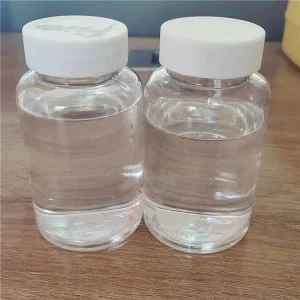
Explore initial technical catalog selections directly engineered for cross-industry elastomeric resilience, extreme thermal stability, and vacuum-tight encapsulation.



Analyzing molecular weight control, diene termonomer selection (ENB vs DCPD), and non-migrating plasticization mechanisms across high-stress environments.
Liquid Ethylene Propylene Diene Terpolymer (Liquid EPDM) represents a synthetic breakthrough in low molecular weight chemistry (typically Mn 2,000 to 12,000 g/mol). Utilizing a fully saturated methylene backbone accompanied by controlled unsaturated pendant non-conjugated diene sites, the material displays unprecedented stability against ultraviolet photon breakdown and ozone degradation (O3 scission resistance), maintaining physical integrity far beyond conventional polybutadiene or polyisoprene systems.
Unlike mineral oil or paraffinic process oils that suffer from phase separation, plasticizer extraction, and volatilization over thermal cycling, liquid EPDM co-vulcanizes directly into solid matrix rubber (EPDM, butyl, natural rubber) via peroxide or sulfur bridge cures. The presence of 5-ethylidene-2-norbornene (ENB) or dicyclopentadiene (DCPD) functional centers enables precise radical incorporation, mitigating VOC off-gassing while eliminating bleed-out in automotive door seals, fluid hoses, and HVAC membranes.
Due to its completely non-polar saturated polyolefin composition, Liquid EPDM exhibits a negligible dielectric dissipation factor and exceptional volume resistivity (>10^16 Ω·cm). These characteristics make it the premier elastomeric fluid base for medium-to-ultra-high-voltage cable splice potting, switchgear dielectric potting joints, EV powertrain silicone-free gap fillers, and moisture-impermeable encapsulation resins operating under severe thermal environments (-50°C to +160°C).
| Polymer Grade Class | Kinematic Viscosity (mPa·s @ 60°C) | Ethylene Content (wt%) | Diene Termonomer Type / Level | Tg Glass Transition (°C) | Primary Industrial Utility |
|---|---|---|---|---|---|
| LEPDM-LV (Low Viscosity) | 5,000 – 15,000 | 48 – 52% | ENB / 4.5% Moderate | -62°C | Cold-Pour Waterproofing & Potting |
| LEPDM-MV (Medium Viscosity) | 25,000 – 45,000 | 53 – 57% | ENB / 8.0% Fast Cure | -56°C | EPDM Extrusion Reactive Modifier |
| LEPDM-HV (High Viscosity) | 60,000 – 120,000 | 60 – 65% | DCPD / Low Gel Matrix | -48°C | Heavy-Duty Roof Seams & Lubricant Viscosity Mod |
| LEPDM-FT (Flame Retardant Base) | 18,000 – 30,000 | 50 – 54% | Functionalized / High ATH Load | -58°C | EV Battery Pack Fire Barrier Seals |
Deployment benchmarks configured across demanding geographic zones, infrastructure types, and microclimatic stresses.
Nordic & North American Roofing Systems: Traditional solvent coatings crack under thermal shock cycling. Liquid EPDM provides a 100% solids, cold-applied single-component seamless barrier displaying elongation past 450% at -40°C, bridging expansion joints on metal roofs, bridge parapets, and concrete foundation cold joints.
Middle East & North Africa Utility PV: Extreme UV indices exceeding 11+ and sandstorm abrasion erode ordinary polyurethanes within 3 years. Liquid EPDM elastomer formulations demonstrate zero chalking, yellowing, or micro-fissuring over 5,000 continuous hours of ASTM G154 accelerated weathering testing.
Central European OEM Assembly Lines: As vehicle light-weighting accelerates, dynamic sealing tolerances tighten. High-flow liquid EPDM replaces plasticizing oils, co-curing into dense peroxide profiles to secure Shore A 30–65 hardness profiles without windshield hazing or sulfur blooming.
Offshore Wind Farms (North Sea & East China Sea): Constant hydrostatic pressure and saline exposure accelerate dielectric breakdown in standard mastic tapes. Liquid EPDM thixotropic potting gels prevent water treeing and guarantee long-term partial discharge suppression in 220kV–500kV subsea joint closures.
Direct from Chinese manufacturing plants: Upstream hydrocarbon integration, continuous polymerization, and strategic price stability mechanisms.
Wholesale prices for liquid EPDM fluctuate between $3,850 and $5,600 USD per Metric Ton (FOB Qingdao / Shanghai), driven primarily by raw monomer streams (Ethylene and Propylene spot indexes), Diene catalyst efficiencies (single-site metallocene vs Ziegler-Natta), and specific batch molecular polydispersity indexing (PDI). Contract buyers benefit from direct volume rebates, ISO Tank delivery discounts, and quarterly hedged feedstock cost-locking arrangements.
Our collaborative production bases reside within national-level petrochemical parks featuring pipeline-connected ethylene crackers and propylene fractionators. By sourcing monomers over closed loops without inter-provincial tank transport, feedstock costs remain buffered from volatile marine shipping spot-markets, transferring a continuous 12-18% cost advantage directly to wholesale buyers.
Continuous stirred-tank reactor (CSTR) lines equipped with specialized constrained-geometry metallocene catalysts (CGC) synthesize narrow molecular weight distribution profiles (PDI < 2.2). This eliminates ultra-low molecular volatiles that lead to interior automotive odor while mitigating excessive high-molecular-weight tails that undermine pumpability at room temperature.
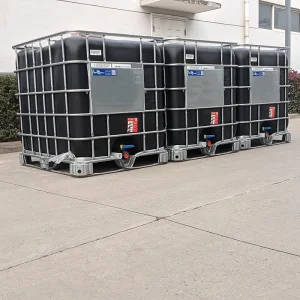
From 200L UN-rated anti-static steel drums with nitrogen headspace blanketing to 1,000L composite IBC containers and 24,000L steam-heated ISO Tanks, our liquid packaging lines ensure oxidation-free logistics. Heated decanting manifolds are available upon request to assist high-latitude cold-climate unloading at destination ports worldwide.
Tracking the evolution from conventional liquid polyolefins to functional silane-modified and maleic anhydride-grafted liquid EPDM polymers.
Integration of alkoxy-silane end-capping on liquid EPDM chains enables hybrid cure mechanisms: primary ultraviolet (UV) or room-temperature vulcanization (RTV) supplemented by secondary ambient moisture cures. This eliminates the necessity of heated autoclaves, driving immediate cost savings in architectural curtain-wall perimeter sealing.
Under ESG frameworks and EU circular economy directives, roadmap R&D incorporates bio-ethylene derived from sugarcane ethanol, yielding bio-content liquid EPDM variations reaching up to 65% renewable carbon index without compromising heat resistance, oxidative threshold limits, or vulcanization kinetics.
Next-generation electric vehicle pouch and cylindrical cell modules demand zero-siloxane gap fillers to circumvent contact terminal oxidation. High-loading alumina-filled (up to 88% w/w) functional liquid EPDM formulations provide thermal conductivities >3.5 W/m·K while delivering absolute low-temperature elasticity.
Ensuring complete import compliance across North America, Europe, Asia-Pacific, and Latin America through rigorous third-party auditing.
Full registration certificates with complete dossier clearance for imported tonnage bands (>1,000 MT/annum). Confirmed SVHC-free (Substances of Very High Concern) across all monomeric residuals, aromatic polycyclic compounds, and volatile phthalates.
All component chemicals exist on the active TSCA inventory list. Specialized grades comply with FDA 21 CFR 177.2600 for repeated food-contact elastomeric gaskets, brewing dispensing equipment, and potable water NSF/ANSI Standard 61 certification pipelines.
Every individual container is tied to a batch-specific Certificate of Analysis generated via high-temperature Gel Permeation Chromatography (GPC), Fourier Transform Infrared Spectroscopy (FTIR), and Karl Fischer moisture titration (<0.03 wt% guaranteed).
Liquid EPDM polymers carry stable flash points >260°C and non-corrosive chemical profiles. Classified as non-regulated general freight under IMDG, DOT, and IATA codes, significantly slashing demurrage exposure and lowering international maritime shipping insurance fees.
Transparent engineering answers addressing formulation compatibility, vulcanization kinetic control, sample testing, and global contract terms.
Comprehensive supply capabilities bridging liquid reactive polymers, gas-atomized functional alloys, and fine inorganic salts.