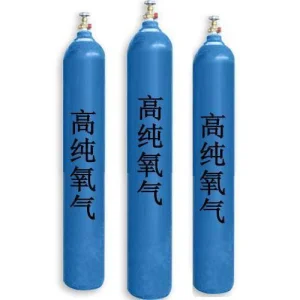
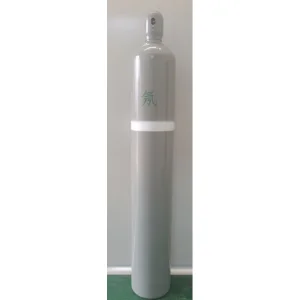
Verified export formulations, specialized high-purity gases, advanced metal powders, and polymer additives supported by full Certificate of Analysis (COA) and global logistics compliance.
Understanding chemical curing mechanisms, cross-linking kinetics, mechanical endurance parameters, and tear resistance benchmarks required for high-yield production cycles.
Liquid silicone formulations for mold reproduction divide fundamentally into two catalyst chemistries: Addition-Cure (Platinum-Catalyzed) and Condensation-Cure (Tin-Catalyzed).
Dynamic fluid rheology dictates capillary penetration into micro-undercuts and master model textures, eliminating surface micro-voids prior to gelation.
Repetitive industrial casting with aggressive chemical mediums (polyurethanes, epoxies, low-melt metals, unsaturated polyesters) demands optimal polymer network integrity.
| Grade Series | Hardness (Shore A) | Mix Ratio (A:B) | Viscosity (mPa·s) | Pot Life (25°C) | Cure Time (25°C) | Tear Strength (kN/m) | Shrinkage (%) |
|---|---|---|---|---|---|---|---|
| LSR-MD10A (Ultra-Soft Addition) | 10 ± 2 | 1:1 or 10:1 | 18,000 | 45 - 60 min | 4 - 6 hrs | ≥ 22 | ≤ 0.08% |
| LSR-MD25A (Precision Engineering) | 25 ± 2 | 1:1 | 24,000 | 40 - 50 min | 3 - 5 hrs | ≥ 30 | ≤ 0.05% |
| LSR-MD40A (Rigid Structural) | 40 ± 2 | 1:1 | 38,000 | 30 - 45 min | 4 - 5 hrs | ≥ 34 | ≤ 0.05% |
| RTV-TC20C (Industrial Condensation) | 20 ± 2 | 100:2 to 100:3 | 22,000 | 30 - 45 min | 6 - 8 hrs | ≥ 25 | ≤ 0.25% |
| RTV-HT300 (Heat-Resistant Alloy Casting) | 35 ± 2 | 100:2 | 30,000 | 30 - 40 min | 8 - 12 hrs | ≥ 28 | ≤ 0.20% |
Strategic vertical integration from upstream silicon metal smelting and organosilicon monomers (DMC, D4) to specialized vacuum compounders and automated drum packaging.
China accounts for over 70% of global basic silicon metal refining and siloxane monomer synthesis capacity. By sourcing direct from root manufacturing clusters in Jiangsu, Zhejiang, and Shandong, international buyers bypass secondary distributor markups and secure immediate price stability against feedstock volatility.
Modern high-capacity facilities employ continuous kneader lines, vacuum-sealed static compounders, and multi-stage planetary dispersers. This mechanized compounding process guarantees that batch-to-batch variation in viscosity, specific gravity, and catalyst dispersion remains within an ultra-tight ±2% tolerance window.
Off-the-shelf elastomers do not fit every production reality. Our partnered factory laboratories support comprehensive molecular tailoring: modifying pot life from 10 minutes (for automated meter-mix dispensing) to 3 hours (for monumental mold casting), adding anti-static modifiers, adjusting translucency, or formulating flame-retardant UL 94 V-0 silicones.
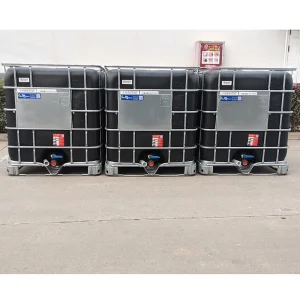
From pilot evaluation trial kits (1 kg + 1 kg, 5 kg + 5 kg pails) to full container loads (FCL) packaged in 20 kg metal pails, 200 kg airtight steel drums, and 1,000 kg IBC containers with nitrogen blanketing to prevent moisture ingestion and extend storage stability to 12+ months.
Supplying regulated industrial markets in North America, the European Union, Japan, and the Asia-Pacific with verifiable safety dossiers, technical declarations, and toxicological certifications.
Our liquid silicone systems undergo rigorous independent SVHC (Substances of Very High Concern) screening under EU Regulation (EC) No 1907/2006. Cyclosiloxane impurities (D4, D5, D6) are monitored and strictly controlled below 0.1% w/w thresholds to ensure seamless clearance across European borders without restricted chemical exposure liability.
For mold applications intended for culinary, confectionery (chocolate, candy, fondant), and skin-contact prosthetics, we manufacture certified food-contact compliant addition-cure grades. Formulations undergo complete extraction testing in certified labs demonstrating non-migration of harmful plasticizers, phthalates, or heavy metals.
Non-hazardous classification documentation enables substantial freight savings. We issue localized, GHS-compliant 16-section Safety Data Sheets (SDS) in English, German, French, Spanish, and Japanese, accompanied by official Maritime Transport Identification Certificates for Non-Dangerous Goods to guarantee smooth port customs clearance.
Deploying specialty liquid silicone matrices across demanding sector applications requiring exact micro-geometry replication and long tooling service life.
Utilized in vacuum casting chambers to replicate polyurethane (PU) functional prototypes of automotive dashboard housings, optical lens mockups, and intake manifold assemblies directly from SLA/SLS master patterns, maintaining tolerances within ±0.1 mm over 25+ cycles.
Formulated high-tear condensation and addition systems withstand alkaline concrete, GFRC, and gypsum slurry degradation. Molds accurately reproduce natural wood grain, quarried slate, and complex masonry textures for hundreds of sequential pours without surface chalking.
Biocompatible platinum polymers formulated to meet ISO 10993 cytotoxicity and sensitization parameters. Widely utilized for casting soft anatomical models for surgical pre-planning, orthotic linings, respiratory mask gaskets, and custom dermatological prostheses.
Specially stabilized high-temperature silicone rubber systems that withstand recurring thermal shocks up to 300°C–350°C. Perfect for spin-casting zinc, pewter, lead, and tin jewelry, historical miniatures, fishing lures, and decorative hardware components.
The global liquid silicone moldmaking market is evolving rapidly from traditional handicraft reproduction into advanced additive manufacturing hybrids and automated tooling.
Stereolithography (SLA) and Digital Light Processing (DLP) 3D printers often employ UV-curable resins containing free sulfur or amine photoinitiators that cause severe cure inhibition on platinum silicone interfaces. Next-generation liquid silicone formulations integrate barrier-scavenging additives that cure completely against photopolymer prints without requiring specialized barrier sprays or baking steps.
Enterprise foundries are abandoning manual two-part batch weighing and planetary vacuum mixers. Industrial supply chains now demand optimized 1:1 dynamic viscosities specifically designed for pneumatic high-pressure meter-mix dispensing systems, allowing continuous mold filling, bubble-free automated injection, and dramatic cycle time reduction from hours to minutes.
Global environmental guidelines are accelerating the transition away from tin catalysts toward heavy-metal-free addition systems and ultra-low cyclic organosilicon polymers. Emerging technologies focus on recyclable mold scrap depolymerization, allowing discarded silicone tooling to be chemically recycled back into cyclic dimethylsiloxane feedstocks, closing the circular manufacturing loop.
Detailed technical answers addressing cure inhibition, demolding longevity, vacuum preparation protocols, shelf-life management, and volume factory quotations.
Addition-cure (platinum) silicones vulcanize via hydrosilylation without producing volatile reaction byproducts, yielding extraordinary dimensional stability with negligible linear shrinkage (< 0.1%). They have virtually indefinite shelf lives once cured and are safe for food and skin contact. Condensation-cure (tin) silicones cure by reacting with ambient moisture and release an alcohol byproduct, leading to slight shrinkage (0.2% - 0.4%) over time. However, tin systems are cost-effective, immune to surface cure inhibition, and offer high initial flexibility for aggressive polyurethane resin casting.
Platinum cure inhibition happens when catalyst poisons—such as sulfur, organic amines, organotin compounds, or residual uncured UV monomers—contact the liquid silicone, leaving an uncured, sticky interface. To avoid this: 1) Thoroughly wash SLA/DLP 3D prints in fresh isopropyl alcohol (IPA); 2) Post-cure prints completely under 405nm UV light followed by a dry thermal bake at 60°C–80°C for 2–4 hours; 3) Apply a sealed barrier coat (such as clear acrylic lacquer or PVA mold release) or select our inhibition-resistant silicone grades.
For low-viscosity systems (< 20,000 mPa·s) poured in thin, high-angle streams, small bubbles can dissipate naturally. However, for critical industrial tooling, high-detail texture duplication, and high-durometer polymers, vacuum degassing at 28–29 in. Hg (approx. -0.1 MPa) for 3–5 minutes is strongly recommended. The liquid compound will rise to 3–4 times its liquid volume before collapsing, after which it should be held for 1–2 minutes to eliminate microscopic entrained air before casting.
Mold life depends directly on the casting matrix. Non-corrosive materials like gypsum, plaster, wax, and low-temperature candle bases yield 200 to 500+ demoldings. In contrast, exothermic resin systems (polyurethanes and epoxy resins) chemically extract silicone plasticizers over repeated runs, hardening the mold. Using high-tear addition silicones combined with proper silicone-safe sacrificial release agents delivers 30 to 70 successful pulls in rapid-cast polyurethane production.
Every production batch shipped from our partner facilities includes a lot-specific Certificate of Analysis (COA) documenting viscosity (Part A & Part B), mixed viscosity, specific gravity, Shore A hardness, pot life, demold time, and tensile/tear strength. We also maintain updated GHS-compliant 16-section SDS, REACH-SVHC compliance dossiers, RoHS certification, and non-dangerous goods declaration sheets for frictionless international customs entry.
Standard inventory formulations in 20 kg pails or 200 kg drums carry an MOQ of 200 kg (or sample trial orders of 20 kg–40 kg for qualifying manufacturing accounts). Custom-tailored formulations (special durometers, adjusted pot life/gel time, specific colors, or thixotropic modifiers) require a 1,000 kg minimum run. Standard factory lead time for full pallet or FCL orders ranges from 7 to 14 business days from formulation confirmation.
Explore our complete portfolio of specialty materials, liquid rubbers, and high-purity process gases designed for high-precision manufacturing and industrial synthesis.