



Certified high-purity inorganic dielectric gases, electronic grade chemical agents, and specialty alloy feedstocks supplied directly to global manufacturing infrastructures.




A comprehensive engineering assessment of the octahedral fluorinated gas that maintains modern power transmission reliability, ultra-large-scale semiconductor wafer manufacturing, and aerospace metallurgy.
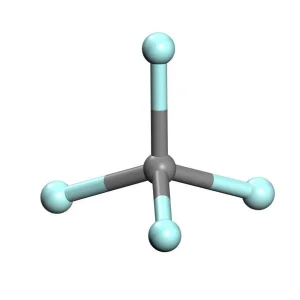
Sulfur Hexafluoride (Chemical Formula: SF6, CAS Registry Number: 2551-62-4) represents one of the most chemically inert, thermally stable, and electro-negative gaseous compounds synthesized by modern inorganic industrial chemistry. Formed by a central sulfur atom surrounded symmetrically by six fluorine atoms in an octahedral coordination geometry (Oh symmetry), SF6 exhibits a molecular weight of 146.06 g/mol, rendering it approximately five times heavier than ambient air. This molecular conformation shields the core sulfur valence shell, creating an exceptionally low chemical reactivity profile that resists attack by acids, bases, boiling water, and aggressive reducing agents at temperatures well exceeding 500°C.
In wholesale and commercial manufacturing operations, obtaining accurate wholesale sulfur hexafluoride uses quotes requires an exhaustive understanding of purity grades, cylinder pressure mechanics, and destination-country environmental mandates. Modern electrical transmission systems, medium-voltage distribution infrastructure, and silicon-wafer dry etch processes cannot accept variable gas compositions. Even parts-per-million (ppm) fractions of moisture (H2O), air, or hydrolyzable fluorides can compromise breakdown voltage gradients, accelerate contact erosion, or induce wafer defects during sub-10nm semiconductor fabrication.
| Critical Parameter | IEC 60376 Standard Grade | Electronic Grade (5N / 99.999%) | Metallurgical / Tracer Grade |
|---|---|---|---|
| Assay Purity (SF6 Content) | ≥ 99.70% to 99.90% | ≥ 99.999% (5N) | ≥ 99.50% |
| Moisture Content (H2O) | ≤ 15 ppm (v/v) | ≤ 1.0 - 2.0 ppm (v/v) | ≤ 30 ppm (v/v) |
| Air (N2 + O2) Contamination | ≤ 500 ppm (v/v) | ≤ 5.0 ppm (v/v) | ≤ 1500 ppm (v/v) |
| Carbon Tetrafluoride (CF4) | ≤ 500 ppm (v/v) | ≤ 2.0 ppm (v/v) | ≤ 800 ppm (v/v) |
| Acidity (Calculated as HF) | ≤ 0.3 ppm (w/w) | ≤ 0.1 ppm (w/w) | ≤ 1.0 ppm (w/w) |
| Hydrolyzable Fluorides | ≤ 1.0 ppm (w/w) | ≤ 0.05 ppm (w/w) | ≤ 2.0 ppm (w/w) |
| Mineral Oil Residues | ≤ 4.0 ppm (w/w) | Non-detectable (<0.1 ppm) | ≤ 10 ppm (w/w) |
From mega-voltage electrical switchyards to nanometer semiconductor etching, explore the critical performance parameters dictating SF6 adoption across strategic sectors.
Over 80% of global sulfur hexafluoride production is utilized within medium- (MV), high- (HV), and extra-high-voltage (EHV) electrical switchgear. Operating at pressures between 3.5 and 6.5 bar, SF6 captures free secondary electrons during arc formation, rapidly extinguishing destructive electric arcs within milliseconds and preventing breaker re-ignition. Its exceptional dielectric strength reduces switchyard footprint by over 85% compared to air-insulated substations (AIS).
In deep reactive-ion etching (DRIE) and Bosch processes, electronic-grade SF6 provides high concentrations of atomic fluorine radicals (F*) under RF plasma excitation. This enables high-aspect-ratio vertical etching of silicon substrates, tungsten silicide plugs, and micro-electromechanical systems (MEMS). Low contamination tolerances demand 5N (99.999%) purity to prevent micromasking and unintended capacitive variations.
Molten magnesium ignites spontaneously in contact with atmospheric oxygen. Introducing a protective cover-gas blend typically containing 0.1% to 0.5% SF6 mixed with dry air or carbon dioxide (CO2) establishes a robust, self-healing liquid-gas protective film of magnesium fluoride (MgF2) and magnesium oxide (MgO). This chemically impassive barrier prevents catastrophic oxidation, melt-loss, and hazardous foundry burn-outs.
Ultra-pure biomedical grade SF6 is injected into the posterior ocular cavity during pneumatic retinopexy to treat rhegmatogenous retinal detachments and macular holes. Because SF6 has low water solubility, the gas bubble slowly expands over several days, providing sustained physical surface tension against the neurosensory retina to ensure anatomical reattachment before bio-absorption across 10 to 14 days.
Electrostatic Van de Graaff generators, linear accelerators (Linacs), and synchrotron beamlines utilize pressurized SF6 insulating atmospheres. The gas prevents high-voltage spark-overs between high-potential acceleration terminals and containment vessels, allowing voltage gradients exceeding hundreds of kilovolts per meter within compact, non-flammable chamber housings.
Due to non-toxicity, virtual zero natural background concentration, and high sensitivity to electron capture detectors (ECD), SF6 serves as an ideal non-destructive tracer gas. Applications include measuring atmospheric airflow dispersions, subsea pipeline micro-crack detection, building HVAC ventilation efficiencies, and verifying mine airway integrity down to parts-per-trillion (ppt) concentrations.
Strategic analysis of wholesale SF6 acquisition matrices, packaging compliance standards, Dangerous Goods logistics, and key factors influencing wholesale manufacturer quotes.
Purchasing sulfur hexafluoride at industrial wholesale volumes requires navigating strict chemical logistics protocols, international regulatory registries, and hazardous containment engineering. SF6 is commercially distributed as a liquefied compressed gas under its own vapor pressure (approximately 21 to 23 bar at 20°C). As an internationally classified Dangerous Good (Class 2.2: Non-Flammable, Non-Toxic Gas; UN Number: UN 1080), all packaging and distribution channels must conform strictly to International Maritime Dangerous Goods (IMDG) codes for ocean freight and DOT-4BA / ISO 11118 standards for pressure containment.
Commercial buyers select from standard 40L–50L seamless steel cylinders (net filling 40 kg to 50 kg), 800L–1000L heavy-duty ton tanks (net filling 800 kg to 1,000 kg), or intermodal ISO tank containers (net filling 18 to 20 metric tons). Filling ratios are capped at 1.04 to 1.33 kg/L depending on container test pressure ratings to guarantee thermal expansion safety during equatorial marine transport.
Regional switchgear and OEM gas manifolds require specific valve outlets. We supply CGA 590 (North America), DIN 477 No. 6 (Germany/Continental Europe), BS 341 No. 3 (UK/Commonwealth), and JIS B 8246 (Japan) brass or stainless steel diaphragm valves. Double-port configurations with integrated residual pressure valves (RPV) prevent ambient air ingress during field exhaustion.
To safeguard high-voltage infrastructure, each production lot undergoes dual-detector gas chromatography (GC-TCD and GC-ECD), Fourier Transform Infrared Spectroscopy (FTIR), and capacitive dew point analysis. Batch-specific Certificates of Analysis (COA) guarantee compliance with IEC 60376, IEEE C37.122, and customer-defined maximum moisture thresholds.
Cost & Price Driver Breakdown: Wholesale SF6 quotes fluctuate according to anhydrous hydrogen fluoride (AHF) feedstocks, industrial electricity rates for direct elemental fluorination, international maritime DG slot availability, and regional quota allocations (such as EU F-Gas transfer quotas). Long-term supply agreements include indexation mechanisms to shield procurement managers from extreme market swings.
Operating within the international regulatory architecture: EU F-Gas Regulation (EU 2024/573), US EPA Greenhouse Gas Reporting Program (Subpart DD), and life-cycle reclamation strategies.
While sulfur hexafluoride offers unmatched operational safety and non-toxicity to technicians, its environmental footprint represents a critical corporate responsibility parameter. SF6 possesses a Global Warming Potential (GWP) of approximately 24,300 over a 100-year horizon (IPCC Sixth Assessment Report) and an estimated atmospheric lifetime of 3,200 years. As a designated fluorinated greenhouse gas under the Kyoto Protocol and Paris Agreement, global manufacturers and utility conglomerates face intensifying statutory oversight.
In response, modern procurement mandates operate under a strict Zero-Emissions and Life-Cycle Gas Management paradigm. Leading manufacturers do not merely deliver virgin gas; they establish audited recovery networks, closed-loop handling protocols, and standardized on-site reclaiming carts that ensure no gas venting occurs during maintenance, testing, or end-of-life plant decommissioning.
Phased bans on SF6 in new medium-voltage electrical switchgear take effect progressively between 2026 and 2030, followed by high-voltage systems up to 145 kV by 2028 and above 145 kV by 2032. Existing systems remain serviceable throughout their 40-year lifespans using reclaimed and virgin top-up quotas.
Requires electrical utilities with total system nameplate capacity exceeding 17,820 lbs of SF6 to track and report annual emission rates, establish strict leak repair thresholds within 30 days, and maintain digital mass-balance inventory records for auditing under federal Clean Air Act oversight.
Specifies reuse criteria for used SF6 extracted from electrical equipment. Mobile vacuum-compressor treatment units strip toxic arc byproducts (SOF2, SO2F2, HF, SF4) and moisture through active molecular sieves and activated alumina filters, restoring gas to compliant dielectric working standards.
For contaminated gas batches contaminated beyond purification limits, ultra-high temperature plasma arc destruction systems operating above 1,200°C thermally crack the S-F covalent bond, neutralizing the breakdown products into harmless calcium fluoride (CaF2) and gypsum slurries with >99.99% DRE.
An objective technical analysis of synthetic alternative gas formulations, hybrid switchgear architectures, and the operational coexistence of SF6 with next-generation eco-gases through 2040.
Maximizing switchgear sealing integrity with double O-ring Viton/EPDM gaskets, laser acoustic leak imaging, and smart online gas density monitors with temperature-compensated digital outputs. Expansion of secondary SF6 recycling networks to eliminate virgin demand across maintenance workflows.
Adoption of Fluoronitrile mixtures (C4-FN / Heptadecafluorooctanenitrile blends with CO2 and O2) and Fluoroketone (C5-FK) formulations in medium-voltage (12kV–36kV) installations. Simultaneously, vacuum interrupters paired with dry air insulation capture substantial market share in greenfield distribution networks.
Deploying C4-FN mixtures in ultra-high voltage (UHV) 420kV–550kV GIS substations, addressing low-temperature liquefaction barriers in cold climates through optimized buffer gas ratios. Long-term coexistence strategies where existing gigawatt switchgear continues relying on certified recycled SF6 under closed-loop circular systems.
Direct answers to critical questions regarding purity verification, pricing structures, shipping hazardous gases, and compliance audits.
High-purity rare noble gases, precision energetic chemical nitrates, functionalized elastomers, and atomized elemental powders available for bulk industrial export.







