Austrian Industrial & Specialty Gas Procurement Guide

Gas Manufacturers & Quotes in the Austria Market

A definitive procurement whitepaper for Austrian high-tech clusters: UHP noble gases, dielectric switchgear media, and semiconductor etching precursors meeting EU 2024/573, REACH, and ADR Alpine transit standards.

€3.8B+
Austrian High-Tech Cluster Output
Silicon Austria corridor annual fab volume
5N–6N
Semiconductor Purity Requirement
Sub-ppb levels for trace moisture and hydrocarbons
100%
ADR & TPED Compliance
Certified Alpine transit packaging (π-marking)
-38%
F-Gas Quota Deficit by 2026
EU 2024/573 driving alternative dielectric adoption
Macro-Industrial Overview

The Austrian Industrial Gas Ecosystem: Precision, Decarbonization, and Supply Resilience

From the semiconductor foundries of Villach to the steel converters of Upper Austria, Austria’s high-precision manufacturing relies on an unbroken, highly audited gas molecule supply chain.

The "Silicon Alps" Corridor & Electronics Hubs

Austria’s microelectronics sector, anchored in Carinthia (Villach) and Styria (Graz), represents one of Europe's top concentrations of power semiconductor fabrication. Facilities producing silicon carbide (SiC), gallium nitride (GaN), and 300mm silicon wafers depend directly on reliable shipments of specialty etching agents like Carbon Tetrafluoride (CF4), high-purity carrier Nitrogen (N2 6N), and purge Argon (Ar).

In these nanometer-scale photolithography and reactive ion etching (RIE) cycles, molecular purity is an uncompromising yield determinant. Impurities exceeding 1 ppm in trace moisture or volatile hydrocarbons lead directly to lattice dislocation, parasitic gate capacitance, and catastrophic batch rejection. Consequently, Austrian procurement managers require direct manufacturer assay transparency, gas chromatography with pulsed discharge helium ionization detectors (GC-PDHID), and continuous batch traceability from filling rack to fab hook-up.

Grid Modernization & Voestalpine Industrial Belt

Across Upper Austria (Linz, Steyr, and Wels), heavy industry and advanced metallurgy are undergoing a systemic transition toward hydrogen-assisted direct reduced iron (DRI) and additive manufacturing using gas-atomized metal powders. Simultaneously, transmission grid operators like Austrian Power Grid (APG) must manage substations operating at 220 kV and 380 kV amidst alpine terrain.

This operational reality demands high-dielectric breakdown gases—predominantly Sulfur Hexafluoride (SF6) under strict IEC 60376 specifications—while navigating stringent recovery and leak-monitoring regimes mandated by the European Union’s revised F-Gas framework. Securing stable pricing and verifiable reclamation workflows has become an existential operational benchmark for Austrian infrastructure contractors.

Regulatory Focus (EU Regulation 2024/573): As Austria aggressively implements the European Union’s tightened fluorinated greenhouse gas quotas, industrial buyers must establish relationships with gas manufacturers capable of providing closed-loop cylinder reclamation, low-emission packaging, and verified global quota allocations.

Strategic Sourcing Economics

Global Rare Gas Supply Volatility & The Austrian Direct Quote Model

Navigating structural bottlenecks in Xenon, Krypton, Neon, and Helium through direct manufacturer contracts, buffer warehousing, and transparent CIF/FCA cost architectures.

Rare Gas Decoupling

Global air separation unit (ASU) dynamics have drastically shifted since 2022. Rare gases (Neon, Krypton, Xenon) historically refined in Eastern Europe now see major synthetic distillation hubs located across mainland China's mega-steelworks. Austrian industrial consumers who bypass intermediaries and execute long-term factory supply agreements achieve up to 35% lower cost volatility while securing guaranteed crude gas allocation.

Alpine Freight Compliance

Austria’s central geographic position mandates stringent adherence to the European Agreement concerning the International Carriage of Dangerous Goods by Road (ADR), specifically across environmentally protected Alpine transit routes (Brenner, Tauern, Pyhrn corridors). Gas shipments must feature certified TPED (2010/35/EU) π-marked cylinders, impact-resistant valve guards, and comprehensive multi-language SDS documentation.

Audit-Ready Quality (COA)

Austrian procurement departments operating under ISO 9001 and IATF 16949 cannot accept generic catalog statements. Every shipment dispatched into Austrian territory must carry batch-specific Certificates of Analysis confirming analytical test methods (APIMS, Cavity Ring-Down Spectroscopy), detailing sub-ppm impurity thresholds down to parts-per-billion levels.

Gas Molecule Available Grades Target Purity Critical Impurity Limits (H2O / O2 / THC) Key Austrian End-Use Cluster
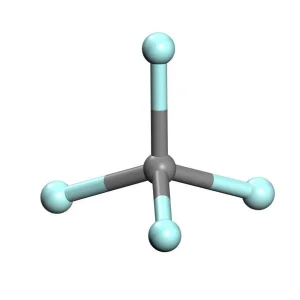
Carbon Tetrafluoride (CF4) 5N / VLSI ≥ 99.999% H2O < 1.0 ppm, CO+CO2 < 0.5 ppm, Acidity < 0.1 ppm Villach / Graz Plasma Etch & Chamber Cleaning
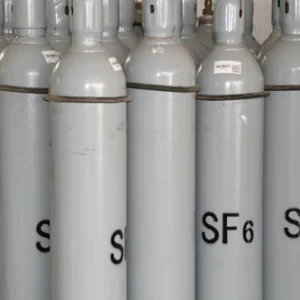
Sulfur Hexafluoride (SF6) Electrical / 4N8 ≥ 99.995% Moisture < 1.5 ppm, CF4 < 10 ppm, Air < 50 ppm APG Substation GIS / High-Voltage Switchgear
Ultra-Pure Xenon (Xe) 5N5 / 6N ≥ 99.9999% Kr < 0.5 ppm, N2 < 0.2 ppm, O2 < 0.1 ppm Aerospace Thrusters, Research Optics, Medical
Electronic Krypton (Kr) 5N / 5N5 ≥ 99.999% Xe < 1.0 ppm, N2 < 1.0 ppm, H2O < 0.5 ppm Excimer DUV Lithography, Insulated Architectural Glass
Electronic Helium (He) 5N5 / 6N UHP ≥ 99.9999% Neon < 1.0 ppm, O2 < 0.1 ppm, Dew Point < -78°C Semiconductor Wafer Backside Cooling, Cryogenics
Pure Argon (Ar) 5N / 6N Grade ≥ 99.9999% O2 < 0.2 ppm, Moisture < 0.5 ppm Linz Vacuum Metallurgy, Additive Manufacturing
Austrian Regulatory Framework

Localized Compliance & Austrian Chemical Law Safeguards

Navigating the interplay between Austrian federal legislation, the European Chemicals Agency (ECHA), and Alpine hazardous logistics.

Austrian Chemikaliengesetz & REACH Compliance

All chemical additives, fluorinated agents, and specialty precursors delivered to Austrian territory must strictly comply with the Austrian Chemicals Act (Chemikaliengesetz 1996) and Regulation (EC) No 1907/2006 (REACH). YANXA delivers fully verified Safety Data Sheets (SDS) formatted under GHS Revision 9 in formal Austrian German, complete with European waste codes (EWC) and registered REACH dossiers.

For fluorine chemistry (CF4, SF6), supply quotas are rigorously monitored under the European F-gas portal, ensuring our Austrian corporate clients encounter zero bureaucratic hold-ups at European border customs inspections (Zollamt Österreich).

Pressure Equipment Directive (PED) & TPED π-Marking

Alpine transport conditions impose extreme temperature differentials and structural vibration profiles on high-pressure cylinder bundles and ISO tank containers. Under the Transportable Pressure Equipment Directive (TPED 2010/35/EU) and ADR, all containers delivered into Austria are stamped with the official "π" (Pi) mark.

Valves are calibrated to DIN 477-1 (e.g., No. 6 for pure Argon, No. 8 for SF6, No. 10 for Nitrogen) or ultra-high purity DISS (Diameter Index Safety System) connections, ensuring immediate plug-and-play compatibility with Austrian cleanroom gas distribution manifolds (Gasboxen).

Practical Engineering Use Cases

Field-Proven Gas Implementations in Austrian Industrial Ecosystems

How our high-purity molecules empower Austrian R&D facilities, cleanroom production lines, and high-voltage electrical installations.

Semiconductors · Carinthia

300mm Deep Silicon Etching

In Villach’s power semiconductor fabs, Carbon Tetrafluoride (CF4 5N) serves as the primary fluorine atom donor in reactive ion etching (RIE) of silicon nitride (Si3N4) passivation barriers. With moisture controlled strictly below 1 ppm, our gas prevents micro-trenching defects, enabling 99.8% wafer die yield stability across high-volume production cycles.

Grid Systems · Vienna & Lower Austria

380 kV GIS Dielectric Insulation

For regional substations expanding transmission to accommodate Alpine wind and pumped-storage hydro assets, our dry Sulfur Hexafluoride (SF6) guarantees dielectric breakdown voltages > 89 kV/cm at 1 atm. Supplied in ultra-clean 50L cylinders with residual moisture below -62°C dew point to entirely prevent toxic SOF2 by-product formation under electrical arcing.

Advanced Metallurgy · Upper Austria

Inert Vacuum Remelting & AM

Specialty steel mills and additive manufacturing contract service centers in Linz utilize our 6N Ultra-Pure Argon and Nitrogen. Oxygen levels throttled under 0.2 ppm prevent titanium and aluminum-magnesium powder oxidation during laser powder bed fusion (LPBF), securing full mechanical tensile density in mission-critical aerospace brackets.

Strategic Horizon 2025–2035

Technology Roadmap: Next-Generation Gases & Decarbonization

Anticipating Austria's industrial transition towards climate neutrality, F-Gas phase-out mandates, and circular noble gas closed loops.

Phase 1: 2025 – 2027

F-Gas Quota Defense & Pure Gas Audits

Securing direct manufacturer quotas for SF6 and CF4 while deploying point-of-use gas recovery scrubbers in Carinthia and Styria cleanrooms to slash virgin molecule consumption by 40%.

Phase 2: 2028 – 2030

Fluoronitrile (C4-FN) Dielectric Adoption

Introduction of zero-GWP and ultra-low GWP dielectric mixtures (C4-FN/CO2/O2) for medium-voltage GIS installations across Austrian municipal utility networks, replacing conventional SF6 infrastructures.

Phase 3: 2031 – 2035

Green Carrier Gases & Circular Xenon

Full industrial adoption of certified green hydrogen and green ammonia, coupled with on-site cryogenic Xenon/Krypton recovery skids achieving 95%+ recycling loops in optical research institutes.

Extended Industrial & Specialty Portfolio

Specialty Gases, Noble Elements & Auxiliary Chemicals

Complete supply lines available for prompt dispatch to Austrian industrial buyers, supported by multi-ton bulk filling capacity and technical safety certification.

Wholesale Electronic helium Manufacturer Manufacturers for Austria
Electronic Gas

Electronic Helium (He) - Wafer Backside Cooling

Unsurpassed thermal conductivity for electrostatic chuck heat dissipation in semiconductor etching and high-field superconductor MRI cooling.

Purity: ≥ 99.9999% (6N) Total Impurities < 1 ppm
Wholesale High purity argon Ar Manufacturers Pricelist for Austria
Industrial Gas

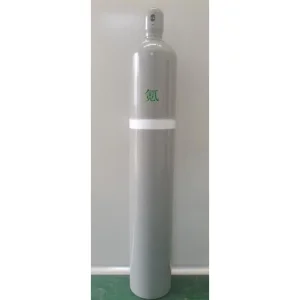
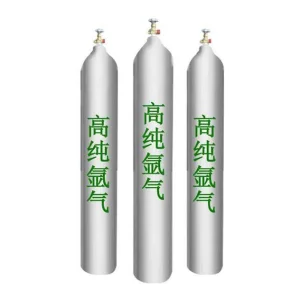
High-Purity Argon (Ar 5N) - Metallurgical Blanketing

Shielding gas formulation for TIG/MIG welding, specialized automotive chassis manufacture, and degassing molten aluminum and high-alloy steel.

Purity: ≥ 99.999% Packaging: 12-Cylinder Bundles (200/300 Bar)
China Barium Acetate Supplier Factories for Austria
Inorganic Reagent

Barium Acetate (High Purity) - Catalyst & Ceramic Precursor

Ultra-pure salt used in modern ceramic dielectric capacitors, high-temperature superconducting substrates, and specialized industrial catalysis.

Assay: ≥ 99.0% Heavy Metals (as Pb): < 5 ppm
Enterprise Procurement Inquiries

Frequently Asked Questions for Austrian Gas Buyers

Detailed answers regarding delivery times, dangerous goods transit across the Alps, F-Gas quotas, and third-party quality verification.

How does YANXA guarantee TPED and ADR compliance for gas deliveries into Austria?
Every compressed and liquefied gas cylinder destined for Austria is manufactured, inspected, and stamped in accordance with the Transportable Pressure Equipment Directive (TPED 2010/35/EU), carrying the recognizable π (Pi) mark. For road transport through the Austrian Alpine transit corridors (Brenner, Tauern, Phyrn autobahns), cargo is dispatched strictly in compliance with ADR regulations. This includes approved hazardous materials labeling, UN-certified multi-cylinder bundles (MEGCs) where applicable, and bilingual German-English transport documentation accompanied by standard European emergency instructions.
What specific analytics and batch testing accompany our High-Purity CF4 and SF6 shipments?
Each batch undergoes comprehensive analysis prior to cylinder filling and dispatch. We employ Gas Chromatography with Pulsed Discharge Helium Ionization Detectors (GC-PDHID) to measure trace halocarbon contaminants, and Atmospheric Pressure Ionization Mass Spectrometry (APIMS) or Cavity Ring-Down Spectroscopy (CRDS) to measure trace moisture (dew point) and oxygen down to sub-ppm and ppb levels. A certified batch Certificate of Analysis (COA) specifying exact instrument-read values—never nominal averages—is provided with every consignment.
How do the EU 2024/573 F-Gas quota reductions affect long-term supply agreements for Austrian plants?
Regulation (EU) 2024/573 systematically steps down the quota for high Global Warming Potential (GWP) gases including Sulfur Hexafluoride (SF6) and Carbon Tetrafluoride (CF4). To protect our Austrian clients from market quota shortages, YANXA operates with audited EU quota holdings and provides closed-loop logistics coordination. We also partner with engineering teams to explore lower-GWP dielectric alternatives (such as C4-FN mixtures) and supply point-of-use recovery guidance to ensure your operational continuity remains unaffected by regulatory step-downs.
What are typical lead times for CIF deliveries to Vienna, Linz, or Graz?
Standard inventory items (such as standard purity Argon, Nitrogen, and high-purity CF4) in TPED-certified cylinders have an ocean transit time of approximately 30 to 38 days to European northern ports (Rotterdam, Hamburg) or Adriatic ports (Koper, Trieste), followed by expedited rail or road bonded transit to your Austrian site. Total lead times typically average 6 to 8 weeks from factory release to customer dock. For urgent research or fab replenishment requirements, chartered air freight with ICAO/IATA dangerous goods approval can be arranged within 7 to 10 working days.
Can Austrian facilities request third-party inspections before departure from the factory?
Yes. We routinely collaborate with international inspection agencies such as SGS, TÜV Rheinland, and Bureau Veritas. Buyers may specify third-party pre-shipment sampling, verification of cylinder wall thickness and hydraulic pressure test certificates, valve seal audits, and batch COA validation prior to container loading and seal application.
Which cylinder valve standards are supplied for Austrian customer hook-ups?
We adapt cylinder valve configurations strictly to customer specifications. For European industrial standards, we supply DIN 477 valves (e.g., DIN 477 No. 6 for Argon, No. 8 for SF6, No. 10 for Nitrogen). For electronic cleanroom gas cabinets, we provide DISS (Diameter Index Safety System) connections or CGA 660/580/350 valves with ultra-high purity electropolished 316L stainless steel internals to eliminate metal particulate contamination.

Ready to Secure Your Austrian Gas Supply Contract?

Contact our technical gas engineering and procurement desk today for comprehensive batch specifications, TPED compliance dossiers, and direct factory quotes.

Send Inquiry Now