


Direct manufacturer supply for Greater Sydney cleanrooms, power transmission infrastructure, analytical laboratories, and heavy fabrication plants.
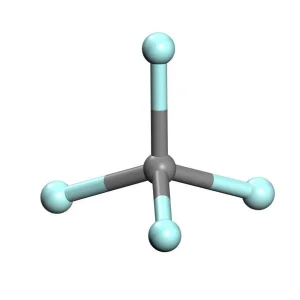
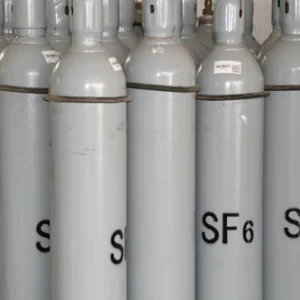

Analyzing procurement flows, cryogenic storage demands, and supply integrity across the greater New South Wales manufacturing corridor.
The Greater Sydney metropolitan area serves as Australia's primary financial, advanced technology, and high-value manufacturing capital. Unlike conventional resource-heavy economies centered in Western Australia or Queensland, Sydney's industrial gas footprint is defined by precision fabrication, heavy infrastructure modernization, pharmaceutical manufacturing, and the rapidly expanding Western Sydney Aerotropolis corridor. The demand profiles of key industrial clusters—ranging from Botany Industrial Park and Port Botany maritime chemical handling to the manufacturing centers of Silverwater, Wetherill Park, and Smithfield—dictate an evolving requirement for higher gas purities, dependable cylinder manifolds, and stable primary producer partnerships.
Historically, the Australian industrial gas market has been characterized by an oligopolistic supply framework dominated by a few multinational Tier-1 distributors. While localized cryogenic air separation units (ASUs) located near Newcastle, Port Kembla, and Western Sydney fulfill baseload requirements for atmospheric gases (Liquid Nitrogen, Liquid Oxygen, and Argon), local manufacturing lines face severe cost premiums and supply volatility regarding imported specialty gases, high-purity noble gases (Neon, Krypton, Xenon), and fluorinated electronics gases (SF6 and CF4). As regional supply chains experience structural reorganizations, industrial procurement leaders in Sydney are actively transitioning to direct-from-factory import relationships to mitigate pricing shocks and insulate local processing lines.
Advancements in aerospace manufacturing, advanced composite autoclave curing, and laser profiling around Badgerys Creek require high-flow, ultra-pure nitrogen and laser-grade argon manifolds.
Major infrastructure projects driven by Transgrid and Endeavour Energy across NSW require verified 99.999% dielectric SF6 gas for gas-insulated switchgear (GIS) substations and circuit interruption.
Australia’s primary life sciences corridor relies on continuous cryogenic liquid nitrogen, high-grade analytical carrier gases (He, N2, H2), and specialty excimer laser mixtures for surgical device fabrication.
In addition to advanced engineering, the traditional Sydney industrial engine—comprising heavy fabrication, automotive repair, food cold chains, and water treatment plants across Parramatta, Moorebank, and Blacktown—requires uncompromised reliability in continuous gas logistics. As energy transition frameworks accelerate across the state under the NSW Decarbonisation Innovation Hub, the intersection between green gases, high-efficiency rare gas recovery, and ultra-purity fluorinated chemistry has become the central focus of competitive industrial supply.
Strategic movements impacting availability, geopolitical supply shifts, and engineering standards for Australian gas consumers.
The global noble gas supply matrix has undergone substantial volatility over the past five years. Key geopolitical conflicts and disruptions in Eastern European air separation crude extraction facilities significantly constrained global neon and krypton availability, sending shockwaves through the global semiconductor lithography and insulated glass sectors. As Australian universities, quantum physics laboratories at UNSW and the University of Sydney, and specialized industrial laser manufacturers faced extreme spot price escalation, diversified global supply channels became an operational imperative. Direct factory integration with advanced multi-stage cryogenic separation plants in Asia has allowed Sydney operations to secure long-term allocations of 5N (99.999%) and 6N (99.9999%) Xenon and Krypton under transparent contractual pricing frameworks.
Sulfur Hexafluoride remains unmatched in its arc-quenching capability and dielectric breakdown resistance, critical for the safe operation of compact indoor substations in dense Sydney metropolitan environments. However, with an atmospheric lifetime of 3,200 years and a Global Warming Potential (GWP) 23,500 times that of CO2, environmental regulations across Australia are enforcing strict leakage monitoring, mandatory recovery protocols, and stringent purity verification. Contemporary procurement models demand high-assay SF6 (≥ 99.995%) to guarantee that moisture, acidity (calculated as HF), and hydrolyzable fluorides do not corrode expensive switchgear internals or cause premature circuit flashovers.
Greater Sydney is leading Australia's additive manufacturing and 3D printing revolution, particularly within defense, aerospace, and biomedical implants. Advanced metal powder bed fusion (PBF) and directed energy deposition (DED) processes require inert gas shield atmospheres of exceptional dryness and purity. Trace oxygen or moisture impurities in argon or nitrogen shielding gas cause interstitial contamination in reactive titanium (Ti-6Al-4V) and aluminum alloy powders, leading to mechanical porosity, microcracking, and compromised tensile integrity. Gas suppliers must now deliver ultra-high purity (UHP) Ar and N2 featuring oxygen levels verified below 1.0 ppm and moisture below 1.5 ppm, supported by continuous in-line dewpoint analysis.
For large-scale consumers of specialty gases in Western Sydney, sourcing via intermediate local resellers often adds 40% to 120% in handling markup, rental demurrage on long-turnaround cylinders, and regulatory overhead. Adopting factory-direct containerized imports with certified ISO-tank or cylinder-pack consignments drops landed per-unit gas costs substantially while consolidating batch Certificates of Analysis (COA) directly from primary producers.
Detailed chemical assays, impurity controls, and international testing standardizations applied to our industrial and specialty gas supply lines.
| Gas Designation | Formula | Purity Grade | Key Impurity Thresholds | Primary Industrial Applications in Sydney |
|---|---|---|---|---|
| Carbon Tetrafluoride | CF4 | 5N (99.999%) | O2 ≤ 1 ppm, H2O ≤ 1 ppm, CO+CO2 ≤ 1 ppm, SF6 ≤ 1 ppm | Silicon etching, semiconductor wafer fabs, cleanroom chamber cleaning |
| Sulfur Hexafluoride | SF6 | 5N (99.999%) | Air ≤ 15 ppm, CF4 ≤ 10 ppm, H2O ≤ 1.5 ppm, Acidity ≤ 0.1 ppm | High-voltage GIS switchgear, power distribution, circuit breakers |
| Ultra-Pure Nitrogen | N2 | 6N (99.9999%) | O2 ≤ 0.2 ppm, H2O ≤ 0.5 ppm, Total Hydrocarbons ≤ 0.1 ppm | Fiber laser cutting, inert carrier gas, pharmaceutical synthesis |
| High-Purity Argon | Ar | 5N5 (99.9995%) | O2 ≤ 0.5 ppm, H2O ≤ 1.0 ppm, N2 ≤ 2.0 ppm | Titanium TIG/MIG welding, additive manufacturing, ICP-OES spectroscopy |
| Research Grade Xenon | Xe | 6N (99.9999%) | Kr ≤ 0.5 ppm, N2 ≤ 0.2 ppm, O2 ≤ 0.1 ppm, H2O ≤ 0.2 ppm | Ion thruster propulsion, dark matter detectors, medical imaging research |
| Electronic Helium | He | 5N5 (99.9995%) | Ne ≤ 2 ppm, N2 ≤ 0.5 ppm, O2 ≤ 0.2 ppm, H2O ≤ 0.5 ppm | Cryogenic cooling, leak detection mass spectrometry, optical fiber draw |
| Specialty Krypton | Kr | 5N (99.999%) | Xe ≤ 1 ppm, N2 ≤ 2 ppm, O2 ≤ 0.5 ppm, H2O ≤ 1 ppm | Architectural insulated glazing, excimer laser gas mixtures, physics R&D |
Every gas cylinder, ton tank, or ISO cryogenic manifold leaving our manufacturing facilities undergoes multi-stage laboratory validation before dispatch. Analytical methodology adheres strictly to international benchmarks, utilizing:
Ensuring full legal, environmental, and workplace safety compliance under SafeWork NSW and Australian dangerous goods frameworks.
Strict alignment with the Australian Standard for the storage and handling of gases in cylinders, including segregation distances, ventilation rates, and certified secondary containment systems.
Class 2.1 (Flammable), Class 2.2 (Non-flammable, non-toxic), and Class 2.3 (Toxic) gas consignments handled according to the Australian Code for the Transport of Dangerous Goods by Road & Rail.
Cylinders can be configured with standard Australian outlet connections (Type 10, Type 11, Type 50, Type 51) or international equivalents (CGA, DIN) to ensure seamless connection to Sydney plant manifolds.
Under the Work Health and Safety Regulation 2017 administered by SafeWork NSW, facilities storing compressed gases exceeding manifest quantities must maintain a comprehensive Emergency Plan, Hazchem placarding, and manifest registers. Sydney industrial facilities face stringent scrutiny regarding asphyxiant gas storage (such as liquid nitrogen or compressed argon) in enclosed production spaces. We provide full consultation on system integration, including automatic ambient oxygen depletion sensors, relief valve vent-pipe routing to outside safe atmosphere, and seismic cylinder floor racking that meets Building Code of Australia (BCA) specifications.
Furthermore, each chemical consignment arrives accompanied by a GHS-compliant 16-section Safety Data Sheet (SDS) referencing Australian exposure standards (Safe Work Australia Workplace Exposure Standards for Airborne Contaminants), comprehensive batch Certificates of Analysis (COA), and complete maritime dangerous goods documentation (IMDG) for trouble-free customs clearance through the Port Botany logistics terminal.
Engineered distribution models designed to resolve specific operational challenges across key New South Wales industry sectors.
High-pressure nitrogen (25-30 bar) delivery systems eliminate micro-burrs and edge oxidation on stainless steel and aluminum cuts, directly reducing downstream secondary grinding costs for Wetherill Park fabricators.
Supply of high-purity virgin SF6 gas alongside custom cart recovery systems ensures zero atmospheric venting during maintenance cycles across Sydney metropolitan utility substations.
Fluorinated carbon etch chemistry (CF4) and ultra-pure noble carrier atmospheres enable sub-micron microfabrication and surface activation without particle contamination in cleanroom environments.
Beyond baseline gas supply, our technical support engineers evaluate pressure-drop profiles across plant pipework, calculate required vaporiser thermal capacities for high-draw liquid storage installations, and implement dual-manifold auto-switchover systems to prevent costly line interruptions during continuous manufacturing campaigns.
Strategic advancements in intelligent cylinder telemetry, low-carbon industrial gas production, and traceability across New South Wales.
Traditional manual inventory audits of compressed gas cylinders are prone to stockout risks and idle cylinder rental charges. Our logistics framework is integrating smart telemetry-enabled cylinder bundle manifolds featuring real-time wireless pressure, temperature, and GPS monitoring. Automated telemetry alerts dispatch replenishment shipments into Port Botany before plant pressure buffers drop below critical reserves, eliminating unexpected downtime in automated laser and chemical plants.
Recognizing the impending global phase-down initiatives for high-GWP gases, our R&D team is investing in alternative specialty etching chemistries with ultra-low environmental footprints (such as C4F8, C4F6, and fluorinated ethers) and advanced closed-loop cryogenic condensation units designed to recapture and recycle over 98% of industrial SF6 used during high-voltage switchgear commissioning.
To support high-reliability defense and pharmaceutical contractors operating within the Western Sydney Aerotropolis, we are transitioning to digital product passports. By scanning QR-code matrices embedded on each cylinder neck, quality control teams can instantly access immutable spectral chromatography reports, hydrostatic test records, cylinder wall inspection stamps, and full carbon footprint calculations spanning manufacturing through final delivery.
Full manufacturing lines available for consolidated container shipment, bulk pack supply, and industrial project contracts in Sydney.


Comprehensive responses covering cylinder certification, logistics timelines, purity guarantees, and Australian regulatory compliance.
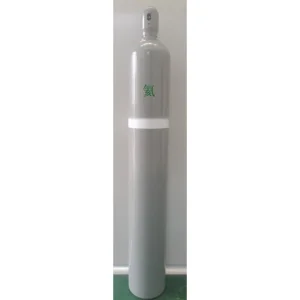
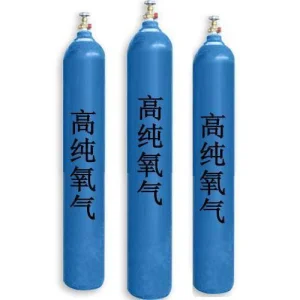
All imported cylinders dispatched to Australian ports are manufactured to ISO 9809 or DOT specifications, certified with design registration approved by SafeWork NSW. Cylinders can be specified with Australian Standard AS 2473 valve outlets (e.g., Type 10, Type 11, Type 50) and undergo hydrostatic pressure retesting verification before dispatch.
Standard sea-freight transit from our major production facilities in China to Port Botany typically spans 14 to 21 days on direct liner services. Complete dangerous goods (IMDG) clearances, customs tariff classifications, and local transport delivery into Greater Sydney facilities typically take an additional 3 to 5 business days.
Yes. Every batch is analyzed using Cavity Ring-Down Spectroscopy (CRDS) and Gas Chromatography. We supply lot-specific Certificates of Analysis documenting exact impurity levels in parts-per-million (ppm) or parts-per-billion (ppb) for O2, H2O, CO, CO2, total hydrocarbons, and specific halocarbons.
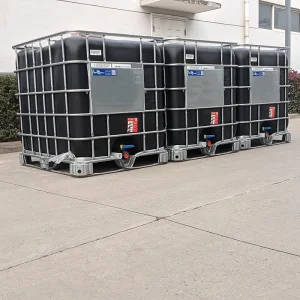
Due to the high intrinsic value of noble gases, MOQs are flexible. Xenon (Xe) and Krypton (Kr) are available in individual 10L, 40L, or 50L cylinders at pressures ranging from 100 to 150 bar. For high-volume users, multiple-cylinder bundles (quads) or bulk transport containers can be arranged.
Moisture is the most detrimental impurity in switchgear insulating gas as it forms toxic and corrosive HF under electrical arc conditions. Our dielectric-grade SF6 undergoes rigorous multi-stage desiccant drying and fractional cryogenic distillation to guarantee moisture content below 1.5 ppm by volume (≤ -60°C dew point), exceeding IEC 60376 specifications.
Both commercial models are supported. Industrial clients in Greater Sydney can purchase high-pressure cylinders outright, eliminating ongoing monthly cylinder rental demurrage charges. Alternatively, we operate scheduled empty cylinder return logistics loops via Port Botany for ongoing project replenishment.
Whether you require full container-load shipments of dielectric SF6, laser-grade N2 manifolds, or ultra-pure 6N rare gases for cleanroom research, our chemical engineers provide rapid specification matching, compliance documentation, and landed pricing models.
