

Acetate Chemistry
Request Spec & FOB Quote


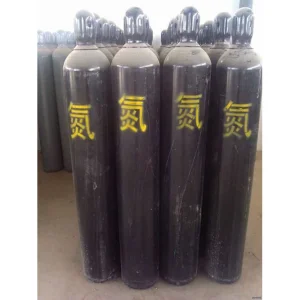
Pre-cleared chemical lots conforming to Australian Standards (AS 3780) and AICIS import declarations, packaged in heavy-duty moisture-barrier drums and certified pressure vessels.


An in-depth whitepaper analysis on the structural supply vulnerabilities, critical mineral processing needs, and environmental compliance frameworks reshaping Australian chemical procurement.
Australia's reliance on imported inorganic chemical precursors and specialized salts across WA, QLD, and VIC.
Average maritime container transit time from Qingdao/Shanghai directly to Port of Fremantle and Port of Melbourne.
Batch-to-batch assay consistency guaranteed through automated DCS closed-loop crystallization processing.
Non-detectable asbestos, heavy metal contaminants, and low-chloride targets meeting strict AICIS environmental standards.
Australia’s industrial sector is undergoing a profound structural transition. Historically focused on raw mineral export—such as direct shipping ore (DSO) hematite, bauxite, and unrefined spodumene concentrates—state and federal frameworks (including the Australian Critical Minerals Strategy 2023–2030) now mandate aggressive domestic refining and chemical upgrading. Hydrometallurgical refineries in Kwinana, Kemerton, and the Goldfields require unprecedented quantities of high-purity inorganic salts, nitrates, and specialty acetates to serve as selective complexing agents, precipitation catalysts, and pH-buffer buffers.
Unlike standard agricultural commodities, modern critical mineral processing—specifically the leaching of nickel-cobalt laterites (HPAL), lithium sulfate to lithium hydroxide monohydrate conversion, and rare-earth separation (NdPr)—demands exacting trace-impurity ceilings. Elements like calcium, sodium, iron, and silica in precipitation reagents must be suppressed below parts-per-million (ppm) levels to avoid poisoning resin beds or contaminating battery-grade cathodes. Consequently, Australian procurement executives can no longer rely on spot-market commodity traders; they require direct, auditable factory partnerships backed by full analytical transparency.
Water scarcity across Western Australia (Pilbara, Yilgarn) and South Australia (Olympic Dam, Roxby Downs) forces industrial operators to operate near-zero liquid discharge (ZLD) systems. Inorganic salts used in industrial water remediation, membrane anti-scalant formulations, and flocculation circuits must possess absolute solubility kinetics without insolubles that clog reverse-osmosis (RO) cassettes. The demand for ultra-pure inorganic salts—such as synthetic phosphates, high-grade acetates, and tailored nitrates—is accelerating at an annual growth rate of 7.4% across Australian mine water recycling plants.
Introducing industrial chemicals into Australia requires compliance with the Australian Industrial Chemicals Introduction Scheme (AICIS) under the Industrial Chemicals Act 2019. Every chemical shipment introduced into Fremantle, Brisbane, Sydney (Port Botany), or Melbourne must carry comprehensive Chemical Safety Assessments, compliant SDS under the Globally Harmonized System (GHS Revision 7), and exact UN-certified packaging. Furthermore, seasonal factors such as maritime moisture during equatorial sea crossings demand specialized, vacuum-sealed barrier packaging with active desiccants to prevent caking and crystal degradation before arrival at Australian inland depots.
Controlled-acidity and neutral salt precipitation agents optimize liquor recovery rates in Western Australia’s lithium hydroxide plants and ionic adsorption clay extractors.
Formulations with sub-ppm insoluble impurities guarantee prolonged lifespan for RO membranes in high-salinity bore water processing across the Bowen and Surat Basins.
Every lot is backed by GHS-7 certified Safety Data Sheets, CAS-verified declarations, and maritime Dangerous Goods (IMDG) documentation for rapid customs release.
How our vertically integrated synthesis facilities de-risk chemical supply chains for Australian enterprise buyers through automated process control and direct logistics.
Global chemical markets over the past five years have suffered from extreme price whipsawing caused by localized power restrictions, feedstock bottlenecks, and volatile ocean freight indices. Our factory infrastructure resolves this through end-to-end integration. By co-locating elemental dissolution, continuous synthesis, mother-liquor recycling, and multi-effect vacuum evaporation within an integrated industrial park, we maintain direct control over key chemical feedstocks.
This integration insulates Australian commercial contracts from sudden merchant market swings. When purchasing barium acetate, strontium compounds, or high-purity inorganic nitrates, clients receive pricing stability backed by predictable synthesis yield curves. Our production plants utilize Distributed Control Systems (DCS) with artificial intelligence-driven PID loop feedback, stabilizing crystallization temperatures within ±0.2°C. This guarantees that crystal habit, particle size distribution (PSD), and bulk density remain identical from container to container.
Australian quality managers frequently report that imported salts fail incoming qualification due to unlisted micro-contaminants that foul downstream automated lines. At our Factory 4.0 facilities, quality control does not end with standard wet-chemistry titration.
Barcoded batch tracing links every 25kg bag or 1,000kg bulk bag directly to reactor logbooks, raw material lot numbers, and post-synthesis quality release data.
Multi-layer polyethylene liners with vacuum-purged nitrogen flushing, palletized on heat-treated ISPM-15 compliant pallets, plastic shrink-wrapped for zero moisture ingress.
Strategic logistics agreements with major carriers (Maersk, COSCO, MSC) servicing direct express corridors from Chinese export ports directly into Fremantle, Melbourne, and Sydney.
Indicative pricing matrix based on full container load (FCL) orders. Final contract pricing is indexed against feedstock spot prices, customized purity thresholds, and destination discharge ports.
| Product Compound / Grade | Typical Assay | Standard Packaging | FOB China Main Port (USD/MT) | Est. CIF Australia Main Port* (USD/MT) | Primary Industrial Use in Australia |
|---|---|---|---|---|---|
| Barium Acetate Tech/Refined | ≥ 99.0% | 25kg Kraft Bag / 1MT Super Sack | $1,850 – $2,400 | $2,050 – $2,650 | Hydrometallurgy Mordant / Catalyst |
| Strontium Acetate Hemihydrate | ≥ 99.2% | 25kg Fiber Drum (UN Approved) | $3,200 – $4,100 | $3,450 – $4,400 | Specialty Chem Optical glass / Pharma |
| Tricalcium Phosphate (TCP) Super-Fine | ≥ 98.5% (FCC/Ind) | 25kg Multi-Wall Paper Bag | $1,100 – $1,550 | $1,280 – $1,780 | Anti-caking Flow agent / Mining flotation |
| Paraformaldehyde Powder 96% | ≥ 96.0% | 25kg Bag / Palletized | $750 – $980 | $920 – $1,180 | Resin / Mining Phenolic resins & adhesives |
| High-Purity Krypton Gas (Kr 5N) | ≥ 99.999% | 40L / 50L ISO Cylinders | Market Indexed / m³ | Direct Quote on Request | Electronics Laser optics / Insulated glass |
| Ultra-Pure Xenon Gas (Xe 5N) | ≥ 99.999% | 10L / 40L Certified Cylinders | Market Indexed / Liter | Direct Quote on Request | Advanced Tech Satellite propulsion / Medical |
| Flake Zn-Al Alloy Powder | Zn 80% / Al 20% | Inert-gas sealed 50kg steel drums | $4,200 – $5,600 | $4,500 – $5,950 | Coatings Anti-corrosion mining primers |
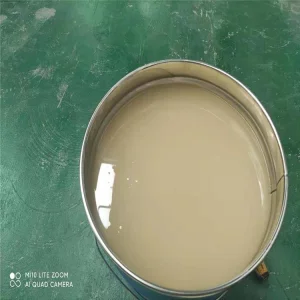
| Liquid Rubber (HTPB / EPB) | Hydroxyl Val matched | 190kg Steel Drum / IBC | $6,800 – $8,900 | $7,150 – $9,350 | Polymers Mining conveyor belts / Sealants |
*Note: CIF Australian estimates (Port of Fremantle, Melbourne, Sydney, Brisbane) fluctuate subject to monthly bunker adjustment factors (BAF), currency exchange variations, and ocean container spot rates. Custom contract pricing available for quarterly and annual supply agreements.
Targeted chemical specifications engineered to withstand Australia’s extreme processing conditions, from hypersaline desert processing to marine coastal metallurgy.
In the Pilbara and South West lithium refining hubs, precise salt formulations serve as fluxing agents and selective precipitating compounds. Minimizing sodium and potassium contamination during the conversion to battery-grade lithium carbonate or lithium hydroxide is critical. Our inorganic salts undergo multi-stage re-crystallization to ensure zero interfering impurities.
Heavy coal processing, copper smelting in Mount Isa, and coastal alumina refining utilize inorganic salts for slag fluidization and wastewater clarification. Tailored particle sizing facilitates instantaneous dissolution in high-throughput agitator tanks, eliminating settling and unreacted sludge in tailings dams.
Automotive tier suppliers, polymer converters, and defense research hubs in Adelaide and Melbourne rely on specialty liquid rubbers (EPB, HTPB) and high-purity rare gases (Neon, Krypton, Xenon). Our materials deliver high tensile strength, thermal resilience, and spectroscopic precision meeting Australian Defence and university lab standards.
Fully certified specialty materials engineered for advanced compounding, high-voltage equipment, and industrial coatings across Australian industry.







Comprehensive regulatory, operational, and commercial answers for Australian chemical procurement specialists, materials engineers, and supply chain managers.
Every chemical product supplied to Australian buyers is verified against the Australian Inventory of Industrial Chemicals (AIIC). We provide full CAS identification, chemical categorization statements, and GHS Revision 7 Safety Data Sheets (SDS) formatted specifically to Australian Safe Work standards, guaranteeing seamless AICIS customs clearance at all major ports.
We operate scheduled weekly sailings from Qingdao, Ningbo, and Shanghai directly to Fremantle (Western Australia), Melbourne (Victoria), Port Botany (Sydney, NSW), and Brisbane (Queensland). Typical ocean transit time is 12 to 16 days, with complete customs documentation dispatched electronically prior to vessel arrival.
Crossing equatorial marine zones exposes cargo to high heat and extreme relative humidity. We utilize heavy-duty 120-micron polyethylene hermetic inner liners with heat-sealed seams, external woven polypropylene outer bags with UV stabilization, and active multi-pack container desiccant poles to maintain relative humidity below 40% throughout the entire journey.
Yes. Our processing lines are equipped with precision jet-milling, mechanical classification, and automated vibrating screens capable of delivering narrow particle distributions (from D50: 5μm up to granular prills 2-4mm). Every custom-milled lot includes a Malvern laser diffraction particle size curve on the batch Certificate of Analysis.
For standard inorganic salts and chemical additives, our typical production MOQ is 1 Full Container Load (FCL, 20-25 MT). However, for high-purity rare gases (Kr, Xe, Ne) and specialized acetate grades, we accommodate trial quantities of 1 to 5 MT. Pre-shipment laboratory samples (500g – 1kg) with lot-specific COA are supplied via express courier for pre-qualification.
Absolutely. We regularly coordinate with SGS, Intertek, and Bureau Veritas at our factory facilities and container stuffing terminals. Inspectors can verify gross/tare weights, composite chemical assay, packaging seal integrity, and container cleanliness prior to bill of lading issuance.
We offer competitive commercial terms to qualified Australian enterprise buyers, including Irrevocable Letters of Credit at sight (L/C), Telegraphic Transfer (T/T), and structured open-account credit arrangements (OA 30/60 days) backed by Sinosure export credit insurance for established long-term off-take partners.
Our facilities hold certified Dangerous Goods packing licenses for Class 4.1, 4.3, 5.1 (Oxidizing substances), and Class 8 (Corrosives). All export drums, intermediate bulk containers (IBCs), and gas cylinders feature stamped UN markings, certified dunnage, and IMO-compliant Dangerous Goods Declarations (DGD) approved by maritime authorities.
Eliminate trading house markups, secure traceable quality, and stabilize your annual supply contracts. Contact our technical sales engineering team today for complete technical dossiers, sample arrangements, and comprehensive CIF Australia pricelists.