


Engineering-grade salts and specialty chemicals calibrated to stringent Australasian regulatory parameters and precision manufacturing requirements.




Analyzing structural supply requirements across the North and South Islands: pastoral agriculture, timber treatment, food processing, and geothermal infrastructure.
New Zealand’s industrial landscape exhibits a unique dual-model architecture: a globally dominant primary agricultural processing sector alongside specialized, high-standard advanced manufacturing, forestry infrastructure, and environmental engineering hubs. Unlike continental manufacturing hubs that benefit from overland pipelines and domestic raw chemical extraction, New Zealand operates as an isolated oceanic economy. Virtually all concentrated inorganic salts, synthesis catalysts, mineral additives, and technical functional reagents must be imported via deep-sea container lines docking primarily at the Port of Tauranga, Ports of Auckland, or Lyttelton Port.
Across the Waikato, Taranaki, Canterbury, and Southland regions, the demand profile is heavily anchored around soil nutrient balancing, animal feeds, and dairy processing sanitation. Large-scale dairy cooperatives and ingredient manufacturers require consistent multi-ton consignments of food-grade phosphates (such as Tricalcium Phosphate), acetate stabilizers, and trace mineral salts. Concurrently, New Zealand's world-leading plantation forestry industry—predominantly cultivating Pinus radiata across the Central North Island (Kaingaroa)—demands specialized inorganic formulations for wood preservation, including copper- and boron-based salts, flame-retardant mineral impregnations, and antifungal curing systems.
Furthermore, Auckland and Christchurch host a robust ecosystem of specialized polymer compounders, marine composite builders, surface finishing workshops, and commercial water treatment plants. These facilities demand strict chemical consistency: lot-to-lot assay tolerances within ±0.2%, zero unlisted insoluble particulates, sub-ppm heavy metal profiles (Arsenic, Lead, Cadmium, Mercury), and dependable documentation aligned with New Zealand’s Environmental Protection Authority (EPA NZ) standards.
Strict conformity to Food Standards Australia New Zealand (FSANZ) and MPI requirements. Controlled heavy metals, FCC/E-number certified compliance for food additives and dairy mineralization.
Every inbound chemical lot is supplied with compliant GHS Safety Data Sheets (SDS), HSNO approval categorization, and comprehensive chemical registration dossiers.
Desiccant-fortified, sea-moisture barrier packaging engineered specifically for the 18–26 day maritime voyage across the Pacific equator to Port of Tauranga and Auckland.
How digital crystallization, automated DCS reactor control, and real-time spectrometry provide unparalleled reliability for New Zealand procurement directors.
Over the past decade, China’s specialty chemical manufacturing sector has undergone a profound transformation. Moving beyond legacy batch synthesis, Tier-1 manufacturing facilities operate under fully integrated Industry 4.0 smart plant systems. For inorganic salts such as barium, strontium, lithium, and calcium compounds, this evolution represents an exponential leap forward in quality predictability, batch consistency, and ecological efficiency.
In our partner synthesis hubs, production lines utilize Distributed Control Systems (DCS) linked to automated gravimetric feeders, multi-stage counter-current crystallization reactors, and continuous centrifugal separation loops. The real-time control of supersaturation levels, nucleation kinetics, and Mother Liquor recycling ensures narrow crystal particle size distribution (PSD). This eliminates the clumping and caking commonly associated with long-distance ocean freight, guaranteeing rapid re-dissolution or uniform blending once the containers arrive at processing plants in Hamilton, Penrose, or Hornby.
Every manufacturing campaign is subject to multi-stage analytical inspection. Raw materials are screened by X-Ray Fluorescence (XRF) and Inductively Coupled Plasma Mass Spectrometry (ICP-MS) to detect trace elemental contaminants down to sub-part-per-billion levels. During intermediate crystallization, laser diffraction particle size analyzers continuously log D10, D50, and D90 parameters.
Crucially for New Zealand buyers—who face stringent biosecurity inspections by the Ministry for Primary Industries (MPI) at coastal arrival ports—all final packaging operations take place inside automated, positive-pressure clean rooms. Pallets are either heat-treated (ISPM 15 compliant) or constructed from virgin poly-composites, fully shrink-wrapped with hermetic foil multi-wall liners to eliminate environmental exposure, external microbial spores, and humidity infiltration during oceanic crossing.
Standardized chemical properties, application domains, and New Zealand regulatory compliance classifications.
| Chemical Product | CAS Number | Standard Grade / Purity | Key NZ Target Industry | HSNO / Dangerous Goods Status | Packaging Options |
|---|---|---|---|---|---|
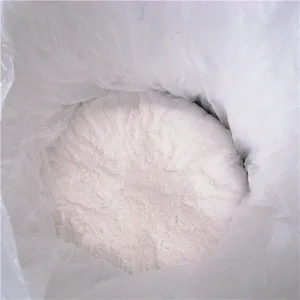
| Tricalcium Phosphate (TCP) | 7758-87-4 | Food / Pharma Grade (FCC/E341), ≥38.0% Ca | Dairy Processing, Food Fortification, Animal Feed | Non-DG / Non-Hazardous | 25kg multi-wall bags, 1000kg bulk totes |
| Barium Acetate | 543-80-6 | Technical / Pure Grade, Assay ≥99.0% | Catalyst Manufacture, Analytical Testing, Mordants | Class 6.1 Toxic (UN 1564) | 25kg UN-rated drums / bags |
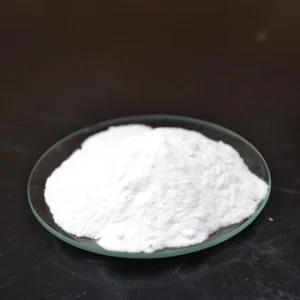
| Strontium Acetate Hemihydrate | 543-94-2 | High Purity Crystalline, ≥99.0% | Specialty Reagents, Ceramic Capacitors, Pyrotechnics | Non-DG under standard transport | 25kg fiber drums with inner PE bag |
| Lithium Nitrate | 7790-69-1 | Technical Anhydrous, Assay ≥99.0% | ASR Concrete Admixtures (Seismic Bridges), Geothermal | Class 5.1 Oxidizer (UN 2722) | 25kg UN-approved plastic drums |
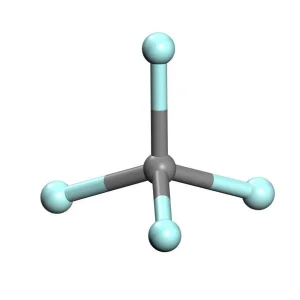
| Carbon Tetrafluoride (CF4) | 75-73-0 | Electronic / Semiconductor Grade, 5N (99.999%) | Advanced Electronics, Plasma Etching, Chamber Cleaning | Class 2.2 Non-Flammable Gas (UN 1982) | 40L / 47L ISO seamless gas cylinders |
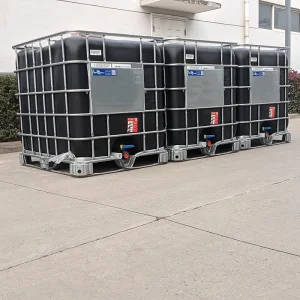
| CTBN Liquid Rubber | 68891-50-9 | Carboxyl Terminated, AN content 10–26% | Epoxy Structural Adhesives, Marine Composites | Non-Hazardous Industrial Liquid | 200L steel drums, 1000L IBC tanks |
Notice for New Zealand Importers: Pricing structures and CIF quotation metrics vary according to container optimization (20GP vs 40HQ), raw mineral index rates, and international maritime bunker fuel surcharges (BAF). Contact our engineering sales desk for current CIF Auckland, CIF Tauranga, or CIF Lyttelton formal price lists inclusive of all export documentation.
Targeted solutions developed for specific operational and climatic conditions encountered across Aotearoa.
In high-throughput spray drying plants across Waikato and Southland, premium Tricalcium Phosphate (TCP) functions as an essential, inert flow-conditioning agent and bioavailable calcium source. Our ultra-fine, low-heavy-metal TCP ensures free-flowing properties in exported whole and skim milk powders, avoiding crusting during high-humidity ocean transit to Asian and Middle Eastern destination markets.
Given New Zealand’s intensive seismic activity along the Alpine and Hikurangi fault lines, major civil infrastructure—such as bridges, harbor docks, and transmission pillars—relies on high-durability concrete. Lithium Nitrate admixtures provide the industry gold standard for eliminating Alkali-Silica Reaction (ASR), preventing micro-cracking and expansion in reactive volcanic aggregates native to the North Island.
Radiata pine requires chemical treatment to resist subterranean fungi, termites, and rot in New Zealand's oceanic climate. Our high-purity inorganic acetates, nitrates, and specialty reactive polymer liquid rubbers (CTBN/HTBN) are deployed as crucial formulation ingredients in preservative carriers, structural marine epoxy adhesives, and elastomeric industrial coatings.
The Taupo Volcanic Zone powers significant baseload renewable electricity in New Zealand. Geothermal well operations require specialized corrosion inhibitors, scale-control salts, and thermal-spray alloy precursors capable of withstanding aggressive hydrogen sulfide and brine conditions at depths exceeding 2,000 meters.
Explore our export-ready products manufactured under ISO 9001 certified protocols with batch-specific Certificates of Analysis.



Authoritative technical, regulatory, and logistics answers addressing standard challenges faced by Kiwi industrial buyers.
Every imported chemical must align with the Hazardous Substances and New Organisms (HSNO) Act 1996. We supply New Zealand-compliant GHS Safety Data Sheets (16-section SDS) referencing official EPA NZ group standards, CAS registrations, hazard classifications, and HSNO approval codes to expedite pre-clearance with local customs brokers.
Due to intense humidity and temperature fluctuations during equatorial ocean voyages, our shipments utilize triple-layer protective packaging: an inner heat-sealed polyethylene barrier, high-absorption silica desiccant bags within container interiors, and external UV-resistant shrink hood wrapping on treated pallets.
Yes. In addition to our factory DCS batch Certificate of Analysis (COA), buyers can mandate third-party inspection agencies such as SGS, Intertek, or Bureau Veritas at the loading port (Qingdao, Shanghai, or Ningbo) to re-verify assay purity, particle sizing, trace heavy metals, and drum packaging integrity.
Direct ocean transit from primary Chinese ports to Auckland or Tauranga generally averages 14 to 21 days. Allowing for factory synthesis batch allocation, export customs processing, and final port clearance, we recommend scheduling recurring procurement cycles on an 8- to 10-week planning horizon.
Strict biosecurity compliance is guaranteed. All timber pallets undergo verified heat treatment compliant with ISPM 15 standards carrying the official IPPC stamp. High-density composite plastic pallets are also available upon request to completely bypass organic wood fumigation protocols at New Zealand ports.
For standard inorganic salts and liquid rubbers, pilot evaluation samples (500g to 2kg) are supplied with representative batch COAs via international air courier. Bulk commercial MOQs start at 1 metric ton (1 pallet) for specialized fine salts and 20GP full-container-loads (FCL) for high-volume commodity grades.
