

Advanced Metallurgy
View Product Details


Engineered to exact particle morphology, tight PSD tolerance, and low interstitial oxygen levels, our core alloy grades serve Korean industrial leaders in additive manufacturing, thermal spray coatings, and reactive energetic compounds.



Analyzing high-precision raw material dependencies across Korean industrial clusters: Gyeonggi-do semiconductor fabs, Ulsan automotive ecosystems, and Changwon defense manufacturing.
South Korea stands at the forefront of high-precision engineering, power storage innovation, and automated manufacturing. From semiconductor packaging facilities in Suwon and Pyeongtaek to advanced naval fabrication hubs in Geoje and Ulsan, the demand for high-integrity metal powder materials has transformed from standardized commodities to tightly bounded, micro-engineered specifications. The national focus on hydrogen mobility, next-generation secondary batteries, and defense aerospace elevates spherical metal alloy powders and electronic-grade precursors from transactional consumables into critical supply-chain pillars.
Historically, industrial metal powders served conventional powder metallurgy—press-and-sinter parts characterized by broader size distributions and irregular grain structures. However, Korean manufacturing has rapidly scaled toward Laser Powder Bed Fusion (LPBF), Direct Energy Deposition (DED), and cold spray technology. In these advanced thermal and kinetic environments, performance hinges directly on physical metrics:
Global raw material shifts and volatile supply chains require reliable manufacturing partners capable of multi-ton production throughput while upholding stringent batch consistency. Serving Korea requires navigating local regulatory safety networks (K-REACH, Chemical Control Act) and delivering verifiable metallurgical audit trails from raw ingot refining to final packaging under vacuum-argon purge.
Combining modern vacuum atomization, mechanical attrition milling, and inert packaging protocols to solve industrial oxidation, porosity, and variability challenges.
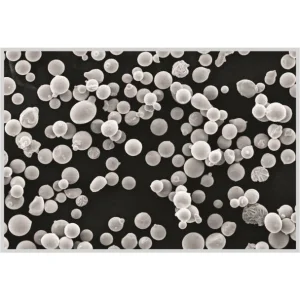
Utilizing high-pressure Argon/Nitrogen atomization chambers to produce spherical Al, Mg, and Zn alloy powders with minimal satellites, uniform roundness, and exceptional Hall flow rates tailored for high-speed automated lines.
Multi-stage air classification and ultrasonic sieving achieve custom-tailored particle distributions (e.g., 15-53 μm for additive manufacturing, <20 μm for energetic mixtures, 45-105 μm for thermal spray applications).
Full compliance with Korean hazardous substance and dangerous goods management requirements. UN-rated moisture-barrier steel drums, nitrogen backfill, and vacuum desiccant packs eliminate degradation during maritime transit.
Connecting specialized material properties directly to specific manufacturing demands across Korea's tier-one manufacturing ecosystems.
In semiconductor manufacturing across Hwaseong, Icheon, and Giheung, our 5N/6N ultrapure electronic gases (Krypton, Argon, Helium) deliver stable dielectric environments and precise plasma etching. Concurrently, high-purity barium and lithium salts support next-generation photoresist formulations and dielectric ceramic multi-layer capacitors (MLCC).
Flake zinc and zinc-aluminum alloy powders are essential for thin-film Dacromet and Geomet-style dip-spin coatings on critical fasteners and structural chassis. For Korea's massive shipbuilding infrastructure, flake Zn-Al delivers anodic galvanic barrier defense against aggressive maritime salt-spray exposure.
Spherical aluminum-magnesium powders provide high reactivity and controllable burn rates for solid propellant rocket motors and signal flares. For aerospace components, gas-atomized spheroid Al-based powders enable high-strength, thin-walled structural geometries via LPBF 3D printing.
Our commitment to sustained capital expenditure in atomization technology, powder spheroidization, and circular metal re-refining.
Explore our comprehensive industrial lineup supplied with full technical dossiers, SDS, and batch-level Certificate of Analysis (COA).







Detailed technical, regulatory, and supply chain answers for Korean procurement directors, materials scientists, and quality auditors.
Aluminum-magnesium alloy powders and flake metals are classified under Class 4.1 or Class 4.3 dangerous goods (UN 1396, UN 1418, UN 3089). We utilize UN-certified steel drums with internal polyethylene hermetic liners, flushed with inert argon. Shipments are strictly booked with IMDG-compliant ocean carriers directly to Busan or Incheon, supported by pre-cleared dangerous cargo manifests.
Yes. Our multi-stage gas classification lines accommodate customized D10, D50, and D90 parameters. For Laser Powder Bed Fusion (LPBF), we typically supply 15–53 μm; for Direct Energy Deposition (DED), 45–106 μm. Each production lot comes validated with laser diffraction (Malvern Mastersizer 3000) data and SEM morphology micrographs.
We work closely with Korean importer representatives to comply with K-REACH (Act on Registration and Evaluation of Chemical Substances) and the Chemical Control Act (CCA). We supply Korean-language GHS-compliant Safety Data Sheets (MSDS), verifiable CAS/KE numbers, and certified laboratory analysis covering restricted heavy metals and RoHS/REACH SVHC lists.
Our electronic gases (Argon, Helium, Krypton) are tested up to 5N5 (99.9995%) and 6N (99.9999%) purity grades. Every cylinder or ton-tank delivery includes gas chromatography reports measuring trace atmospheric contaminants (O2 < 0.2 ppm, H2O < 0.5 ppm, CO+CO2 < 0.1 ppm, THC < 0.1 ppm) to prevent wafer oxidation in cleanroom fab environments.
Consult with our metallurgical and specialty chemical engineers today. Receive comprehensive technical data sheets, batch inspection certificates, and rapid CIF quotation to Busan or Incheon.
Send Inquiry Now