Direct factory access to mission-critical chemical salts, high-performance catalyst matrices, and energetic rubber oligomers engineered to British Standards and REACH requirements.
The strategic deployment and procurement of inorganic nitrates—encompassing cupric nitrate, aluminum nitrate, lithium nitrate, and potassium compounds—form an irreplaceable backbone across contemporary precision engineering, high-value catalyst manufacturing, high-density energy storage, and industrial concrete passivation. While Greater London and the Thames Gateway corridor are globally acknowledged as preeminent epicenters for financial services and digital commerce, the area quietly commands an intricate ecosystem of advanced material synthesis, environmental wastewater denitrification infrastructure, life sciences fabrication in the MedCity Golden Triangle (London-Oxford-Cambridge), and next-generation battery R&D consortia.
The industrial requirements for nitrates across Greater London diverge substantially from traditional agricultural fertilizer bulk distribution. Within London's metropolitan and suburban orbital nodes—including logistics hubs in Dagenham, Dartford, Park Royal, and the Medway estuary—nitrate applications are characterized by strict chemical purity, consistent grain-size distributions, micro-impurity control, and acute regulatory oversight under UK-REACH and the Control of Poisons and Explosives Precursors Regulations 2023.
The international industrial nitrate sector is experiencing structural reconfiguration driven by volatile fossil-fuel ammonia feedstocks, international logistics decarbonization mandates, and geopolitical tensions that disrupt conventional Eurasian trade arteries. Global output is transitioning from carbon-heavy synthetic Haber-Bosch pathways toward electrified, "green ammonia" synthesis backed by renewable solar and wind corridors.
For UK procurement directors, reliance on domestic or European continental suppliers has experienced frictions resulting from post-Brexit customs procedures, fluctuating natural gas prices across Northwest Europe, and restricted local refinery operating margins. Yanxatech System Industries Limited (YANXA) addresses these supply disruptions by functioning as a high-volume, vertically integrated manufacturer and exporter. By pairing advanced gas-phase and liquid synthesis technologies in state-of-the-art Chinese chemical production parks with direct maritime containerized dangerous goods (DG) carriage into London Gateway, Tilbury, and Southampton, YANXA provides transparent cost margins, multi-ton inventory consistency, and certified analytical testing.
| Chemical / Grade Designation | Standard Molecular Formula | Target Purity (Assay) | Dominant Application in Greater London | Compliance & Packing Standard |
|---|---|---|---|---|
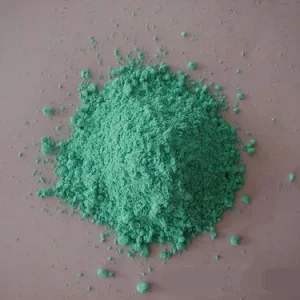
| Basic Cupric Nitrate | Cu2(OH)3NO3 | ≥ 98.5% | Pyrotechnic colorants, wood preservative catalyst, gas generation | UN 1477 Class 5.1 / 25kg Anti-Static Drums |
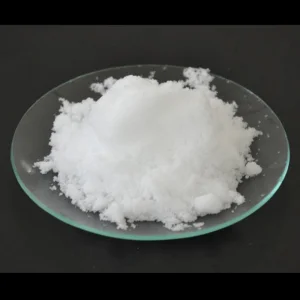
| Aluminum Nitrate Nonahydrate | Al(NO3)3·9H2O | ≥ 99.0% | Petroleum cracking catalyst, insulating ceramics, textile mordant | UN 1438 Class 5.1 / Moisture-proof Bags |
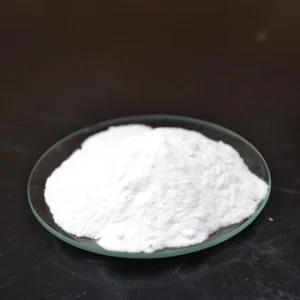
| Lithium Nitrate Technical Grade | LiNO3 | ≥ 99.2% (Low Na/K) | Eutectic molten salts, concrete ASR remediation, heat transfer media | UN 2722 Class 5.1 / Sealed Fiber Drums |
| Hydroxyl Terminated Polybutadiene (HTBN) | Oligomeric Matrix | Hydroxyl Value Compliant | Aerospace sealants, polymer bonding, defensive elastomeric liners | Industrial ISO Drums / Temperature Controlled |
Over the next decade (2026–2036), the adoption of nitrates across London and Northern Europe will be propelled by three major technological vectors:
Vector A: Molten Salt Thermal Energy Storage (TES). As the UK grid integrates surging tranches of North Sea offshore wind power, industrial-scale grid balancing demands non-flammable, thermally resilient thermal storage. Binary and ternary eutectic nitrate salts (mixtures of LiNO3, NaNO3, and KNO3) achieve operating temperature bandwidths from 130°C to 550°C without vapor phase pressurization, providing vital thermal inertia for district heat networks and industrial steam cogeneration around the UK.
Vector B: Low-Carbon Pozzolanic Concrete Chemistry. To comply with London’s ambitious Net Zero 2030 building targets, construction specifiers are substituting Portland cement with supplementary cementitious materials (slag, fly ash, calcined clay). Because these blends demonstrate prolonged early-age setting times in cold British weather, nitrate-based hardening accelerators serve as non-corrosive chemical triggers that expedite hydration without deteriorating interior structural durability.
Combining metallurgical precision, advanced synthesis chemistry, and international compliance to support high-reliability engineering sectors.
Fully compliant safety data sheets (GHS-format SDS), poison center notifications, and detailed substance evaluations to streamline clearance through HM Revenue and Customs and the Health and Safety Executive (HSE).
Sub-ppm controls on detrimental chlorides, iron, sulfates, and heavy metals via continuous multi-stage recrystallization, ensuring high activity yields in chemical catalysis and electronics etching.
Strict adherence to IMDG (International Maritime Dangerous Goods) and ICAO/IATA standards. UN-certified steel drums, specialized inner poly-liners, and palletized vacuum barriers prevent moisture absorption.
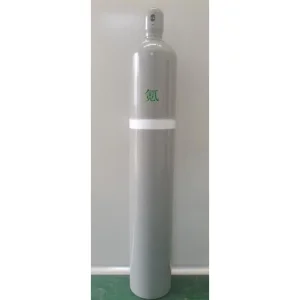
Supplying the full spectrum of high-specification metal powders, inert noble gases, and functional polymers engineered for precision processing in Greater London and global manufacturing lines.
Clear technical answers regarding delivery protocols, quality validation, storage protocols, and UK regulatory compliance.
We partner with tier-one shipping lines providing direct services from Qingdao, Shanghai, and Ningbo directly into the Port of London (London Gateway / Tilbury) and Southampton. Cargo is packaged according to UN Class 5.1/4.3/2.2 specifications with complete dangerous goods declarations (DGD), enabling swift customs clearance via UK freight clearing agents experienced with chemical precursors.
Every shipment is issued an authentic batch Certificate of Analysis (COA) containing precise assay percentages, heavy metal trace analyses conducted via Inductively Coupled Plasma Optical Emission Spectroscopy (ICP-OES), moisture content determination, and particle size distribution (PSD) laser diffractometry curves where applicable. We also supply REACH-ready Safety Data Sheets (SDS) and facilitate third-party inspection (SGS, Intertek) upon customer request.
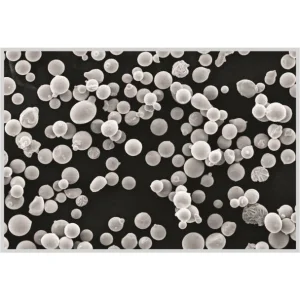
Yes. In addition to chemical salts, our vacuum inert gas atomization towers can customize Al-based, Zn-Al, and specialized alloy powders to tailored D10/D50/D90 distributions (e.g., 15–53 μm for laser powder bed fusion, or 45–105 μm for HVOF thermal spray). Powders undergo high-efficiency cyclonic classification and are packaged under dry argon in hermetic containers.
Inorganic nitrates—specifically aluminum nitrate and lithium nitrate—are intensely hygroscopic and deliquescent. For facilities across Greater London and Southeast England, we recommend climate-controlled warehouses operating below 60% relative humidity. Materials are shipped in heavy-gauge polyethylene heat-sealed liners inside UV-resistant drums to safeguard crystalline integrity until formulation.
We regularly dispatch air-freight analytical sample quantities (typically 250g to 2kg in sealed containers) accompanied by lot-specific COA data for laboratory qualification. For hazardous items regulated by the IATA Dangerous Goods Regulations, we use accredited courier channels to ensure delivery directly to university and corporate testing facilities in London, Cambridge, and Oxford.
Connect directly with YANXA chemical engineers and commercial managers to secure factory-direct pricing, custom batch specifications, and compliant shipping schedules to London and international ports.