Wholesale Atomized Spherical Aluminum Magnesium Alloy Powder for Canada
- Chemistry: Al-Mg 50:50 / 60:40 or Custom
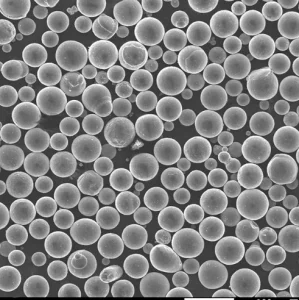
- Sphericity: ≥ 94% Gas Atomized
- PSD: 15–53 μm, 45–105 μm or Tailored
- Application: AM, Energetic Formulations
Direct factory bulk supply guaranteed under strict ISO 9001 quality frameworks, tested against ASTM B213 Hall Flow and ASTM B822 particle size distribution benchmarks for mission-critical manufacturing across Canada.
From the aerospace innovation clusters in Quebec to the heavy extractive energy corridors of Alberta and Ontario's electric vehicle manufacturing hubs, Canadian manufacturing demands metallurgical powders with ultra-low oxygen content, tight sieve fractions, and traceable chain of custody.
The Montreal aerospace hub (Greater Montreal, Mirabel) and Southern Ontario aerospace clusters demand spherical aluminum-based alloy powders with exceptional spherical integrity for Laser Powder Bed Fusion (L-PBF) and Electron Beam Melting (EBM). Critical requirements focus on satellite-free powder grains, hall flow rate < 28 s/50g, and oxygen contamination below 0.08 wt% to prevent structural porosity under cyclic thermal fatigue.
With Canada's massive multi-billion capital injection into EV gigafactories across Windsor, St. Thomas, and Oakville, atomized flake Zn-Al and light-alloy powders are essential. They provide thin-film zinc-flake galvanic corrosion protection on chassis sub-assemblies, while micronized aluminum and magnesium powders are increasingly deployed in conductive polymer adhesives and lightweight structural composites.
In the oil sands of Athabasca, deep-well drilling in the Western Canadian Sedimentary Basin, and British Columbia hard-rock mining sites, severe abrasion and cavitation destroy standard machinery. Our pre-alloyed spherical and high-entropy alloy powders are engineered for HVOF and Plasma Transferred Arc (PTA) thermal cladding, offering service-life extensions exceeding 300% in harsh corrosive slurries.
| Alloy Powder Family | Manufacturing Technology | Typical Mesh / PSD (μm) | Target Canadian Standard / Spec | Primary Industrial Use-Case in Canada |
|---|---|---|---|---|
| Al-Mg Alloy Series (Spherical) | Inert Argon Gas Atomization | 15–53 μm / 20–63 μm | ASTM B822 / AMS 4998 Equivalency | Aerospace Additive Manufacturing & Pyrotechnic Engineering |
| Pure Aluminum & Al-Si Flakes | Controlled Wet Ball Milling / Lubricant Treat | D50: 12–28 μm (Aspect Ratio 30:1) | ASTM D962 Type II / CGSB 1-GP-143 | Offshore Rig Barriers, Anti-Corrosion Structural Primers |
| Zinc Flake (Pure Zn & Zn-Al) | Cryogenic Micro-Flaking & Passivation | D50: 8–18 μm (Thickness 0.2–0.5 μm) | ISO 10683 / GM 6047M / ASTM F1136 | Automotive Fasteners, Heavy Infrastructure Bolt Galvanizing |
| Engineered Pre-Alloy Formulations | Vacuum Induction Gas Atomization (VIGA) | 45–105 μm / 53–150 μm | ASTM B214 / NACE MR0175 Severe Service | Mining Mud Pumps, Oil Sands Slurry Valve Cladding (PTA/HVOF) |
The global metal powder industry is undergoing rapid disruption driven by additive manufacturing scale-up, EV battery gigafactory consumption, and volatile precursor raw material prices. Understanding these systemic market forces enables Canadian industrial leaders to insulate their procurement operations.
Canadian tier-1 manufacturing programs routinely face supply bottlenecks when relying solely on Western domestic atomization facilities, which carry multi-month order backlogs and rigid minimum batch sizes. Rising spot energy tariffs in North America have exacerbated conversion cost markups. Partnering directly with high-volume Chinese primary atomization hubs decouples procurement from regional energy spikes while securing direct access to major global primary aluminum and zinc refining basins.
With Canada enforcing stringent carbon reporting under the Greenhouse Gas Pollution Pricing Act and CEPA mandates, industrial buyers require transparent Scope 1, 2, and 3 emissions metrics. Our factories incorporate electrified, induction-heated melting vessels and closed-loop argon atomization recycling systems that significantly reduce net energy dissipation per metric ton of powder produced, ensuring full compliance with Canadian ESG sourcing directives.
Combining primary industrial feedstock access with high-vacuum supersonic inert gas atomization (VIGA/EIGA) infrastructure, delivering precision atomized alloy powders at institutional scales with rigorous batch-level documentation.
Our atomization towers operate in close geographical integration with high-purity aluminum and zinc smelters. This vertical synergy removes intermediate re-melting costs, guarantees chemical purity up to 99.99%, and eliminates trace elemental tramp contamination (Fe, Si, Cu) that degrades fracture toughness in additive components.
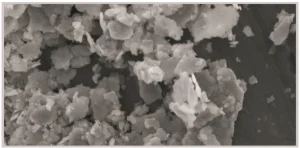
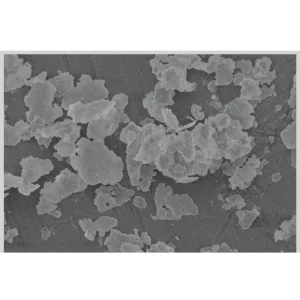
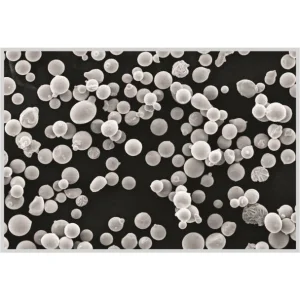
Every single Canadian production lot is evaluated via Malvern Mastersizer 3000 laser diffraction, Hall and Carney flow funnels (ASTM B212/B213), and LECO ONH gas combustion determinators. Real-time SEM scanning verifies zero satellite formation and uniform spherical geometry before packaging authorization.
We maintain active buffer stock of high-demand spherical Al-Mg, pure aluminum flakes, and zinc flakes specifically designated for contracted Canadian accounts. This mitigates trans-Pacific freight disruptions, guaranteeing immediate container loading and stable lead times into Vancouver, Montreal, and Halifax.
Continuous investment in closed-loop atomization, sub-micron particle engineering, and high-entropy alloy (HEA) systems positioned to empower next-generation Canadian industrial transformations.
Development and industrialization of next-generation scalmalloy-equivalent lightweight powders (Al-Mg-Sc-Zr) characterized by ultra-low interstitial oxygen content (< 400 ppm). Tailored explicitly for zero-crack laser bed fusion in high-payload Canadian commercial aerospace and space satellite constellations.
Introduction of graphene-reinforced zinc-aluminum flakes and organic-inorganic hybrid lamellar particles for micro-thin protective coatings. These systems exceed 3,500 hours in neutral salt spray while lowering total applied dry film thickness by over 40% on Arctic offshore energy structures.
High-Entropy Alloy (HEA) powders utilizing multi-principal component systems (FeCoCrNiMo / AlCrFeNiTi). Engineered to endure deep subterranean oil sands wear, nuclear reactor structural zones, and sub-zero Arctic mining conditions without brittle phase degradation.
Procuring metal powders across international borders requires stringent adherence to Canadian safety, environmental, and dangerous goods statutes. We provide turn-key documentation safeguarding your procurement process against border customs holds and safety infractions.
Reactive metal powders, notably spherical Al-Mg and finely milled aluminum, are classified under Transport of Dangerous Goods (TDG) Class 4.3 (Water-Reactive Substances) or Class 4.1 (Flammable Solids). We provide bilingual English/French Safety Data Sheets (SDS) strictly formatted according to Hazardous Products Regulations (HPR) and WHMIS 2015, fully aligned with GHS Revision 7 standards.
Every imported chemical substance and metal alloy composition is cross-referenced against Environment and Climate Change Canada's Domestic Substances List (DSL). We ensure all pre-alloy components and specialized surface lubricants do not trigger New Substances Notification (NSN) delays or unannounced environmental tariffs at the Port of Entry.
Shipments destined for Western Canada enter seamlessly through the Port of Vancouver or Prince Rupert via CN/CPKC rail corridors. Eastern destinations route through the Port of Montreal or Halifax. Cargo is packed in UN-certified steel drums (1A2/Y1.5/150) with heavy-gauge polyethylene inner liners and argon flush purging to eliminate humidity ingress during transit across Canadian winter temperature swings.
Every commercial delivery includes an auditable Certificate of Analysis (COA) specifying chemical assay via ICP-OES, interstitial gas limits via LECO, and granulometric curves (D10, D50, D90). Independent verification through accredited testing bodies such as SGS, Bureau Veritas, or Intertek is readily arranged prior to vessel dispatch.
Explore our complete institutional portfolio supporting advanced additive manufacturing, composite polymer synthesis, and electronic-grade shielding atmospheres across the Canadian industrial landscape.
In-depth responses covering regulatory compliance, transport classifications, particle characterization, and minimum commercial order sizes for engineering procurement teams.
Atomized Al-Mg powders and fine aluminum particulates fall under UN Class 4.3 (Substances which in contact with water emit flammable gases). We package these materials in hermetically sealed, UN-certified steel drums (1A2 standard) equipped with heavy-duty multi-layer barrier foil liners backfilled with dry argon gas. All maritime bookings comply strictly with the IMDG Code and Transport Canada TDG Part 4 (Dangerous Goods Safety Marks), accompanied by verified ERAP (Emergency Response Assistance Plan) documentation where volume thresholds apply.
Winter freight transiting from Vancouver ports through mountain corridors to Alberta or Ontario experiences extreme thermal fluctuations (down to -35°C). To eliminate humidity condensation inside drum headspace, our packaging lines utilize heated vacuum desiccating ovens prior to sealing inside double-laminated, moisture-vapor-proof aluminum foil envelopes under inert gas flush. This ensures relative humidity inside the primary containment remains strictly under 10% upon arrival at your Canadian warehouse.
Yes. We operate multi-stage supersonic air classification systems capable of precise cut-offs across any envelope between 10 μm and 150 μm. Whether you require narrow fractions (15–45 μm for EOS, SLM Solutions, or Renishaw L-PBF machines) or broader cuts (45–105 μm for DED laser deposition and thermal spray torches), our metrology team provides precise sieve curves matching your exact flowability, tap density, and melting kinetics requirements.
For standard production grades, our typical commercial MOQ starts at 100 kg to 500 kg depending on the alloy family. However, for Canadian R&D laboratories, university research centers (e.g., McGill, McMaster, Waterloo, UBC), and aerospace qualification programs, we supply representative 1 kg to 5 kg trial samples complete with batch Certificate of Analysis (COA) and GHS SDS via certified dangerous goods air couriers.
Partner directly with China's premier gas atomization and advanced materials manufacturer. Gain guaranteed quality assurance, ISO 9001 auditable batch traceability, and up to 45% landed cost savings delivered directly to your Canadian facility.