Pre-cleared hazardous goods (Class 5.1 Oxidizers) tailored for the Port of Hamburg chemical clusters, including precision surface treatment, catalyst production, and energetic compounding.
Hamburg operates not merely as Germany's largest seaport, but as a critical maritime gateway linking international synthetic chemical plants directly with European heavy manufacturing corridors along the Elbe River basin.
Handling specialized hazardous cargo via automated container terminals (CTA Altenwerder & CTB Burchardkai). Direct transshipment capabilities reduce demurrage expenses and enable rapid clearance under German Sea-Harbour Dangerous Goods Regulations.
Navigating volatility in nitrogen feedstocks, ammonia synthesis, and raw metal salts (copper, lithium, aluminum). Sourcing directly from verified Chinese synthesis plants delivers up to 18-24% margin preservation against local European distribution markups.
Nitrate salt handling within the Hamburg metropolitan zone requires strict alignment with the Federal Immission Control Act (BImSchG), water protection laws (AwSV WGK 2/3), and hazardous substance storage ordinances (TRGS 510).
How technical nitrates drive performance in precision surface finishing, automotive catalyst synthesis, maritime corrosion resistance, and thermal energy storage across Northern Germany.
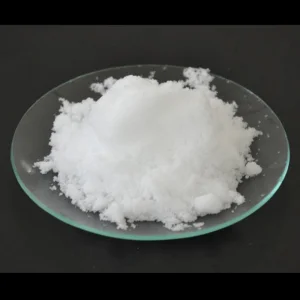
The aerospace manufacturing clusters located around Hamburg-Finkenwerder and Stade demand ultra-pure Aluminum Nitrate Nonahydrate (Al(NO3)3·9H2O) with trace heavy metal contaminants below 5 ppm. In anodizing workflows, aluminum nitrate serves as an essential precursor for hard-coat surface passivation, delivering uniform oxide dielectric layers that guard critical fuselage and wing assembly components against North Sea saline atmospheric degradation.
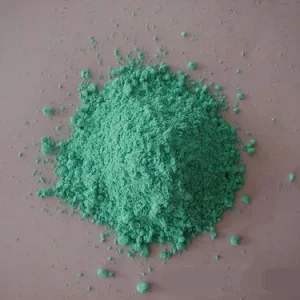
Basic Cupric Nitrate (Cu2(OH)3NO3) represents the international gold standard oxidizer for automotive gas-generant compounds utilized in passive safety restraints across Germany's automotive supply chain. With its distinct thermal decomposition profile and controlled burn-rate kinetics, our basic cupric nitrate yields zero toxic carbon monoxide peaks, ensuring strict compliance with European ECE R16 automotive safety mandates.
The petrochemical refining clusters of Harburg, Moorburg, and the adjacent Lower Saxony chemical park at Stade utilize metal nitrates as fundamental precursors in heterogeneous catalyst synthesis. Basic copper nitrate and aluminum nitrate undergo precise calcination routines to produce copper-alumina catalysts for methanol synthesis, desulfurization, and VOC emission abatement scrubbers installed throughout the port zone.
Lithium Nitrate (LiNO3) functions as an indispensable chemical additive for high-durability offshore maritime engineering, including the tidal berths of the Elbe estuary and North Sea offshore wind foundations. It permanently suppresses Alkali-Silica Reactions (ASR) in marine-grade concrete, preserving the tensile matrix of seawalls, quay walls, and offshore transformer platform pilings.
| Compound Specification | Chemical Formula | Assay (Purity) | Hamburg Industrial Sector | UN Dangerous Goods Class | Standard Packaging Format |
|---|---|---|---|---|---|
| Basic Cupric Nitrate | Cu2(OH)3NO3 | ≥ 99.0% (Cu ≥ 52.5%) | Automotive Restraints, Petrochemical Catalysts | UN 3085 / Class 5.1 (8) | 25kg UN Fiber Drums, Polyethylene Liner |
| Aluminum Nitrate Nonahydrate | Al(NO3)3·9H2O | ≥ 98.5% (Fe ≤ 10ppm) | Aerospace Anodizing, Synthetic Zeolites | UN 1438 / Class 5.1 | 25kg Moisture-Proof Multi-wall Bags |
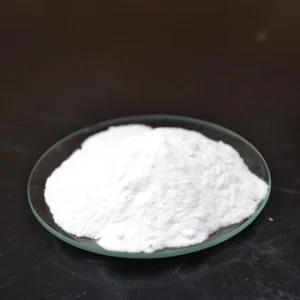
| Lithium Nitrate Technical Grade | LiNO3 | ≥ 99.5% (Na+K ≤ 50ppm) | Offshore Concrete Admixtures, Molten Salts | UN 2722 / Class 5.1 | 25kg Sealed UN Bags or 1000kg Big Bags |
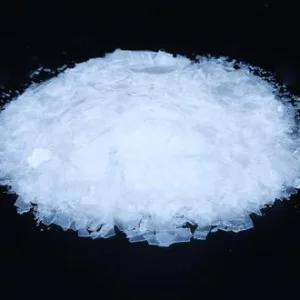
| High-Purity Copper Nitrate | Cu(NO3)2·3H2O | ≥ 99.0% (Chloride ≤ 20ppm) | Electroplating, Surface Passivation Baths | UN 3085 / Class 5.1 | 25kg Palletized Sealed Plastic Drums |
Eliminating border clearance bottlenecks and mitigating supply chain risks through comprehensive regulatory integration tailored to the European Single Market.
Every imported metric ton of our nitrate product range is backed by comprehensive REACH dossiers, verified Only Representative (OR) mandates, and formal registration numbers, ensuring direct eligibility for consumption across EU Member States without administrative liability.
As strong oxidizers (Class 5.1), shipments are packaged in strict compliance with UN certified packaging groups (PG II/III). We coordinate seamless transit from container vessel discharge at Waltershof directly into specialized ADR bonded trucks for overland transport to Lower Saxony, Schleswig-Holstein, and North Rhine-Westphalia.
We provide localized technical datasheets, GHS SDS documentation in German (CLP compliant), and full storage compatibility matrices to assist your Environmental Health & Safety (EHS) officers in fulfilling German AwSV water containment and TRGS 510 warehouse separation criteria.
Addressing the European Green Deal and German Federal Climate Change Act (KSG) through raw material decarbonization, low-chloride refining, and closed-loop hydrometallurgical recycling.
Our manufacturing facilities are transitioning nitric acid synthesis lines to utilize green hydrogen-derived ammonia, significantly depressing Scope 1 and Scope 2 embedded carbon emissions per metric ton. This enables Hamburg industrial buyers to satisfy upcoming European Carbon Border Adjustment Mechanism (CBAM) benchmarks seamlessly.
Advanced multi-stage recrystallization processes remove halide and alkali contaminants, yielding specialized electronic and optical grade aluminum and copper nitrates. These ultra-refined crystals eliminate micro-corrosion risks in cutting-edge semiconductor photolithography and precision electronic packaging lines.
In partnership with Northern German metal reclamation hubs, we develop hydrometallurgical recovery protocols allowing spend copper-nitrate etching liquors to be re-synthesized into technical grade basic cupric nitrate, achieving true circular economy alignment with zero liquid effluent discharge (ZLD).
Direct technical and logistical insights for chemical procurement officers, plant managers, and import logistics controllers.
Standard ocean freight shipments are quoted CIF Hamburg (Incoterms 2020) with direct departure from major chemical ports such as Qingdao, Ningbo, or Shanghai. Ocean transit times typically range between 28 to 34 days, arriving at Container Terminal Altenwerder (CTA) or Burchardkai (CTB). For urgent technical trials, certified air shipments of small dangerous goods batches can be coordinated via Frankfurt Airport (FRA) or Hamburg Airport (HAM) under ICAO/IATA dangerous goods provisions.
Hydrated nitrates (such as Aluminum Nitrate Nonahydrate and Basic Cupric Nitrate) are highly sensitive to hygroscopic moisture absorption and caking. We utilize UN-certified heavy-duty multi-layer polyethylene (PE) heat-sealed barrier liners inside robust composite fiber drums or moisture-barrier woven big bags with inner foil barriers. Desiccant packs and vacuum nitrogen purging are available upon request for sensitive electronic-grade crystalline consignments.
Yes. We maintain dedicated milling, classification, and controlled crystallization facilities. For Basic Cupric Nitrate utilized in pyrotechnic gas generators, we supply precise micronized grades (D50 = 3–8 μm) or free-flowing granular grades (100–300 mesh) that guarantee consistent burn rates and bulk density matching your automated feeding machinery.
Every delivery includes a batch-specific Certificate of Analysis (COA) detailing assay purity, trace metal analysis via ICP-MS, moisture content, and particle size distribution. We also furnish full GHS-compliant Safety Data Sheets (SDS in German, adhering to REACH Regulation (EC) No 1907/2006 and CLP (EC) No 1272/2008), Packing Lists, Commercial Invoices, Non-Asbestos Declarations, and Multimodal Dangerous Goods Declarations (IMO DGD).
Most inorganic nitrate salts are categorized under Water Hazard Class 1 or 2 (WGK 1 / WGK 2) according to the German Federal Environment Agency (Umweltbundesamt - UBA). Our technical engineering team provides comprehensive ecological and toxicological dossiers allowing your local Hamburg or regional facility to specify containment bunding, drainage shut-off systems, and spill-retention capacity in direct compliance with AwSV regulations.
Explore our integrated chemical compounds, functional polymers, high-performance alloys, and specialty gases manufactured to rigorous global industrial tolerances.