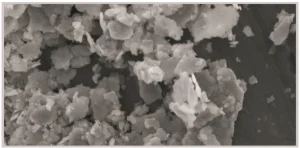



In high-precision advanced materials engineering, 3 micron aluminum powder (D50 = 3.0 μm) occupies a critical technological nexus between conventional micron-scale metallurgical powders and volatile nanoscale particulates. Exhibiting a highly defined specific surface area (SSA) typically exceeding 2.2 m²/g, a spherical morphology index greater than 96%, and an active metallic aluminum content strictly calibrated above 99.0%, this ultra-fine grade serves as an irreplaceable functional additive across modern aerospace, photovoltaic conductive metallization, thermal interface composites, and defense pyrotechnics.
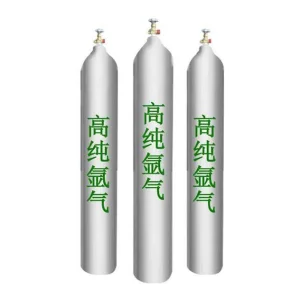
As premier Chinese manufacturing facilities have migrated from conventional compressed-air dispersion toward closed-loop Supersonic Vacuum Inert Gas Atomization (VIGA) backed by pure Argon or Nitrogen atmospheres, the metallurgical landscape has fundamentally changed. Today, Chinese production yields sub-micron and 3-micron powders with tight log-normal distributions (D10 ≥ 1.5 μm, D90 ≤ 5.8 μm), achieving repeatable tap densities exceeding 1.25 g/cm³ that easily surpass the parameters traditionally restricted to legacy European or Japanese specialists.