Specification-grade atomized alloys, modified liquid elastomers, and ultra-high-purity gases manufactured according to stringent ISO 9001 quality matrices and UN dangerous goods standards.






A data-backed analysis for engineering teams, chief procurement officers, and metallurgy specialists seeking structural cost efficiency, batch consistency, and stringent compliance assurance.
Modern industrial supply chains require significantly more than commoditized pricing. In precision applications ranging from aerospace thermite pyrotechnics and refractory monolithics to ultra-durable automotive OEM pigment coatings and lithium iron phosphate (LFP) energy storage cathode precursors, the synergy between micro-engineered Aluminium Powder and high-purity Iron Oxide (Fe2O3, Fe3O4, and FeOOH) defines end-product yield, mechanical tensile integrity, and chemical stability.
Strategic Sourcing Imperative: In thermite reactions (Fe2O3 + 2Al → Al2O3 + 2Fe + 851.5 kJ/mol), stoichiometric performance depends wholly on specific surface area (BET), passive oxide layer thickness (Al2O3 skin < 4.2 nm), and total absence of tramp heavy metals. Purchasing managers must bypass generic trading brokers and partner directly with vertically integrated Chinese atomization and chemical synthesis plants operating under audited ISO 9001:2015 frameworks.
Procuring raw materials from China demands rigorous alignment on critical physical-chemical boundaries. Discrepancies in moisture content, loose bulk density, or trace contamination (e.g., Chlorides, Sulfates, Silica) can induce catastrophic failure in sintering lines or cause uncontrolled exotherm spikes during compounding.
| Material Class | Common Mesh / Particle D50 | Purity & Active Content | Moisture Limit | Primary Industrial Use Case |
|---|---|---|---|---|
| Gas-Atomized Spherical Al Powder | 15–45 μm / D50: 28 μm | ≥ 99.8% Active Al | ≤ 0.08% | Additive manufacturing, energetic composite propellants, thermal spray coatings |
| Flake / Leafing Aluminium Powder | 200–400 Mesh (38–75 μm) | ≥ 98.5% Active Al | ≤ 0.15% | Anti-corrosive marine paints, protective primers, metallic industrial inks |
| Micronized Red Iron Oxide (Fe2O3) | D50: 0.2–0.8 μm | ≥ 96.0%–98.5% Fe2O3 | ≤ 0.50% | High-temperature ceramic glazes, architectural colorants, plastic compounding |
| Magnetite Black Iron Oxide (Fe3O4) | D50: 0.3–1.2 μm | ≥ 93.0%–97.0% Fe3O4 | ≤ 0.60% | Magnetic induction cores, laser printer toner formulations, EMI shielding |
| Technical Grade Al-Fe Thermite Blends | Custom Screened (80–325 Mesh) | Optimized Stoichiometry | ≤ 0.05% | In-situ rail exothermic welding, metallurgical deoxidizers, aluminothermic reduction |
Understanding the pricing mechanisms of Chinese chemical and metallurgical plants: raw ingot indexing, electricity consumption, atomization gas medium, and packaging regulations.
Pricing correlates directly with the Shanghai Futures Exchange (SHFE) A00 aluminium spot index plus a processing conversion premium. Nitrogen atomization carries lower premiums, whereas inert argon-gas atomization for ultra-spherical additive manufacturing powder commands higher specialized processing fees per metric ton.
Synthetic iron oxide pigments rely on scrap steel or ferrous sulfate pickling liquor by-products oxidized under precision pH, aeration, and heating curves. Calcination fuel (natural gas or clean coal gasification) represents up to 34% of direct production cost, rendering regional energy tariffs decisive for FOB price competitiveness.
Untreated atomized aluminium powder is categorized as UN 1396 (Dangerous Goods Class 4.3, emitting flammable gases in contact with water) or UN 1309 (Class 4.1). Specialized steel drums with moisture barrier linings, DG-certified warehousing, and port-level IMDG hazardous surcharges typically add $180–$320 per container load.
| Product Classification | Grade / Specification Profile | Estimated Volume Tier | Indicative Price (FOB Tianjin/Qingdao/Shanghai) | Packaging Standard |
|---|---|---|---|---|
| Spherical Atomized Al Powder | D50: 15–30 μm, Active Al ≥ 99.7% | FCL (10–20 MT) | $3,150 – $3,780 / MT | 50 kg UN Steel Drums with inner argon purge |
| Industrial Flake Al Powder | 200 Mesh, Active Al ≥ 98.0% | FCL (≥ 14 MT) | $2,850 – $3,250 / MT | 25 kg Iron Drums with hermetic PE liner |
| Synthetic Red Iron Oxide (Fe2O3) | Pigment Grade Red 130 / 110, Assay ≥ 96% | FCL (20–25 MT) | $850 – $1,280 / MT | 25 kg Multi-ply paper bags / 1,000 kg Jumbo Bags |
| Synthetic Yellow Iron Oxide (FeOOH) | Pigment Grade Yellow 3920, Assay ≥ 86% | FCL (16–20 MT) | $920 – $1,420 / MT | 25 kg Valve Paper Bags palletized |
| Synthetic Black Iron Oxide (Fe3O4) | Pigment Grade Black 330, Assay ≥ 94% | FCL (20–24 MT) | $880 – $1,340 / MT | 25 kg Moisture-resistant polypropylene woven bags |
| Exothermic Thermite Pre-mix | Formulated stoichiometric Al/Fe2O3 blend | LCL / FCL (Custom) | $3,400 – $4,100 / MT | UN Class 4.1 Certified Composite Packing |
*Note: The prices quoted above serve as indicative reference points based on raw ingot base levels and typical energy costs. Actual contract quotes are subject to weekly LME/SHFE index updates, exact particle size distribution (PSD) tolerances, and required maritime inspection protocols.
From infrastructural megaprojects to high-tech electronic component manufacturing, explore the technical synergy and precise operational mechanisms of these critical materials.
Exothermic rail joining utilizes tailored blends of coarse flake or granular aluminium with granular red iron oxide (Fe2O3). Upon ignition at ~1200°C, the mixture sustains a self-propagating reaction producing superheated molten iron at ~2500°C that fuses heavy-haul rail joints without external power supplies.
Flake aluminium powders provide overlapping barrier protection (leafing effect) reflecting UV radiation, while micronized red iron oxide functions as an active passivating pigment in epoxy primers. Together, they safeguard offshore rigs, commercial bridges, and petrochemical storage terminals against salt-spray corrosion.
High-purity synthetic iron oxide (Fe2O3 > 99.2%, low heavy metals) serves as the indispensable precursor for hydrothermal synthesis of Lithium Iron Phosphate (LiFePO4) cathode crystals, powering electric vehicles and grid-scale lithium-ion battery containers worldwide.
In green construction material manufacturing, un-leafing aluminium powder is dispersed into alkaline sand-lime slurry. The reaction releases micro hydrogen gas bubbles (2Al + Ca(OH)2 + 6H2O → Ca[Al(OH)4]2 + 3H2↑), forming lightweight, high-insulation structural blocks with superior thermal ratings.
Aluminium powders act as reactive antioxidants in carbon-bonded alumina-carbon refractory bricks. By reacting with carbon monoxide to form aluminium carbide (Al4C3) and corundum (Al2O3), the powder inhibits graphite oxidation in basic oxygen furnaces and steel ladles.
Black iron oxide (Fe3O4) and hematite (Fe2O3) are processed with nickel, zinc, or manganese oxides through solid-state sintering to manufacture high-permeability soft ferrite toroids used in high-frequency power transformers and wireless charging coils.
Leading Chinese production facilities are transitioning from conventional fossil-fueled reduction processes to closed-loop circular systems, inert closed-circuit atomization, and AI-driven particle classification.
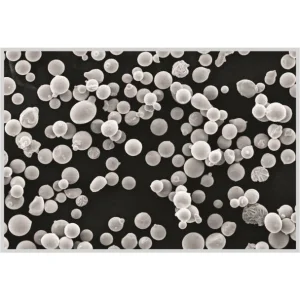
Deployment of de Laval supersonic convergent-divergent nozzles yielding ultra-narrow particle distributions (D10-D90 span < 1.2), virtually eliminating satellite particles in additive manufacturing powders.
Replacing natural gas calcination kilns with green hydrogen flash reactors for iron oxide synthesis, slashing scope-1 carbon footprint by 84% while maintaining strict >99% crystalline phase purity.
Co-locating iron oxide pigment manufacturing with cold-rolled steel mills to recover iron chlorides and sulfates via spray-roasting crystallization, establishing zero-waste circular loops.
Integrating continuous laser diffraction sensors within the cyclone classification stream to modulate atomization gas pressure in millisecond feedback loops, guaranteeing zero lot-to-lot variance.
Ensuring zero border hold-ups, seamless customs clearance, and comprehensive compliance across REACH, RoHS, GHS, and international Dangerous Goods (DG) shipping treaties.
Every active production batch exported from our partnering plants operates under full REACH registrations (Aluminium powder EC 231-072-3, Diiron trioxide EC 215-168-2). Standard supply packets feature 16-section SDS authored in full compliance with the UN GHS 9th Revised Edition.
Flake and atomized powders subject to water-reactive or flammable solid rules ship exclusively in UN-rated steel drums (1A2/Y1.5/100) hermetically sealed under dry inert nitrogen atmosphere. Packaging withstands hydrostatic drop tests, vibration stress, and maritime moisture infiltration during transoceanic transit.
Every lot is subjected to dual-tier analytical validation before factory gate release: Inductively Coupled Plasma Optical Emission Spectrometry (ICP-OES) for trace element analysis, Malvern Mastersizer 3000 for laser diffraction PSD, and Karl Fischer titration for residual moisture verification.
In-depth responses resolving technical screening, Dangerous Goods logistics, custom alloying, and international contract terms.
Spherical aluminium powder is manufactured by atomizing molten aluminium with high-velocity inert gases (Nitrogen or Argon), creating rounded, highly flowable particles ideal for additive manufacturing, thermal spray, and powder metallurgy. In contrast, flake aluminium powder is produced via ball milling with stearic acid or mineral spirits, yielding thin, leafing or non-leafing planar structures engineered for reflective coatings, anti-corrosive paints, and cellular concrete foaming.
High-grade fine aluminium powder reacts exothermically with moisture to generate hydrogen gas. Chinese ISO 9001 manufacturers mitigate this risk by sealing powders in UN-certified steel drums lined with aluminum-foil composite vacuum bags containing activated desiccants. Powders sensitive to oxidation are blanketed under high-purity argon or nitrogen gas to guarantee zero degradation during 30 to 60 days of ocean freight.
Yes. We supply pre-blended, balanced formulations combining coarse atomized aluminium powder with specific crystalline-phase synthetic red iron oxide (Fe2O3) or magnetite (Fe3O4), customized with alloying additives (Ferromanganese, Carbon, Ferrovanadium) to match target rail hardness ratings (e.g., UIC 860 R260 or R350HT standards) upon solidification.
Every single consignment ships with a comprehensive batch dossier including: Batch Certificate of Analysis (COA) specifying laser diffraction PSD (D10, D50, D90), active metal assay, and residual moisture; 16-section GHS SDS; packing list; commercial invoice; Certificate of Origin; and official Dangerous Goods inspection certificates issued by CIQ. Third-party testing by SGS, BV, or Intertek is routinely coordinated upon request.
Explore our extensive portfolio of alloy powders, chemical curing crosslinkers, high-purity inorganic salts, and ultrapure cryogenic industrial gases ready for immediate containerized deployment.