

Specialty Gas
Request Specification & Quote


Precision materials, electronic specialty gases, and elastomer resins engineered for exacting metallurgical, pyrotechnic, and chemical synthesis workflows.





An exhaustive technical evaluation of global production volumes, feed ingot purity tiers, energy surcharges, and the structural transition from air-milled flakes to high-sphericity inert gas-atomized powders.
China's consolidated dominance in primary electrolytic aluminum smelting (accounting for over 57% of global primary output) creates a distinct raw-material buffer against international supply shocks. By establishing direct pipeline access to molten primary A00 aluminum ingots (99.7% minimum assay), our facilities mitigate the thermal energy penalties of re-melting, ensuring strict upstream control over iron, silicon, and copper trace inclusions.
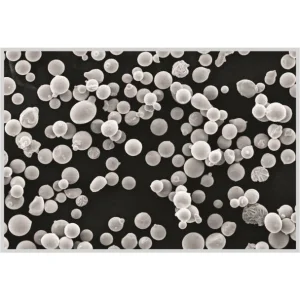
Air atomization, while economically feasible for civil explosives or aeration concrete, produces irregular nodular particles with thick, non-uniform surface oxide layers (Al2O3 up to 1.8 wt%). In contrast, our closed-loop Nitrogen and Argon gas atomization systems operate under strictly regulated partial oxygen pressures (<100 ppm), delivering perfectly spherical morphologies with an engineered native oxide skin (≤0.35 wt%) that ensures optimum rheology and laser absorption.
Procuring aluminum powders from European or North American compounders often entails layered intermediary margins, elevated cryogenic milling costs, and stringent local energy surcharges. Yanxatech (YANXA) provides factory-gate pricing with guaranteed technical data sheets (TDS) and batch Certificates of Analysis (COA). Our automated atomization towers and integrated air classification units cut unit production costs by up to 28% compared to Western benchmarks.
From structural aerospace additive manufacturing to highly reactive solid propulsion and photovoltaic metallization, our aluminum powders are customized to target rheological and thermochemical specifications.
Engineered for Laser Powder Bed Fusion (LPBF / SLM) and Direct Energy Deposition (DED). Our atomized pure aluminum and pre-alloyed spherical grades (AlSi10Mg, AlSi7Mg, Scalmalloy-type) achieve zero internal gas entrapment, low moisture absorption (<150 ppm), and optimal laser reflectance behavior for high-density structural flight components.
Used as a primary thermal booster and burning-rate stabilizer in composite solid propellants (APCP), thermite formulations, and high-performance mining pyrotechnics. High active metallic aluminum content (≥99.5%) maximizes combustion heat release (>31 MJ/kg), while strictly controlled particle sizes eliminate acoustic combustion instabilities.
Critical functional phase in screen-printable conductive aluminum pastes for crystalline silicon solar cells. Spherical morphology with low sub-micron fines prevents paste rheology drift and ensures uniform eutectic Al-Si layer formation upon rapid thermal sintering, maximizing open-circuit voltage and fill factor efficiency.
Engineered for clean ladle metallurgy (secondary refining of special steels) and high-velocity oxy-fuel (HVOF) or flame-sprayed anti-corrosion barrier coatings. Acts as an aggressive dissolved oxygen scavenger in molten steels, preventing pinhole porosity and enhancing subsequent ingot rollability.
| Grade Category | Typical Morphology | D50 Range (μm) | Active Al Content (%) | Tap Density (g/cm³) | Key Testing Standard |
|---|---|---|---|---|---|
| AM-SLM Pro | Gas-Atomized Spherical | 32.5 ± 2.5 | ≥ 99.80% | 1.52 – 1.62 | ASTM B214 / ISO 9276 (Laser Diffraction) |
| Pyro-Rocket Energetic | Micro-Spherical / Spheroid | 6.0 ± 1.0 | ≥ 99.50% | 1.15 – 1.30 | GB/T 2085 / ISO 13320 |
| Solar PV Conductive | Gas-Atomized Spherical | 4.5 ± 0.5 | ≥ 99.70% | 1.40 – 1.48 | BET N2 Adsorption / ICP-OES Trace Analysis |
| Anti-Corrosive Flake | Lamellar Flake / Leafing | 18.0 ± 2.0 | ≥ 98.50% | 0.45 – 0.65 | Water Coverage / ASTM D480 |
| Metallurgical Cal-Grade | Nodular / Air Atomized | 120 – 450 | ≥ 99.20% | 1.20 – 1.38 | Dry Mechanical Sieve / Hall Flow (ASTM B212) |
Aluminum powder is recognized globally under UN Model Regulations as hazardous cargo. We bridge technical chemistry with international logistics compliance, mitigating clearance liabilities for industrial importers.
Dry, non-passivated aluminum powder is classified under UN 1396 (Class 4.3: Substances which, in contact with water, emit flammable gases, PG II/III) or UN 1309 (Class 4.1: Flammable solids). We utilize heavy-gauge galvanized UN-certified steel drums (1A2/Y1.5/100) with airtight EPDM sealing gaskets and tamper-evident locking rings. Every drum undergoes positive pressure leak tests prior to cargo staging.
Procurement requires verifiable traceability. Yanxatech releases every delivery against a formal batch COA detailing active aluminum percentage (determined via precise hydrogen gas volumetric evolution methods), acid-insoluble residue, iron/silicon/copper trace contents measured by ICP-OES, and full laser diffraction PSD curve outputs (Malvern Mastersizer 3000).
Maritime transport of reactive metal powders requires stringent compliance with the International Maritime Dangerous Goods (IMDG) Code. Our dangerous goods dispatch team manages IMDG container packing declarations (CPC), port safety filings, and maritime reefer/dry container booking across major international sea routes.
Discover how advanced atomization nozzle engineering, nanoscale surface passivation, and zero-carbon induction melting are redefining the boundaries of light metal powders.
Implementation of de Laval close-coupled gas atomization nozzles operating at Mach 2.2 gas velocities. This ensures high yield (>65%) in the critical 15–45 μm AM band directly from molten metal streams, dramatically decreasing thermal energy cycles and reducing satellite agglomeration.
Developing ultra-thin molecular silane and organometallic barrier coatings applied via in-flight fluidized bed chemical vapor deposition. This technology prevents spontaneous oxidation in humid industrial environments while retaining 99.9% reactivity during additive melting or energetic detonation.
Expanding our alloy synthesis towers to produce rapid-solidification multi-principal element powders. These materials will combine high specific stiffness with exceptional operating limits up to 400°C, offering replacements for titanium in supersonic aerospace housings.
Transitioning 100% of our melt induction crucibles to green hydro- and solar-powered electric furnaces with integrated 99.4% closed-loop argon recovery systems, lowering the Scope 1 and Scope 2 carbon footprint of our aluminum powder output to <2.1 kg CO2e/kg powder.
Clear, definitive answers covering analytical testing methodologies, dangerous goods handling, minimum orders, and custom grading protocols.
Complete your supply portfolio with our certified atomized alloys, functional polymers, rare gases, and industrial chemical precursors.







Connect directly with Yanxatech's materials engineering desk. To enable an accurate, legally binding proforma quotation and delivery schedule, please provide your target particle size distribution (PSD cutoffs), purity thresholds, annual procurement volume, and destination seaport.