Explore high-purity industrial gases, tailored synthetic elastomers, and engineered inorganic precursors produced under ISO 9001 certified manufacturing controls.
A rigorous examination of molecular structure, single-electron redox thermodynamics, and synthesis coordination chemistry for industrial scale applications.
Ammonium Cerium(IV) Nitrate—chemically expressed as (NH4)2[Ce(NO3)6] and recognized globally under CAS No. 16774-21-3—represents the pinnacle of tetravalent cerium coordination chemistry. Unlike simple trivalent cerium salts, CAN features a central Ce4+ ion with an electron configuration of [Xe]4f0, coordinated by six bidentate nitrato ligands in an icosahedral arrangement. This coordination geometry endows the complex with exceptional solubility in aqueous media and polar organic solvents while maintaining an extraordinary standard reduction potential exceeding +1.61 V in 1M perchloric acid solutions.
In global industrial synthesis and microelectronics manufacturing, CAN acts as a definitive single-electron oxidant (SET - Single Electron Transfer). Because Ce(IV) accepts an electron to yield stable, diamagnetic or weakly paramagnetic Ce(III) with minimal reorganization energy, the kinetic barrier for electron transfer is remarkably low. As semiconductor architectures scale downward and photolithographic chrome etching reaches nanometer precision, synthetic consistency from direct Chinese manufacturing hubs has become critical for global tech supply chains.
Operates via outer-sphere or inner-sphere SET pathways, making it irreplaceable for selective alcohol oxidation, benzylic functionalization, and radical addition chemistry in active pharmaceutical ingredient (API) manufacturing without toxic heavy metal by-products like chromium(VI) or osmium.
Combined with perchloric or nitric acid in photomask etching baths, CAN enables anisotropic digestion of metallic chromium thin films at precisely calibrated etch rates (2.5 to 5.0 Å/s) without edge feathering or pinhole damage to underlying quartz substrates.
Thermal decomposition of electronic-grade CAN provides ultra-fine, monodisperse cerium dioxide (CeO2) nanoparticles. These nanoparticles are essential for chemical mechanical planarization (CMP) slurries for sub-7nm logic and 3D NAND wafer polishing.
Direct mine-to-crystal integration, solvent extraction infrastructure, clean electrochemical oxidation, and unrivaled economy of scale.
China controls over 70% of upstream rare-earth extraction (bastnäsite and monazite ores from Bayan Obo and southern ion-adsorption clays). Domestic manufacturers source high-purity cerium carbonate (Ce2(CO3)3) directly without oceanic transport markups or geopolitical supply-chain blockades.
Chinese refining plants employ multi-stage counter-current liquid-liquid solvent extraction batteries (using 2-ethylhexyl phosphonic acid mono-2-ethylhexyl ester, PX-507 / HEHEHP), separating cerium from lanthanum, praseodymium, and neodymium to achieve Ce/TREO ratios exceeding 99.999%.
Transitioning away from legacy chemical oxidizers (such as sodium persulfate or lead dioxide) that contaminate product matrices, top-tier Chinese facilities use divided-cell membrane electrochemical reactors with titanium-supported DSA anodes to oxidize Ce3+ to Ce4+ with 92%+ current efficiency.
For semiconductor fabs, modern Chinese export plants carry out final crystallization, vacuum centrifuging, and automated double-vacuum bagging within ISO Class 5 (Class 100) modular environments, preventing airborne silica and airborne molecular contaminants (AMCs).
Every commercial consignment must be matched against strict ICP-MS, titrimetric, and particle-dispersion parameters to guarantee zero failure in downstream applications.
| Analytical Parameter | Industrial Grade (Catalyst/Dye) | Analytical Reagent (AR Grade) | Electronic Grade (Semi/Photomask) | Testing Methodology |
|---|---|---|---|---|
| Assay (as (NH4)2[Ce(NO3)6]) | ≥ 98.5% | ≥ 99.5% | ≥ 99.99% | Redox Titration (Ferrous Ammonium Sulfate / Ferroin) |
| Total Rare Earth Impurities (TREO) | ≤ 0.5% | ≤ 0.05% | ≤ 10 ppm | ICP-OES / High-Resolution ICP-MS |
| Iron (Fe) | ≤ 20 ppm | ≤ 5 ppm | ≤ 0.5 ppm | Graphite Furnace AAS / ICP-MS |
| Heavy Metals (as Pb) | ≤ 50 ppm | ≤ 10 ppm | ≤ 1 ppm | Colorimetric / ICP-MS |
| Chloride (Cl-) | ≤ 50 ppm | ≤ 10 ppm | ≤ 2 ppm | Potentiometric Titration / Ion Chromatography |
| Sulfate (SO42-) | ≤ 100 ppm | ≤ 30 ppm | ≤ 5 ppm | Turbidimetric / Ion Chromatography |
| Insolubles in Dilute HNO3 | ≤ 0.05% | ≤ 0.01% | ≤ 0.002% (20 ppm) | Gravimetric Filtration (0.22 μm membrane) |
| Trace Alkali Metals (Na, K, Ca) | ≤ 200 ppm combined | ≤ 50 ppm combined | ≤ 1 ppm each | ICP-MS (Cleanroom Sampling) |
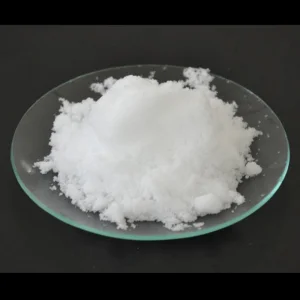
| Physical Appearance | Orange-yellow crystalline powder | Bright orange microcrystalline | Uniform orange-red monoclinic crystals | Visual / Optical Microscopy |
Methodological Rigor: Determining CAN purity requires a two-pronged analytical approach. The primary assay is established via standardized back-titration: Ce(IV) is reduced by an excess of certified ammonium ferrous sulfate solution ((NH4)2Fe(SO4)2·6H2O), and residual Fe(II) is back-titrated using standardized Ce(IV) standard or potassium dichromate against 1,10-phenanthroline-ferrous complex (ferroin) indicator. Simultaneously, trace metals that disrupt integrated circuits—specifically iron, copper, nickel, and sodium—are quantified via double-focusing sector field ICP-MS operating in cleanroom conditions.
Detailed wholesale pricing indices, volume breakdown structures, and the raw chemical indices that drive ammonium cerium nitrate quotes in China.
| Purity Tier & Grade | Order Quantity (MOQ Tiers) | Indicative Price Range (FOB China Port) | Primary Target Industry | Standard Packaging Format |
|---|---|---|---|---|
| Industrial Grade (98.5% - 99.0%) | 1 MT – 5 MT 5 MT – 20 MT FCL |
$12.50 – $15.80 / kg $9.80 – $12.20 / kg |
Specialty Glass, Redox Primers, Organic Dyes | 25 kg fiber drums with inner PE moisture liners |
| Analytical Reagent (99.5% - 99.8%) | 500 kg – 2 MT 2 MT – 10 MT |
$18.50 – $24.00 / kg $16.20 – $19.50 / kg |
Pharmaceutical Catalysis, Lab Reagent Packs | 25 kg UN-certified fiber/steel drums, vacuum sealed |
| High-Purity Electronic Grade (99.99%) | 100 kg – 1 MT 1 MT – 5 MT |
$35.00 – $48.00 / kg $28.00 – $34.50 / kg |
Display TFT-LCD Wet Etchants, Photomask Blank | Double-layered anti-static foil bags in 25 kg drums |
| Ultra-Pure Microelectronics (99.999% Sub-ppb) | Custom Lot Batches (50 kg+) | $65.00 – $95.00 / kg | Sub-14nm Logic Fabs, Optical Waveguides | Inert Argon purged amber fluoropolymer containers |
Cerium is co-produced during neodymium and praseodymium refining for EV permanent magnets. When magnetic rare-earth mining quotas expand, cerium supply increases, moderating base raw material costs for CAN production.
Electrolytic oxidation of Ce(III) to Ce(IV) requires steady high-current electrical inputs. Regional power tariffs and synthetic nitric acid market spot prices in Shandong, Sichuan, and Inner Mongolia directly impact baseline conversion costs.
As a strong inorganic oxidizer, CAN incurs mandatory dangerous goods compliance expenditures: UN-rated packaging, specialized hazardous warehousing storage, maritime DG surcharges, and port handling fees under IMDG regulations.
From flat panel display lithography to active pharmaceutical ingredient synthesis, CAN delivers precision chemical performance.
Modern TFT-LCD and OLED display manufacturing requires chromium wet-etching formulations containing 15-20% CAN, 5-8% perchloric acid (HClO4), and deionized water. The system oxidizes insoluble metallic chromium to soluble dichromate (Cr2O72-) ions with zero substrate pitting.
CAN serves as a mild, highly selective reagent for deprotecting p-methoxybenzyl (PMB) and p-methoxyphenyl (PMP) ethers. It also facilitates carbon-carbon bond forming radical reactions for complex multi-step steroid and antiviral therapeutic synthesis.
Utilized as a high-purity chemical precursor for sol-gel combustion synthesis of gadolinium-doped ceria (GDC) or samarium-doped ceria (SDC) electrolyte layers, ensuring superior oxygen-ion conductivity at intermediate operating temperatures (500–700°C).
Automotive and aerospace OEMs integrate microencapsulated cerium(IV) nitrate complexes into epoxy-silane pretreatment primers on aluminum alloys (2024-T3, 7075-T6). When damaged, migrating Ce4+ precipitates as insoluble Ce(OH)4, blocking cathodic corrosion pathways.
Stringent compliance with international maritime, air, and overland chemical transportation protocols to safeguard product stability.
Certified under UN 1477 (Nitrates, inorganic, n.o.s.), Hazard Class 5.1 (Oxidizing Substances), Packing Group II. Packed in UN-marked full-removable head fiber or steel drums (1G/1A2) with hermetically heat-sealed poly liners to prevent moisture uptake and cake formation.
Every shipment is accompanied by lot-specific Certificates of Analysis (COA), 16-section GHS-compliant Safety Data Sheets (SDS), Technical Data Sheets (TDS), Dangerous Goods Declarations (DGD), and certified Container Packing Certificates for port authorities.
Export clearance is managed via certified Chinese chemical transshipment ports (Shanghai, Qingdao, Tianjin) equipped with dedicated Class 5.1 temperature-regulated dangerous goods warehouses, ensuring zero dwell-time transit to Europe, North America, and Asia-Pacific destinations.
In-depth responses covering shelf-life stability, assay drift, sample testing, customs classification, and specialized customer formulations.
Procure certified industrial and electronic materials engineered to exact stoichiometric and morphological tolerances.
Key information required to issue a fast, accurate Request for Quotation (RFQ) for Ammonium Cerium(IV) Nitrate and related chemicals.
Specify target assay (e.g., ≥99.5% AR vs. ≥99.99% Electronic) and any critical trace limits (e.g., Fe < 0.5 ppm, Cl < 2 ppm) so our technical team can align processing and mother-liquor crystallization steps directly to your spec.
Indicate total campaign volume, batch cadence (e.g., 2 MT/month FCL), delivery terms (FOB China Port, CIF, CFR, or DDP), destination port, and customs clearance requirements for dangerous goods Class 5.1 cargo.
Confirm preferred drum materials (steel vs fiber), palletizing constraints (heat-treated ISPM-15 wood vs plastic), and whether batch qualification requires pre-shipment retained samples or third-party analytical sign-off.