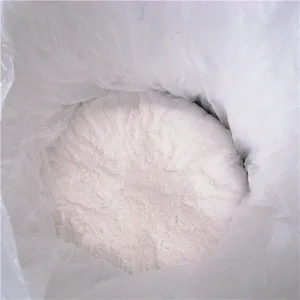
Direct sourcing from certified Chinese manufacturing nodes. Verified assay parameters, batch COA, and ISO/UN packaging compliance across every consignment.

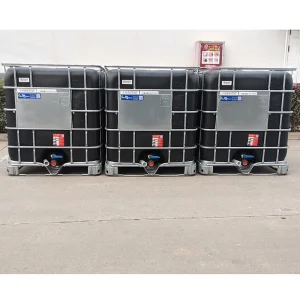





Understanding the shifting regulatory landscape, supply security, and chemical stability requirements for ammonium nitrate and liquid matrix solutions (UN 2426 / UN 1942).
Global availability of raw nitrogen intermediates continues to face disruptions caused by structural shifts in natural gas feedstocks, geopolitical tensions, and localized plant curtailments. Global enterprises require dual-redundancy and long-term supply relationships with Chinese manufacturers capable of stabilizing bulk deliveries across maritime freight channels.
Liquid ammonium nitrate in water (ANS) represents a far safer logistics profile compared to solid porous prills when transport regulations are strictly managed under UN 2426. By shipping homogeneous liquid solutions within heated, insulated ISO tanks, plants significantly decrease explosion hazards and bypass on-site dissolving steps.
Water gel explosives and civil emulsion matrices demand ultra-pure aqueous ammonium nitrate with virtually non-detectable heavy metal ions and strictly capped organic impurities. Trace contaminants directly sabotage fuel phase emulsifiers (such as PIBSA derivatives), leading to premature crystallization and costly blasting misfires.
Parametric analysis of industrial ammonium nitrate solutions in water: understanding crystallisation points, buffer chemistry, and analytical benchmarks.
| Analytical Parameter | Technical Specification (Aqueous Solution) | Solid High-Density / Reagent Grade | Analytical Methodology |
|---|---|---|---|
| Ammonium Nitrate (NH₄NO₃) Assay | 80.0% – 85.0% w/w (Customizable) | ≥ 99.5% Dry Basis | Formaldehyde Titration / Kjeldahl |
| Free Water (H₂O) Content | 15.0% – 20.0% w/w | ≤ 0.15% w/w | Karl Fischer Coulometry |
| pH (10% Solution @ 25°C) | 4.5 – 6.0 (Buffered) | 4.5 – 5.8 | Potentiometric Electrode |
| Chloride Content (Cl⁻) | ≤ 15 ppm | ≤ 5 ppm | Ion Chromatography (IC) |
| Sulfate Content (SO₄²⁻) | ≤ 50 ppm | ≤ 20 ppm | Turbidimetric / Spectrophotometry |
| Iron Impurity (Fe) | ≤ 2 ppm | ≤ 1 ppm | Inductively Coupled Plasma (ICP-OES) |
| Crystallisation Point | 65°C – 85°C (Maintained in transit) | 169.6°C (Melting Point) | Thermal Analysis / Phase Equilibrium |
Thermal stability is strongly dependent on solution pH. Below pH 4.5, self-catalyzed acid decomposition initiates, liberating nitric acid and nitrogen oxides. Our process incorporates food-grade buffering buffers and precise trace ammonia stabilization to sustain pH within the safe envelope across extended marine transit intervals.
Warm aqueous ammonium nitrate solutions are aggressive toward ordinary carbon steels and inferior austenitic stainless alloys. We implement strict molybdenum-stabilized 316L/316Ti transport containers and specialized inorganic passivators that inhibit stress-corrosion cracking and grain-boundary dissolution.
Our roadmap prioritizes green ammonia integration, combining electrolysis-driven renewable hydrogen with energy-efficient nitric acid loop converters. This reduces the Scope 1 and Scope 2 carbon footprint of aqueous nitrate solutions without altering analytical purity or batch performance.
Mitigating cross-border regulatory exposure with end-to-end IMDG/ADR certification, verified anti-caking handling, and auditable batch governance.
Ammonium nitrate liquid solutions (concentration exceeding 80% but not containing more than 0.2% combustible material) are classified under UN 2426 (Class 5.1). We operate strictly within IMO/IMDG special packing provisions, equipped with burst-disc safety venting and constant temperature-monitoring instrumentation.
Every shipment is linked to an auditable Digital Batch Record. Real-time satellite-linked telematic sensors record thermal gradients, GPS velocity, and pressure dynamics throughout transit, safeguarding the solution from entering crystallization windows.
From EU REACH registration files to Australian ODIS approvals and South American defense-ministry import manifests, our compliance division supplies tailored documentation including certified SDS in local languages, independent SGS/BV verification certificates, and verified bills of lading.
Direct answers for purchasing directors, supply chain engineers, and EH&S officers handling bulk chemical orders from China.
Complementary functional materials produced under strict chemical consistency for industrial synthesis, metallurgy, and advanced polymer compounding.