Specification-grade materials, atomized alloy powders, and specialty chemicals manufactured under rigorous process control parameters.


Analyzing powder metallurgical supply networks, industrial transition toward additive manufacturing, and the role of Chinese manufacturing clusters.
Global original equipment manufacturers (OEMs) in North America, Europe, and Asia-Pacific are increasingly pivoting toward consolidated Chinese producers capable of maintaining tight stoichiometric control and batch-to-batch repeatability. The global atomized metal powder ecosystem is transitioning from commoditized coarse grades to engineered, micro-alloyed spherical powders.
China's comprehensive upstream industrial chain—spanning primary aluminum, electrolytic copper, zinc refining, and specialized smelting—allows manufacturers to deliver gas-atomized and water-atomized powders at substantial cost advantages without compromising gas purity, satellite powder removal, or Hall flow rates.
Exporting atomized powders, especially reactive metals such as Aluminum-Magnesium alloys, requires rigorous adherence to UN Model Regulations (Class 4.3 flammable solids). Leading Chinese manufacturers operate under ISO 9001 and ISO 14001 certifications, pairing shipments with full GHS-compliant SDS, comprehensive TDS, and accredited ICP-MS chemical assays.
The progression of atomization physics: from mechanical breaking to inert gas supersonic disintegration.
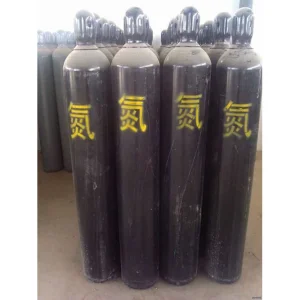
Deploying De Laval convergent-divergent nozzles with high-pressure Argon (Ar) or Nitrogen (N2) achieves gas velocities exceeding Mach 2. This suppresses droplet satellite formation and yields narrow Gaussian particle size distributions (D10, D50, D90) optimized for laser powder bed fusion (LPBF).
Integrating Plasma Rotating Electrode Process (PREP) and radio frequency induction plasma spheroidization for refractory metals and high-purity superalloys. The resulting zero-crucible contact eliminates ceramic inclusion defects and keeps interstitial oxygen down to trace levels.
Developing ultra-thin, controlled nano-oxide layers on fine aluminum and magnesium particles. This passivation preserves active metal enthalpy for energetic applications while mitigating spontaneous combustibility during transit, sieving, and mechanical feeding.
Implementing internal inert gas recovery units and powder recycling algorithms that reclaim un-sintered additive manufacturing scrap. This reduces raw material lifecycle emissions by up to 34% while meeting aerospace tensile and fatigue standards.
How atomized metal architectures power mission-critical engineering sectors worldwide.
High-sphericity Al-Si, Al-Mg, and specialized copper-alloy powders are the backbone of selective laser melting (SLM) and direct energy deposition (DED). High bulk density and consistent powder flowability ensure zero interlayer voids in thin-walled heat exchangers, turbine shrouds, and aerospace bracketry.
Atomized spherical aluminum-magnesium alloys (such as 50:50 Al-Mg ratios) and flake aluminum powders act as high-energy-density fuels. Their defined particle morphology dictates linear burning rates, ignition delay times, and thermite reaction kinetics in civil blasting, solid propellants, and signal flare production.
Flake zinc and zinc-aluminum alloy powders deliver sacrificial galvanic protection in automotive fasteners, marine infrastructure, and wind turbine coatings. Their layered leafing structure forms a tortuous path against moisture, providing up to 1,500 hours of neutral salt spray resistance without hexavalent chromium.
Beyond material sales: delivering full-spectrum technical validation, safety-certified logistics, and chemical engineering integration.
We provide tailored alloy development, adjusting binary and ternary ratios (e.g., Al-Mg, Zn-Al, Cu-Sn) alongside laser diffraction grading from sub-10 μm ultrafine fractions to 150 μm thermal spray cuts. Every order is matched to technical parameters rather than generic catalogue numbers.
Handling reactive metals, fine powders, and compressed gases requires strict compliance. We manage UN-approved steel drums with argon purge seals, desiccated vacuum moisture liners, and full compliance under IMDG and ICAO-TI conventions for hassle-free customs clearance worldwide.
Each production batch includes a Certificate of Analysis (COA) documenting Hall flow rate, tap density, apparent density, and SEM morphology micrographs. Third-party testing via international inspection bodies such as SGS, Bureau Veritas, or Intertek is available on request.
Essential guidance on particle morphology, production tolerances, international freight, and custom alloy synthesis.
Gas atomization utilizes inert gases (N2 or Ar) to break liquid metal streams into droplets that solidify with low surface tension, producing highly spherical particles with minimal oxygen pickup and high flowability. Water atomization utilizes high-pressure water jets, causing rapid cooling and resulting in irregular, nodular particles with higher surface oxygen, which is preferred for cold pressing and traditional powder metallurgy sinterability.
Yes. Our smelting and atomization systems accommodate custom melt compositions. Customers specify primary elemental targets, allowable impurity thresholds (Fe, Si, Cu, Ni), and required PSD fractions (e.g., 15–45 μm, 20–63 μm, or -325 mesh). Prototype evaluation batches are available before entering full industrial production.
Every commercial lot is issued a traceable batch Certificate of Analysis (COA) containing ICP-OES elemental assay, laser diffraction particle size distribution metrics (D10, D50, D90), apparent density, tap density, and moisture limits. Safety Data Sheets (SDS) in accordance with the latest GHS revisions accompany all orders.
Reactive metal powders (such as UN 1396, UN 1418 Class 4.3 flammable solids) are packed in UN-certified steel drums with tamper-evident lever rings, moisture-proof hermetic inner poly liners, and optional argon gas blanketing. We coordinate complete sea freight booking (FCL/LCL) under IMDG regulations, direct factory inspection, and port clearance handling.
For standard catalogue alloys (such as spherical Al-Mg or flake zinc), the baseline MOQ starts from 100 kg to 500 kg depending on target particle size. Specialized gas-atomized alloys tailored to custom specifications require an initial run of 500 kg to 1,000 kg. Standard lead times range from 15 to 25 business days from final technical sign-off to port dispatch.
Specialty polymers, electronics-grade gases, ultra-pure chemicals, and engineered metal powders for precision processing.