


Explore our core industrial product portfolio backed by comprehensive batch COA, ICP-OES elemental analysis, and full international logistics certification.




A rigorous examination of Bismuth(III) Nitrate Pentahydrate synthesis, dissolution equilibria, and its vital role as a heavy-metal alternative across modern manufacturing sectors.
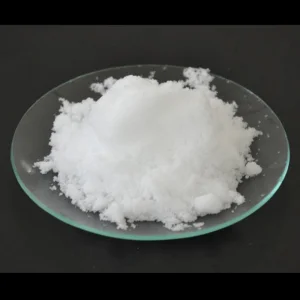
Bismuth Nitrate Pentahydrate (chemical formula: $\text{Bi}(\text{NO}_3)_3 \cdot 5\text{H}_2\text{O}$, CAS Number: 10035-06-0) represents the primary industrial and chemical gateway to high-purity bismuth chemistry. Formed as transparent, colorless to white triclinic crystals, this inorganic salt possesses a molecular weight of 485.07 g/mol and serves as the indispensable precursor for virtually all secondary bismuth compounds, including bismuth subnitrate ($\text{BiONO}_3$), bismuth oxide ($\text{Bi}_2\text{O}_3$), bismuth subsalicylate, and complex bismuth-based metal oxides.
From a molecular perspective, bismuth nitrate displays distinctive physical and chemical attributes dictated by the stability of the trivalent bismuth cation ($\text{Bi}^{3+}$) and its inert pair effect. The compound exhibits strong hygroscopic characteristics and dissolves readily in concentrated or acidified nitric acid media. However, when exposed to unbuffered water, neutral aqueous systems, or elevated pH environments, bismuth nitrate undergoes rapid and spontaneous hydrolytic solvolysis. This equilibrium reaction precipitates basic bismuth oxysalts—predominantly bismuth subnitrate—releasing free nitric acid into solution:
$$\text{Bi}(\text{NO}_3)_3 + \text{H}_2\text{O} \rightleftharpoons \text{BiONO}_3 \downarrow + 2\text{HNO}_3$$
To preserve complete optical clarity and suppress irreversible basic oxysalt precipitation in chemical manufacturing operations, dissolution must be initiated under controlled acidic regimes ($[\text{HNO}_3] \ge 1.0\text{ M}$), progressively diluting with pre-acidified water to avoid localized micro-zones of hydrolysis.
As international supply chains shift decisively toward environmentally benign, non-toxic heavy metal replacements, bismuth nitrate has transitioned from an esoteric fine chemical into an indispensable high-volume industrial commodity. As one of China's seasoned chemical exporters, Yanxatech System Industries Limited (YANXA) has engineered proprietary batch and continuous crystallization platforms since 2008 to ensure crystalline purity, tight heavy-metal impurity limits, and long-term shelf-stability against atmospheric deliquescence.
Accelerating demand across advanced green chemistry, semiconductor electronics, energy storage devices, and high-safety coatings.
Global environmental mandates—including EU REACH, RoHS, and EPA clean initiatives—demand the systematic substitution of lead (Pb), cadmium (Cd), and organotin catalysts. Bismuth nitrate provides a non-toxic Lewis acid alternative exhibiting comparable atomic mass, high polarizability, and superior biocompatibility in industrial organic reactions and specialty polyurethanes.
The electronic components industry relies on bismuth nitrate as a wet-chemical precursor to produce high-purity bismuth-doped zinc oxide (ZnO) varistors, PTC thermistors, and multilayer ceramic capacitors (MLCCs). Its nitrate liquid route ensures homogeneous ionic dispersion down to the nanoscale, eliminating compositional micro-segregation.
Academic and industrial research in green hydrogen and wastewater treatment has propelled the synthesis of bismuth vanadate ($\text{BiVO}_4$), bismuth oxyhalides ($\text{BiOCl, BiOBr, BiOI}$), and bismuth tungstate ($\text{Bi}_2\text{WO}_6$). Bismuth nitrate pentahydrate represents the standard baseline metal precursor used to achieve optimal crystallite facet growth.
Comprehensive analytical baselines for industrial procurement, chemical quality assurance, and laboratory validation.
| Analytical Parameter | Electronic / Nanomaterial Grade | Pharma / Reagent Grade (AR) | Industrial / Catalytic Grade | Testing Methodology |
|---|---|---|---|---|
| Assay [Bi(NO₃)₃·5H₂O] | ≥ 99.99% | ≥ 99.0% – 99.5% | ≥ 98.0% – 98.5% | Complexometric EDTA Titration |
| Bismuth Content (Bi) | ≥ 43.0% | ≥ 42.8% | ≥ 42.5% | Stoichiometric / ICP-OES |
| Insoluble in Dilute HNO₃ | ≤ 0.003% | ≤ 0.005% | ≤ 0.01% | Gravimetric Membrane Filtration |
| Chloride (Cl⁻) | ≤ 0.001% (10 ppm) | ≤ 0.002% (20 ppm) | ≤ 0.005% (50 ppm) | Turbidimetric Comparison |
| Sulfate (SO₄²⁻) | ≤ 0.002% (20 ppm) | ≤ 0.005% (50 ppm) | ≤ 0.01% (100 ppm) | Barium Sulfate Nephelometry |
| Lead (Pb) Impurity | ≤ 0.0005% (5 ppm) | ≤ 0.001% (10 ppm) | ≤ 0.005% (50 ppm) | High-Resolution ICP-MS |
| Iron (Fe) Impurity | ≤ 0.0005% (5 ppm) | ≤ 0.001% (10 ppm) | ≤ 0.003% (30 ppm) | Spectrophotometry / ICP-OES |
| Copper, Zinc, Arsenic (Cu, Zn, As) | Total < 10 ppm | Total < 25 ppm | Total < 80 ppm | Standard ICP-MS Multi-element |
| Appearance & State | White crystalline powder/crystals | Lustrous colorless crystals | White crystalline granular mass | Visual & Optical Microscopy |
In high-precision applications—such as functional electroceramics, optical crystal synthesis, and pharmaceutical processing—the presence of trace lead ($\text{Pb}$), iron ($\text{Fe}$), and halide anions represents a fatal contamination risk. Iron ions destabilize the electronic dielectric constants of ceramic capacitors, while chloride contamination interferes with crystallite growth patterns during sol-gel processes. YANXA applies specialized multi-stage recrystallization from ultrapure nitric acid liquor, driving trace heavy metal contaminants to well below 5 ppm thresholds.
How global enterprises integrate industrial bismuth nitrate precursors into high-value chemical and technological synthesis lines.
Acts as the indispensable chemical precursor for synthesizing active pharmaceutical ingredients (APIs), including Bismuth Subsalicylate, Colloidal Bismuth Subcitrate (CBS), and Bismuth Subgallate. These gastroprotective and antibacterial agents eliminate Helicobacter pylori and combat gastrointestinal ailments globally.
Employed in synthesizing eco-friendly Bismuth Vanadate ($\text{BiVO}_4$) pigments. Known as Pigment Yellow 184, this compound serves as an ultra-durable, weather-resistant, non-toxic replacement for hazardous lead chromate ($\text{PbCrO}_4$) pigments in automotive coatings and architectural paints.
Serves as an active Lewis acid catalyst in carbon-carbon bond forming processes, selective esterifications, protection/deprotection reactions, and the synthesis of high-performance polyurethane elastomers, circumventing regulated toxic organotin catalysts (DBTDL).
Employed in combustion and sol-gel synthesis of bismuth-based oxide solid electrolytes (e.g., yttria-stabilized bismuth oxide, YSB) which show high oxygen-ion conductivity at intermediate temperatures in next-generation fuel cell and lithium-bismuth battery systems.
Robust international supply frameworks compliant with IMDG, ICAO, EU REACH, and stringent dangerous goods export codes.
Bismuth nitrate pentahydrate is an inorganic oxidizer classified under the UN Model Regulations on the Transport of Dangerous Goods as UN 1477, Nitrates, inorganic, n.o.s. (Class 5.1 Oxidizing Substances, Packing Group II or III). Exporting and handling oxidizers necessitates specialized operational competencies, dangerous goods certification, and rigorous hermetic packaging to prevent ambient moisture absorption and oxidation accidents.
We supply material packaged in UN-certified, heavy-duty polyethylene-lined fiber drums (25 kg / 50 kg net capacity) or airtight vacuum-sealed laminated foil liners inside steel drums. This configuration completely isolates the deliquescent crystals from atmospheric moisture, ensuring clump-free powder flowability upon destination arrival.
Every consignment is accompanied by 16-section Safety Data Sheets (SDS) authored in accordance with GHS Revision 9 and destination-specific requirements (US OSHA, EU REACH, Japanese GHS). We maintain full analytical traceability with signed Certificates of Analysis (COA) specifying lot number, production date, and comprehensive ICP-OES spectra.
Navigating maritime Class 5.1 stowage requires close coordination with international carriers. YANXA provides full dangerous goods declarations (DGD), container packing certificates, and professional marine palletization with heat-treated ISPM-15 wooden pallets, delivering cargo safely across Europe, North America, Southeast Asia, and the Middle East.
Pioneering advancements in continuous microfluidic crystallizers, low-emission acid recovery, and high-entropy functional materials.
The manufacturing architecture for inorganic bismuth salts is undergoing rapid technological modernization. Legacy stirred-tank dissolution routes suffer from batch-to-batch variation, thermal hotspots, and excess nitrogen oxide ($\text{NO}_x$) vapor generation during metallic bismuth dissolution in concentrated nitric acid. Modernized facilities are adopting closed-loop engineering and process intensification methodologies:
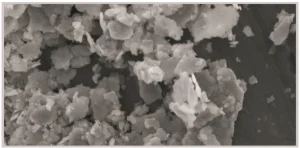
Traditional crystallization exhibits broad particle size distributions, often necessitating post-production pulverization that compromises crystal structural integrity and introduces mechanical impurities. Next-generation synthesis incorporates continuous Taylor-Couette or microfluidic impinging-jet crystallizers. By precisely modulating localized super-saturation ratios and liquid residence times, our manufacturing nodes achieve monodisperse crystalline pentahydrate morphologies with customizable mean diameters ranging from 50 to 500 microns.
Environmental stewardship within Chinese specialty chemicals mandates zero unmitigated $\text{NO}_x$ atmospheric emissions. Our chemical processing lines deploy pressurized multiphase catalytic absorption columns that convert off-gases directly back into technical-grade nitric acid, creating a closed circular recycling loop. This process reduces hazardous chemical effluent by over 92% and lowers carbon footprint metrics per metric ton of refined salt.
Emerging research focuses on utilizing high-purity bismuth nitrate in solvothermal synthesis protocols to create Bismuth-based Metal-Organic Frameworks (Bi-MOFs, such as CAU-17 and Bi-MIL-101). These advanced coordination polymers exhibit exceptional catalytic activity for electrocatalytic carbon dioxide ($\text{CO}_2$) reduction into formate fuels, presenting a transformational market expansion vector for ultra-pure bismuth precursors over the coming decade.
Authoritative technical, commercial, and regulatory guidance for chemical engineers and corporate procurement directors.
Because bismuth(III) ions undergo rapid hydrolysis in neutral water to form insoluble bismuth subnitrate ($\text{BiONO}_3$), bismuth nitrate pentahydrate must never be added directly to pure deionized water. The standard industry procedure is to first dissolve the crystalline crystals into concentrated or moderately concentrated nitric acid (typically 20% to 30% $\text{HNO}_3$ by weight). Once a fully transparent, homogeneous solution is achieved, it can be slowly diluted with pre-acidified deionized water to the desired final concentration while maintaining an overall solution pH strictly below 1.5.
While often conflated in commercial inquiries, these are distinct chemical compounds with different CAS numbers, compositions, and solubilities. Bismuth Nitrate Pentahydrate [$\text{Bi}(\text{NO}_3)_3 \cdot 5\text{H}_2\text{O}$, CAS: 10035-06-0] is a neutral crystalline salt containing approximately 43% elemental bismuth that is highly soluble in acidic aqueous media. Bismuth Subnitrate [approximate formula: $4\text{BiNO}_3(\text{OH})_2 \cdot \text{BiO(OH)}$, CAS: 1304-85-4] is a basic, partially hydrolyzed oxysalt with a much higher bismuth assay (~71% Bi) that is practically insoluble in water and alcohol. Bismuth subnitrate is typically manufactured downstream from bismuth nitrate by controlled alkaline precipitation.
Under international maritime law (IMDG Code), Bismuth Nitrate is assigned to UN 1477 (Nitrates, inorganic, n.o.s.), Hazard Class 5.1 (Oxidizing Substance). It requires UN-approved packaging (1G fiber drums or 1A2 steel drums with internal hermetic plastic liners), distinct Class 5.1 hazard diamond placards, and verified Dangerous Goods Declarations (DGD). Segregation protocols aboard container vessels dictate that it must be stored away from combustible organic compounds, sulfur, and flammable chemicals.
Bismuth nitrate pentahydrate crystals are both hygroscopic and vulnerable to thermal degradation, starting to release crystalline hydration water at temperatures exceeding 30°C and fully decomposing above 60°C. Material should be warehoused in a cool, dark, well-ventilated facility maintained strictly below 25°C with a relative humidity of under 60%. Drums should remain hermetically sealed on original pallets until immediate use. Under these conditions, the product exhibits a stable shelf life of 24 months from the batch production date.
Yes. For advanced electroceramic capacitors, piezoelectric devices, and semiconductor applications, YANXA provides tailor-made electronic-grade batches with customized specifications. Through fractional vacuum recrystallization and high-purity acid wash cycles, we routinely reduce problematic multi-element contaminants (such as $\text{Pb, Fe, Cl, Na, K, SO}_4$) to sub-ppm levels, verified through validated ICP-MS spectrometry.
Complete product spectrum manufactured for international buyers across polymers, semiconductor etching, metallurgy, and advanced formulations.






Connect with our chemical engineering and export logistics specialists to structure commercial terms, custom sample testing, and delivery schedules.
Direct sales, custom assay requirements, and dangerous goods logistics inquiries.
[email protected]Immediate response during international commercial and logistics trading hours.
+86-13051139361Yanxatech System Industries Limited
Supplying precision chemical precursors, rare gases & alloy powders since 2008.
