Direct supply line from certified manufacturing facilities with full lot traceability, batch COA, and high-purity specifications.
As a cornerstone of powder metallurgy, diamond tooling, additive manufacturing, and friction engineering, brass metal powder (copper-zinc alloy) demands strict microstructural control, consistent apparent density, and tailored morphology.
Our induction-melted atomization lines balance Cu60/Zn40, Cu70/Zn30, Cu80/Zn20, and Cu90/Zn10 formulations down to ±0.3wt%, ensuring reliable mechanical and sintering kinetics.
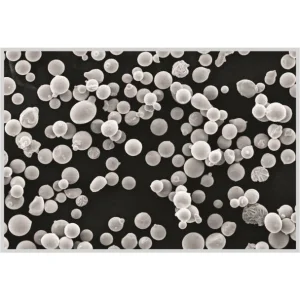
Dual production capabilities encompassing High-Pressure Inert Gas Atomization (spherical morphology) and Ultra-High Pressure Water Atomization (irregular/nodular morphology).
Advanced anti-tarnish and low-temperature reduction surface treatments prevent oxide layer buildup during transoceanic shipping, ensuring stable electrical and sintering performance.
Strategic development trends addressing the requirements of micro-electronics, Binder Jetting 3D printing, and decarbonized metallurgical processes.
Optimizing ultra-fine gas-atomized brass powders (15–45 μm) with satellite-free particle distributions, enabling high green packing density and distortion-free sintering for complex architectural and thermal components.
In accordance with expanding global environmental directives (such as RoHS exemptions phase-out), we lead research in Bismuth (Bi), Silicon (Si), and Phosphorus (P) doped brass powders that preserve high machinability without toxic heavy metals.
Synthesizing core-shell structures and fine-grain dispersion strengthened copper-zinc powders to maximize wear resistance in EV brake pads and heavy-machinery synchronizer rings.
| Alloy Grade | Composition (Nominal) | Atomization Method | Apparent Density (g/cm³) | D50 (Particle Size) | Primary Industrial Use |
|---|---|---|---|---|---|
| CuZn10 (Commercial Bronze) | 90% Cu, 10% Zn | Water / Gas Atomized | 2.8 – 3.4 | 35 – 75 μm | Sintered bearings, decorative coatings, architectural finishes |
| CuZn20 (Low Brass) | 80% Cu, 20% Zn | Water Atomized | 2.9 – 3.5 | 45 – 100 μm | Diamond saw blades, abrasive wheels, sintered structural parts |
| CuZn30 (Cartridge Brass) | 70% Cu, 30% Zn | Inert Gas Atomized | 4.2 – 4.8 (Spherical) | 15 – 53 μm | Binder Jetting 3D printing, thermal spray, precision electronics |
| CuZn40 (Muntz Metal) | 60% Cu, 40% Zn | Water Atomized | 2.7 – 3.2 | 45 – 150 μm | Friction linings, clutch facings, chemical catalysts, brazing filler |
| Leaded Brass (Custom) | 60% Cu, 38% Zn, 2% Pb | Water Atomized | 3.0 – 3.6 | 50 – 120 μm | High-machinability sintered bushings, self-lubricating mechanical sleeves |
Across diverse sectors, selecting the right alloy ratio, particle shape, and surface characteristics directly dictates production yield and product lifespan.
Irregular water-atomized brass powder acts as a critical friction modifier in automotive and railway brake pads, providing stable friction coefficients, thermal dissipation, and low rotor wear without noise generation.
Acts as an indispensable matrix bonding agent for diamond segments, saw blades, and core drills. Controlled sintering shrinkage and alloying with tin improve diamond retention and tool longevity.
Used to produce self-lubricating porous bronze/brass bushings and complex net-shape gears. Offers superior corrosion resistance in seawater environments, high anti-galling performance, and predictable dimensional expansion during sintering.
Fine-mesh brass powders (325 mesh to 500 mesh) are blended with polyurethane resins for cold-cast metal sculptures, luxury coatings, architectural restoration, and thermal spray surface hardening.
Combining upstream raw cathode supply access with automated closed-loop atomization and real-time analytical chemistry.
Direct partnerships with premium copper cathode (>99.99%) and zinc ingot refiners allow us to maintain reliable lead times and mitigate global commodity volatility, passing stability onto our tier-1 procurement partners.
Every furnace cycle is backed by optical emission spectrometry (OES), laser diffraction particle analysis (Malvern Mastersizer), and automated sieving under nitrogen atmosphere, guaranteeing tight D10, D50, and D90 distributions.
Annual production capacity exceeding 12,000 metric tons of copper and alloy powders across 6 dedicated continuous atomization towers, accommodating single-drum R&D lots to multi-container industrial schedules.
Providing seamless compliance for chemical substances, combustible dust hazards, and transboundary customs clearance.
Available in UN-certified steel drums (50kg / 100kg) with sealed inner polyethylene liners and desiccants, vacuum foil bags (5kg / 25kg) for oxidation-sensitive AM grades, or 1000kg reinforced big bags for bulk metallurgical consumers.
Shipments are accompanied by 16-section GHS-compliant Safety Data Sheets (SDS), comprehensive batch Certificate of Analysis (COA), Certificate of Origin (COO), and declarations of conformity for REACH, RoHS, and Conflict Minerals free.
Decades of handling both general chemical freight and dangerous goods (DG classes including oxidizers, flammable solids, and high-purity cylinder gases) ensure worry-free ocean, rail, and air cargo compliance worldwide.
Explore complementary chemical additives, high-purity gases, liquid rubbers, and inorganic salts supplied with full testing documentation.
To accelerate quotation turnaround and technical validation, we encourage international engineering buyers to benchmark requests against five critical parameters:
Define alloy designation (e.g., CuZn30 or CuZn40) and state maximum tolerances for trace elements such as Lead (Pb), Iron (Fe), Arsenic (As), and Antimony (Sb).
Specify whether your manufacturing process requires Spherical Gas-Atomized (for additive manufacturing, thermal spray) or Irregular Water-Atomized (for press-and-sinter powder metallurgy, diamond segment bonding).
Provide mesh size specifications (-100 mesh, -200 mesh, -325 mesh) or laser diffraction cut-offs (e.g., D10 > 15 μm, D50 = 35 μm, D90 < 53 μm).
Declare targeted apparent density (Scott Volumeter g/cm³), tap density, and Hall flowability (s/50g) where automated powder feeding or uniform die-filling is essential.
State container type preferences (steel drums, multi-layer aluminum foil bags, inert-gas backfilling) to guarantee zero atmospheric oxidation during oceanic freight.
Verify needs for lab-scale pilot sample quantities (1kg / 5kg), trial qualification batches, third-party pre-shipment inspections (SGS/Intertek), or plant quality audits.
Comprehensive answers addressing technical capabilities, safety, international shipping, and quality assurance.