Direct supply line featuring high-purity rare gases, functionalized elastomers, and fine synthesized precursors verified to ISO 9001 and international engineering standards.

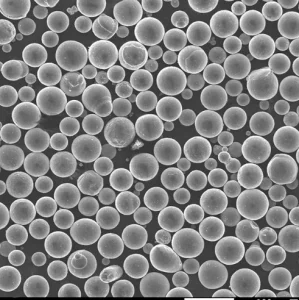
Macroeconomic shifts toward renewable energy, high-frequency telecommunications, and laser additive manufacturing have accelerated global demand for customized, oxygen-controlled particulate copper.
Global procurement systems require resilient manufacturing backbones capable of absorbing swings in base metal index pricing. As Tier-1 industrial buyers shift toward diversified strategic sourcing, Chinese manufacturers have upgraded from basic commodity extraction to automated, vacuum-inert gas atomization plants yielding tightly calibrated micro-morphologies.
The proliferation of Electric Vehicle (EV) inverters, SiC power modules, and 5G base transceiver stations requires advanced copper paste solutions capable of resisting electromigration and providing thermal conductivity beyond 380 W/(m·K). Micronized copper powder replaces expensive silver paste formulations without compromising long-term reliability.
Press-and-sinter powder metallurgy (PM) minimizes scrap losses down to under 3% compared to conventional subtractive machining. By deploying high-compressibility dendritic and irregular copper grades, component manufacturers achieve near-net-shape structural parts with superior mechanical integrity and reduced environmental burdens.
Selecting the optimal copper powder requires understanding the precise synthesis method, apparent density, and specific surface area characteristics. Every production batch is validated against rigorous ASTM and ISO testing protocols.
| Manufacturing Route | Morphology | Apparent Density (g/cm³) | Purity (Cu %) | Key Industrial Applications |
|---|---|---|---|---|
| Gas Atomization (Inert Gas) | Highly Spherical, smooth satellite-free | 4.5 – 5.2 | ≥ 99.90% | LPBF Additive Manufacturing, Cold Spray, Thermal Interface Pastes |
| Water Atomization (High Pressure) | Irregular, nodular, textured surface | 2.6 – 3.4 | ≥ 99.50% | Sintered Friction Materials, Diamond Tools, Structural Bushings |
| Electrolytic Deposition | Dendritic, highly branched structure | 1.2 – 2.4 | ≥ 99.85% | Carbon Brushes, Conductive Gaskets, Sintered Bronze Bearings |
| Chemical Reduction / Milling | Flake-like or ultra-fine submicron | 0.8 – 1.8 | ≥ 99.20% | Electromagnetic Shielding (EMI), Printed Flexible Circuit Inks |
From aerospace propulsion nozzles to microelectronic thermal interfaces, our copper metal powder variants resolve specific thermal, electrical, and structural engineering bottlenecks.
Processing pure copper via Laser Powder Bed Fusion requires strict control over optical absorption and oxygen thresholds. Our high-sphericity gas-atomized powders (D50: 32 μm) feature ultra-low surface oxides (< 100 ppm O₂), allowing green or infrared laser systems to achieve fully dense (> 99.7%) parts with thermal conductivity exceeding 390 W/(m·K) for regenerative rocket engines and complex heat exchangers.
Our chemically treated submicron and flake copper powders serve as cost-effective alternatives to precious metals in MLCC end-terminations, conductive adhesives, and electromagnetic shielding paints. Surface passivation techniques prevent oxidation during high-temperature curing, ensuring long-term low contact resistance and high reliability in automotive electronic control units.
Dendritic and water-atomized powders form the backbone of railway braking blocks, automotive brake pads, and diamond cutting blades. High green strength allows rapid compaction, while uniform matrix diffusion provides controlled wear resistance, rapid heat dissipation from friction interfaces, and strong mechanical retention of diamond grit.
Sourcing metal powders requires thorough compliance with international dangerous goods codes, environmental safety standards, and customs border controls.
Every single consignment is subject to rigorous analytical validation prior to customs clearance. Particle Size Distribution (PSD) is measured via laser diffraction (Malvern Mastersizer 3000), specific surface area through BET analysis, and interstitial elements (O, N, C, S) via LECO combustion analyzers. Third-party testing via SGS or pony testing is routinely integrated based on client quality manuals.
Fine metal powders present specific handling hazards regarding flammability and dust explosion potential. Depending on the particle size threshold and hazard classification under the UN Model Regulations (Class 4.1 Flammable Solids or non-hazardous designation per test N.1), products are packaged in UN-certified steel drums with anti-static liners, sealed under argon or nitrogen blanketed environments.
Full documentation suites—including GHS-compliant Safety Data Sheets (SDS) in 14 languages, Commercial Invoices, Packing Lists, Certificates of Origin (Form E, CO, etc.), and complete RoHS/REACH SVHC declarations—are provided to guarantee clean port entries across North America, the European Union, and Southeast Asia.
Our metallurgy research group focuses on advancing alloy thermodynamics, reducing energy expenditures, and pushing the boundaries of conductive materials.
Developing ultra-thin organic and inorganic nano-coatings (such as graphene and silica nano-shells) that shield copper nanoparticles from oxidation at elevated processing temperatures up to 260°C without compromising sintering conductivity.
Pioneering Cu-Cr-Zr, Cu-Ni-Sn, and high-entropy copper alloy powders via supersonic gas atomization for aerospace components requiring high mechanical tensile strength (> 800 MPa) combined with elevated thermal endurance.
Implementing plasma spheroidization using scrap electronic wire feedstock to drastically curtail the embodied carbon footprint of additive powders, complying with future CBAM regulations and global sustainability mandates.
Direct technical answers addressing purity, morphology selection, storage stability, packaging protocols, and sample validation.
Oxygen content above 300 ppm in pure copper powder leads to internal gas porosity, crack initiation, and reduced electrical/thermal conductivity in LPBF processes. Our gas-atomized AM powder keeps oxygen consistently below 150 ppm (often < 100 ppm), ensuring optical energy absorption translates into dense metallurgical bonding.
Electrolytic copper powder has a dendritic (branched tree-like) structure that provides high green strength and porosity, ideal for friction materials and self-lubricating bearings. Gas-atomized powder is spherical, providing excellent flowability and packing density for additive manufacturing and thermal spraying.
Standard export packaging uses airtight double-layer anti-static plastic bags placed inside heavy-gauge steel drums with inert argon or nitrogen purging. Desiccant packs are inserted to prevent moisture-induced surface oxidation during sea transit.
Yes. Using precision air classification and ultrasonic sieving lines, we customize tight particle distributions, including standard AM cuts like 15–45 μm, 15–53 μm, 20–63 μm, or ultra-fine D50 cuts from 3 to 10 μm for specialty electronic paste formulations.
Complete product catalog items maintained in strict accordance with the original supplier registry and export specifications.