Explore representative high-grade materials manufactured and exported worldwide. Every shipment is accompanied by verified batch COA, SDS, and technical compliance sheets.
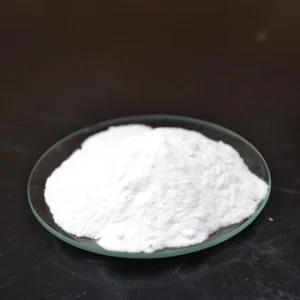



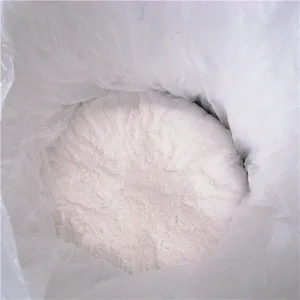
Elemental magnesium powder (Mg ≥ 99.8%) serves as an indispensable metallurgical reagent and chemical energetic constituent. We examine market dynamics, extraction technologies, and strategic manufacturing advantages from China's primary production corridor.
China accounts for over 85% of global primary magnesium ingot extraction via the Pidgeon silicon reduction process, centered in Shaanxi and Shanxi. As integrated manufacturers, Chinese producers control the cost-curve, feedstock consistency, and energy arbitrage indispensable for scalable downstream powder atomization and mechanical milling.
Modern primary steelmaking relies on co-injected elemental magnesium powder and lime (CaO) to achieve deep desulfurization ([S] < 0.001%). Elemental Mg provides superior thermodynamic affinity for dissolved sulfur compared to pure calcium carbide, dropping ladle slag volume and minimizing cycle times across mega-ton blast furnaces.
Supply fragility across Western supply lines has made Chinese OEM procurement partnerships vital. Through dual-stream manufacturing—combining centrifugal mechanical chipping with closed-loop Argon gas atomization—our manufacturing networks ensure guaranteed allocation against unpredictable global supply deficits.
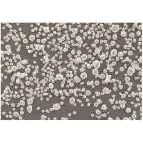
Particle morphology dictates flowability, bulk density, specific surface area, and reaction kinetics. Selecting the correct powder morphology is critical to process optimization.
| Manufacturing Technique | Morphological State | Typical Mesh / PSD Range | Flowability / Bulk Density | Primary Industrial Sector |
|---|---|---|---|---|
| Inert Gas Atomization (Ar/N2) | Spherical / Spheroidal | 15–53 μm, 45–105 μm (Tailored) | Superior (< 25s/50g) / High (> 0.95 g/cm³) | Additive Manufacturing (SLM), Thermal Spray, Advanced Energetics |
| Mechanical Milling / Rasping | Irregular / Needle / Granular | 20–80 Mesh (180–850 μm) | Moderate (Angle of Repose ~38°) / 0.70–0.85 g/cm³ | Hot-Metal Steel Desulfurization, Pyrotechnic Illuminants |
| Cryogenic Micro-Pulverization | Polygonal Flake / Chip | 100–325 Mesh (45–150 μm) | Cohesive / Controlled Surface Reaction | Grignard Reagents, Organometallic Synthesis, Titanium (Kroll Process) |
| Passivated / Coated Grits | Salt/Flux Encapsulated | 0.5 mm – 1.6 mm Spheres/Granules | Engineered Anti-Segregation Flow | Ladle Metallurgy Injection Dispensers, Blast Furnace Torpedo Cars |
Handling Class 4.3 dangerous goods requires strict process control, hermetic atmosphere containment, and auditable chain-of-custody documentation across customs jurisdictions.
Magnesium powders liberate flammable hydrogen when exposed to moisture. All export consignments are packed within UN-certified steel drums (1A2/Y1.5/100) with sealed interior polyethylene linings, desiccated under positive-pressure dry argon or nitrogen blanket cushions to guarantee non-reactivity during maritime transit.
Fully documented shipping workflows ensure seamless customs clearance. Every shipment provides GHS 16-section SDS, valid dangerous goods declarations (DGD) compliant with IMDG Code Class 4.3 (UN 1418 for water-reactive powders, UN 1869 for pellets/ribbons), and REACH registration support for downstream EU chemical importers.
Quality control utilizes Malvern Mastersizer laser diffraction testing to map D10, D50, and D90 parameters, coupled with ICP-OES spectroscopy to ensure minimal heavy element inclusion (Fe, Si, Cu, Ni < 0.02%). Lot retention protocols retain representative library specimens for 24 months post-dispatch.
From chemical reaction catalysts to solid propulsion formulations, understand the mechanisms governing elemental magnesium powder utilization.
Due to its high combustion enthalpy (-601.7 kJ/mol) and vivid spectral emission in oxygen and nitrogen environments, fine spherical magnesium powders act as fuel in MTV (Magnesium-Teflon-Viton) infrared countermeasure decoy flares, illumination munitions, and composite solid propellant formulations.
In pharmaceutical synthesis and fine agrochemical intermediates, dry, oxide-free elemental magnesium turnings and high-surface-area granules serve as the cornerstone for Grignard reagent preparation (R-Mg-X), enabling precise carbon-carbon bond architectures without induction latency.
The Kroll process depends on high-purity magnesium metal to reduce titanium tetrachloride (TiCl4) vapor into titanium sponge at ~800–900°C. Magnesium powders and granules likewise support extraction reduction chemistry across zirconium, hafnium, and beryllium metals.
Our auditable quality framework guarantees metallurgical consistency from primary reduction to sealed cargo dispatch.
High-purity primary ingots undergo melt degassing, surface oxidation skimming, and inert flux purification inside vacuum-induction furnaces.
Molten magnesium streams pass through supersonic Argon-gas nozzles within an oxygen-depleted atomization tower (<50 ppm O2).
Rotary ultrasonic screening lines segregate particle cuts into tight target fractions, avoiding cross-contamination and dust accumulation.
Automated packaging into desiccated UN steel drums with automated vacuum and argon back-flushing guarantees shelf stability.
Advancing green metallurgy, solid-state energy storage, and additive manufacturing through micro-engineered magnesium powder architectures.
Elemental magnesium yields a theoretical hydrogen capacity of 7.6 wt%, placing it at the frontier of stationary energy vectors. Current R&D scales mechanochemically milled Mg nanopowders doped with transition metal catalysts (Ni, Ti, Fe) to drop desorption temperatures and accelerate hydriding kinetics.
Laser Powder Bed Fusion (LPBF) demands ultra-spherical, satellite-free Mg alloy powders (WE43, AZ91, ZK60) with tight hall flowability. Specialized gas atomization towers minimize vapor loss while retaining volatile elements, enabling 3D printing of lightweight aerospace frames and bioresorbable medical implants.
Decarbonization drives our integration of thermal-energy reclamation in ingot production, combined with closed-loop Argon gas recycling systems during centrifugal atomization. This cuts process-associated footprints, helping international procurement partners satisfy corporate Scope-3 carbon accounting mandates.
Direct answers to core inquiries regarding compliance, technical parameters, and international freight handling.
UN 1418 applies to Magnesium Powder or Magnesium Alloys in powder form (Class 4.3, Dangerous When Wet, often with a Class 4.2 secondary hazard depending on pyrophoric potential). UN 1869 applies to Magnesium Alloys in pellets, ribbons, or coarse turnings (Class 4.1, Flammable Solid), which carry less stringent transit protocols.
Yes. We supply standard mesh cuts (such as 20–50 mesh, 50–100 mesh, -200 mesh, and -325 mesh) as well as narrow micron-range envelopes for spherical powders (such as 15–45 μm or 45–105 μm) controlled via multi-stage vibrating screens and air classifiers.
All drums are sealed with heavy-duty gasket clamps under a positive-pressure protective dry argon or nitrogen blanket. Moisture barriers, industrial-grade silica desiccant pouches, and anti-static inner polyethylene barriers are installed to prevent moisture access and oxidation.
Each batch includes an auditable Certificate of Analysis (COA) with laser diffraction particle sizing curves (D10, D50, D90), active magnesium assay, ICP heavy metal analysis, moisture assay, alongside an IMDG-compliant Safety Data Sheet (SDS) and Dangerous Goods Declaration.
Explore our secondary series of inorganic salts, specialty rare gases, functionalized polymers, and engineered master alloys.