


Engineered synthesis intermediates, high-purity rare gases, functional nitrates, and liquid polymers direct from certified Chinese industrial facilities.






CAS No. 25322-68-3 | Linear Polycondensation Polyether Glycol | General Formula: H(OCH2CH2)nOH (n ≈ 4.2)
| Analytical Parameter | Standard Industrial Grade | Pharma / Excipient Grade (USP / EP) | Electronic & High-Purity Grade | Primary Test Methodology |
|---|---|---|---|---|
| Appearance (25°C) | Clear, colorless viscous liquid | Clear, colorless viscous liquid | Aqueous transparent liquid | Visual Inspection |
| Average Molecular Weight | 190 – 210 g/mol | 190 – 210 g/mol | 195 – 205 g/mol (Narrow PDI) | Calculated / GPC SEC |
| Hydroxyl Value (mg KOH/g) | 530 – 590 | 535 – 585 | 540 – 580 | Potentiometric Titration / ASTM E222 |
| Kinematic Viscosity (20°C, mm²/s) | 60.0 – 70.0 | 61.0 – 69.0 | 62.0 – 68.0 | Ubbelohde Viscometer / ASTM D445 |
| Moisture Content (% w/w) | ≤ 0.50% | ≤ 0.20% | ≤ 0.05% (Ultra-dry) | Coulometric Karl Fischer (ASTM E1064) |
| Color (Pt-Co / APHA Hazen) | ≤ 20 | ≤ 10 | ≤ 5 | Spectrophotometry / ASTM D1209 |
| pH (5% Aqueous Solution @ 25°C) | 5.0 – 7.0 | 5.5 – 7.5 | 6.0 – 7.0 | Electrometric pH Measurement |
| Residual Ethylene Oxide (EO) | ≤ 10 ppm | ≤ 1 ppm | ≤ 0.2 ppm (Sub-ppm detection) | Headspace Gas Chromatography (GC-FID) |
| 1,4-Dioxane Residue | ≤ 10 ppm | ≤ 5 ppm | ≤ 1 ppm | Headspace GC-MS Detection |
| Ethylene & Diethylene Glycol Sum | ≤ 0.25% | ≤ 0.10% (Per USP NF monograph) | ≤ 0.05% | Capillary GC Separation |
| Heavy Metals (Pb, As, Cd, Hg) | ≤ 10 ppm | ≤ 2 ppm (Total) | ≤ 0.1 ppm / Semiconductor Class | ICP-MS (Inductively Coupled Plasma) |
How state-of-the-art continuous ethoxylation plants, integrated petrochemical upstream corridors, and AI-assisted process automation redefine global PEG 200 delivery.
Tier-1 Chinese PEG 200 manufacturing facilities are stationed directly in coastal mega-refinery clusters (Zhejiang, Jiangsu, Shandong). Direct pipeline transport of purified Ethylene Oxide (EO) eliminates pressurized isotank transport overheads, suppresses logistics volatility, and ensures uninterrupted feedstocks even amidst maritime bottlenecks.
Replacing legacy batch-stirred tank reactors (STR), modern Chinese factories operate continuous pressurized loop reactors equipped with real-time NIR (Near-Infrared) spectroscopic sensors. This guarantees narrow polymer chain dispersion, eliminating batch-to-batch molecular weight drifting.
Critical for international pharma and cosmetic compliance, our automated falling-film stripping columns operate under high vacuum with nitrogen blanketing. This reduces volatile byproducts (residual monomer EO, 1,4-dioxane, acetaldehyde) to sub-ppm levels without thermal discoloration.
Polyethylene Glycol 200 possesses exceptional hygroscopicity, non-toxicity, lubricity, and solvent power across mission-critical market verticals.
PEG 200 acts as a gold-standard biocompatible non-ionic co-solvent and penetration enhancer. Used extensively in liquid oral dosage syrups, soft-gel capsule shell plasticization, topical dermatological bases, and chemical synthesis of PEGylated peptides and antibody-drug conjugates (ADCs).
Due to its low molecular weight and balanced hydrophobic/hydrophilic index, PEG 200 functions as an effective humectant, viscosity regulator, and spreadability improver in facial emulsions, serums, transparent cleansing formulations, and perfumery fragrance fixation.
Serving as a short-chain diol intermediate, PEG 200 provides terminal hydroxyl functionality for reaction with aromatic and aliphatic diisocyanates (MDI, TDI, HDI, IPDI). It introduces hydrophilic flexible soft segments into waterborne polyurethane dispersions (PUDs) and synthetic elastomers.
As a clean synthetic base fluid, PEG 200 offers high thermal conductivity, low pour point (-50°C glass transition), and low carbonization residue. It is widely specified in hydraulic fluids, metal drawing lubricants, quenching fluids, and water-glycol fire-resistant fluid (HFC) blends.
In pesticide, herbicide, and biostimulant synthesis, PEG 200 serves as a chemical intermediate for non-ionic fatty acid ester emulsifiers (e.g., PEG 200 Monostearate/Dioleate). It functions directly as a crop-penetration carrier in suspension concentrates (SC) and soluble liquid (SL) sprays.
PEG 200 is applied in advanced microelectronics packaging as a primary suppressor/leveler in acid copper electroplating baths for Through-Silicon Vias (TSV) and Printed Circuit Boards (PCB). Its adsorption kinetics ensure ultra-flat copper deposition void of micro-voiding defects.
Removing international trade frictions through rigorous documentation, toxicological dossiers, and harmonized cross-border audits.
Full commercial registration with complete tonnage dossiers (>1000 MT/year). Lead registrant backing guarantees zero regulatory interruption at Rotterdam, Hamburg, or Antwerp ports.
Complies with FDA Title 21 CFR sections 175.105 (Adhesives), 178.3750, and 178.3910 for mineral oil, food contact resins, and processing lubrication contact limits.
Manufactured according to IPEC-PQG Good Manufacturing Practices for pharmaceutical excipients. Every release batch includes full multi-point audit trail and retained lots.
100% synthetic hydrocarbon-derived polyether alcohol free from animal sub-components, BSE/TSE risks, and genetic modifications. Annually renewed rabbinical and halal certifications.
A transparent breakdown of wholesale FOB/CIF pricing variables, packaging configurations, and supply risk management frameworks.
Procuring industrial or excipient PEG 200 from China involves tracking four primary pricing vectors. Yanxatech System Industries Limited (YANXA) provides strategic contracts balancing spot responsiveness and price indexation:
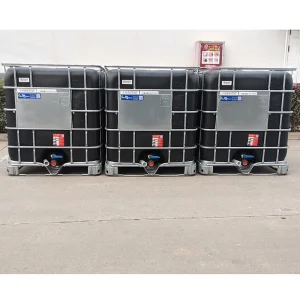
Engineered packaging ensures high barrier integrity against atmospheric moisture absorption and oxidative yellowing during multi-week ocean crossings:
How China's polyether glycol sector is innovating for decarbonization, ultra-purity APIs, and circular chemical synthesis.
Active pilot programs integrate bio-ethanol-derived Ethylene Oxide to manufacture 100% bio-based Polyethylene Glycol with identical molecular kinetics, enabling global multinationals to meet strict Scope 3 greenhouse gas reduction benchmarks.
Next-generation falling-film devolatilization reactors remove trace formaldehydes, acroleins, and acetaldehydes (< 0.2 ppm), preventing oxidation in sensitive active pharmaceutical ingredients (APIs) and biotherapeutic proteins.
Advancements in catalytic continuous ethoxylation allow production of narrow-cut PEG oligomers (tetraethylene glycol to hexaethylene glycol cuts) designed for battery electrolyte solvents and advanced organosilicon chemistry.
Comprehensive engineering insights for global purchasing directors, chemical formulation engineers, and compliance officers.
Under recommended warehouse storage conditions (unopened original factory drums, dry ambient temperature between 15°C and 25°C, away from direct UV exposure and strong oxidizing acids), PEG 200 maintains a guaranteed shelf life of 24 months. Because low-molecular-weight glycols are hygroscopic, drums must be purged with dry industrial nitrogen gas after opening to eliminate atmospheric moisture uptake and oxidative color degradation.
Polyethylene Glycol 200 is an oligomeric polyether mixture (average Mw 190–210 g/mol, n ≈ 4.2), while DEG is a pure monomeric dialcohol (Mw 106.12 g/mol) carrying significant toxicological oral ingestion risks and strict pharmaceutical bans. In comparison with PEG 400, PEG 200 exhibits lower kinematic viscosity (60–70 cSt vs. 105–130 cSt at 20°C), a higher hydroxyl value (530–590 vs. 264–300 mg KOH/g), and higher solvent power for low-polarity actives.
No. Industrial, food, and pharmaceutical grades of Polyethylene Glycol 200 are non-regulated and non-hazardous under the UN Model Regulations for Dangerous Goods. They are classified as non-DG cargo for maritime (IMDG Code), air (IATA-DGR), road (ADR), and rail transport. Standard shipments do not require dangerous goods declarations or UN-certified hazard packaging.
Every commercial consignment exported by YANXA is issued with a certified, lot-traceable Certificate of Analysis (COA) specifying tested hydroxyl value, kinematic viscosity, moisture content, color index, pH, and trace impurities. Standard export packages include 16-section GHS Safety Data Sheets (SDS), Technical Data Sheets (TDS), Certificate of Origin (Form A, Form E, or RCEP), and packing declarations.
Yes. By fine-tuning continuous catalytic loop reactor parameters and downstream vacuum stripping columns, our production team can provide custom narrow-cut PEG 200 variants (e.g., targeted PDI ≤ 1.04) or ultra-dry formulations with moisture controlled below 0.05% (500 ppm) for moisture-sensitive polyurethane pre-polymers and lithium-ion battery electrolyte formulations.
For standard drum and IBC orders, dispatch from our factory warehouse to major departure ports (Shanghai, Ningbo, Qingdao) is completed within 7 to 10 working days. Bulk ISO tank shipments usually take 12 to 14 days, including pre-loading tank inspection, cleaning certificates, and customs clearance procedures.
Explore our broader technological ecosystem of high-performance materials engineered to rigid international standards.








Direct factory quotations, batch Certificate of Analysis (COA), sample requests, and international regulatory dossiers. Speak directly with chemical process engineers.