

Explore high-spec batches verified under rigorous ISO 9001 and GMP manufacturing protocols with batch-traceable Certificate of Analysis (COA).
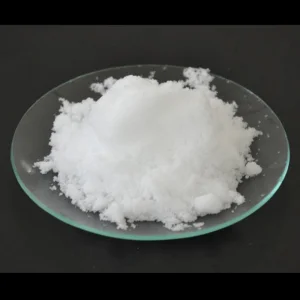

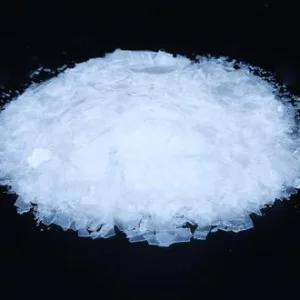
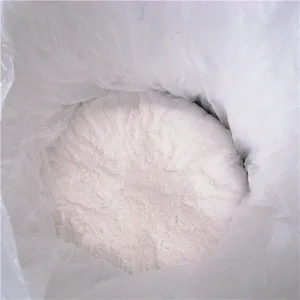
Tribasic Calcium Phosphate—chemically defined as Ca₃(PO₄)₂ or structurally represented by hydroxyapatite Ca₁₀(PO₄)₆(OH)₂ (CAS No. 7758-87-4 / 12167-74-7)—is an essential inorganic phosphate compound manufactured through precise neutralization of thermal-grade phosphoric acid with food- or pharma-compliant calcium hydroxide.
Yanxatech controls the calcination temperature and synthesis stoichiometry to yield specific crystalline allotropes: high-temperature α-TCP (monoclinic, rapid bioresorption for injectable bone cements) and thermodynamically stable β-TCP (rhombohedral, optimal for synthetic bone graft scaffolds and anti-caking matrices).
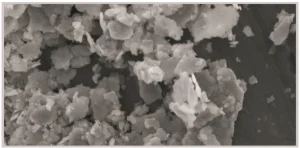
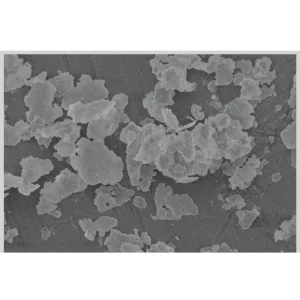
Through air-classifier jet milling, our particle size distribution (PSD) ranges from sub-micron d50 (1.5–3.5 μm) up to tailored coarse powders. Controlled electrostatic charge prevents agglomeration in dry blending, providing extraordinary moisture absorption capacity (up to 10% w/w) without loss of free-flow kinematics.
Heavy metals (As, Pb, Cd, Hg) and fluorine limits are the critical parameters for pharmaceutical excipients and baby nutrition formulas. Our multi-stage crystallization process limits fluorine to < 50 ppm and lead to < 0.5 ppm, consistently surpassing USP, EP, FCC, and GB standards.
| Analytical Parameter | Food / Dietary Grade (FCC / E341iii) | Pharma Excipient Grade (USP / EP / BP) | Biomedical / Technical Ceramic Grade |
|---|---|---|---|
| Assay (as Ca Calculation) | 34.0% – 40.0% | 34.0% – 40.0% | ≥ 38.5% (Ca/P molar ratio ~1.67) |
| Loss on Ignition (800°C) | ≤ 8.0% | ≤ 8.0% | ≤ 2.0% (Pre-sintered) |
| Fluoride (F) | ≤ 50 mg/kg (ppm) | ≤ 50 mg/kg (ppm) | ≤ 10 mg/kg (ppm) |
| Heavy Metals (as Pb) | ≤ 1.0 mg/kg | ≤ 0.5 mg/kg | ≤ 0.1 mg/kg (ICP-MS verified) |
| Arsenic (As) | ≤ 1.0 mg/kg | ≤ 0.5 mg/kg | ≤ 0.1 mg/kg |
| Particle Size (D50) | 5.0 – 12.0 μm | 2.5 – 6.0 μm | 0.8 – 2.0 μm (Sub-micron Jet Milled) |
China commands over 45% of global high-grade phosphate rock reserves and raw thermal phosphoric acid refining capacity. Sourcing directly from Yanxatech System Industries Limited eliminates intermediary brokerage fees, stabilizes contract prices against geopolitical fluctuations, and ensures continuous bulk vessel availability.
Direct access to yellow phosphorus and food-grade thermal-process phosphoric acid plants ensures continuous, uncompromised raw feedstocks with total trace-element control from rock to finished Ca₃(PO₄)₂.
Continuous closed-loop spray drying, rotary calcination, and ultra-dense pneumatic conveying inside Class 100,000 cleanrooms mitigate environmental micro-particulate contamination and microbial loads.
Operating annual capacity exceeding 30,000 metric tons affords our multinational contract partners significant unit cost reductions, high buffering storage, and rapid lead times for 20-foot and 40-foot FCL export lots.
Strategic proximity to primary maritime gateways including Qingdao, Shanghai, and Tianjin ensures rapid stuffing, pallet stabilization, hazardous/non-hazardous customs dispatch, and streamlined CFR/CIF delivery.
Navigating global chemical compliance mandates requires rigorous verification protocols. Yanxatech provides end-to-end regulatory dossiers, audits, and tailored documentation designed to clear customs and food/drug safety barriers smoothly.
Full registration under EU REACH (Regulation EC 1907/2006) for chemical substances, with complete compliance with US FDA 21 CFR §182.1217 as a Generally Recognized as Safe (GRAS) substance. Ready-to-file dossiers expedite cross-border certification.
All production facilities adhere strictly to ISO 22000, FSSC 22000, Halal (MUI/JAKIM compliant), and Kosher certifications. Annual third-party hygiene verifications by international testing entities guarantee compliance for global food supply chains.
Yanxatech pairs international technical sales directors with on-the-ground regional warehouses and localized distribution channels across North America, Europe, Southeast Asia, and the Middle East, offering just-in-time (JIT) stock availability.
Tribasic Calcium Phosphate acts as an indispensable multifunctional ingredient. Its application profiles span food manufacturing, pharmaceutical drug compression, advanced ceramics, and biomaterials.
Acts as a physical spacer and moisture scavenger in instant beverages, table salt, whey protein powders, dry seasonings, and baking formulations, eliminating moisture bridging and preventing block cake formation.
Our highly compressible dental and pharmaceutical grades serve as non-hygroscopic diluents and mineral supplement bases in direct tablet compression, offering excellent tablet hardness and quick dissolution kinetics.
High-purity β-TCP ceramics synthesized under precise calcination demonstrate osteoconductive scaffold matrix dynamics, steadily resorbing in vivo to allow natural bone replacement in orthopedic and dental surgery.
Acts as a non-reactive inorganic suspending agent and particle dispersant in expandable polystyrene (EPS) polymerization, controlling resin bead sizing, porosity, and cell-structure uniformity.
The international market for inorganic phosphates is evolving rapidly. High-precision manufacturing, sustainable production practices, and nanostructured biomaterials are reshaping global specifications.
Next-generation bone tissue regeneration involves synthetic nano-TCP and nano-hydroxyapatite matrices. By optimizing grain boundaries and microporosity, 3D bioprinting can produce personalized scaffolds with customized degradation rates.
Yanxatech is implementing clean electric calcination and closed-loop waste-heat recovery in our synthesis facilities. These low-carbon initiatives reduce embedded CO₂ footprint per metric ton, aligning with stringent European CBAM import mandates.
International regulatory revisions across the EU (EFSA) and the United States (FDA) continue to tighten allowable thresholds for lead, cadmium, and arsenic in infant nutrition. Chinese manufacturers with multi-stage crystallization systems will lead this shift.
Detailed technical answers to common queries regarding manufacturing, specification tolerances, packaging, and logistics.
While "Tribasic Calcium Phosphate" is chemically Ca₃(PO₄)₂, industrial and food grades (FCC, E341iii) frequently consist of an amorphous or poorly crystalline hydroxyapatite form, Ca₁₀(PO₄)₆(OH)₂ (Ca/P ratio ~1.67). Pure β-TCP (Ca₃(PO₄)₂, Ca/P ratio 1.50) is formed via high-temperature solid-state reaction or calcination. Yanxatech synthesizes both tailored formulations depending on whether the customer requires high bio-solubility (β-TCP) or optimal powder anti-caking performance (precipitated TCP/HA).
We employ a proprietary thermal-route phosphoric acid process that prevents initial heavy metal contamination often seen in wet-process acid lines. Furthermore, our multi-stage precipitation and crystallization protocols systematically purge lead, cadmium, and arsenic. Every lot destined for infant formulas undergoes Inductively Coupled Plasma Mass Spectrometry (ICP-MS) testing to verify Lead < 0.5 ppm and Arsenic < 0.5 ppm.
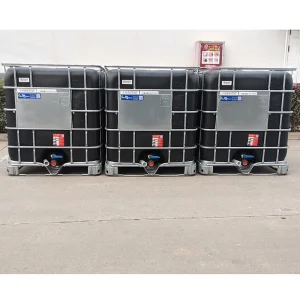
Standard packaging comprises multi-ply kraft paper bags with inner heat-sealed polyethylene (PE) liner (25 kg net), or heavy-duty polypropylene woven bulk bags (500 kg / 1000 kg supersacks) with moisture-barrier liners. Stored under dry, clean, and cool warehouse conditions, TCP remains chemically stable with a certified shelf life of 24 to 36 months from the date of synthesis.
Yes. Utilizing air-swept micro-pulverizers and opposed-jet milling systems, we can tailor the D50 between 1.5 microns and 25 microns. A narrow PSD with minimal ultra-fines eliminates bridging inside silo funnels, while tailored ultra-fine grades maximize calcium fortification dispersion in liquid suspensions without grittiness.
Standard stock grades have an MOQ of 1 metric ton (1 pallet). Custom particle-milled or pharma-dossier batches generally require an MOQ of 5 metric tons. Standard delivery time from order sign-off to vessel dispatch from Qingdao or Shanghai port is typically 7 to 14 business days, complete with lot-specific Certificate of Analysis (COA) and GHS-compliant Safety Data Sheets (SDS).
Collaborate directly with our chemical engineers to select the optimal assay, morphology, and particle size distribution for your specific processing line.
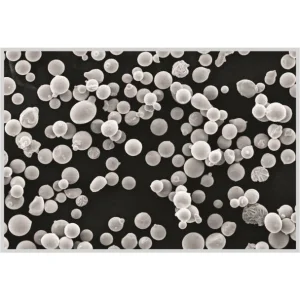
Full portfolio of specialty alloys, functional polymers, rare gases, and rubber additives available for combined container shipping and consolidated international supply lines.