


Explore our premium factory-grade materials manufactured under stringent atmosphere-controlled synthesis, vacuum induction melting, and ISO certified quality control standards.
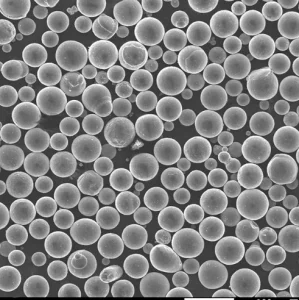

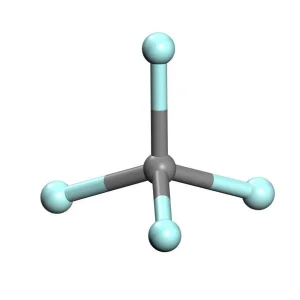



A rigorous evaluation of particle morphology, laser diffraction particle size distribution (PSD), surface oxidation kinetics, and rheological flow characteristics in high-precision industrial operations.
Unlike conventional mechanical ball-milling or air atomization, our factory utilizes high-pressure supersonic nitrogen or argon gas atomization (VIGA). Molten primary aluminum (99.8% purity) is disintegrated at speeds exceeding Mach 2.5, resulting in perfect spherical morphology with sphericity indices exceeding 0.94. This completely eliminates internal micro-porosity and agglomeration.
Precision air classification ensures an exceptionally narrow gaussian PSD. Calibrated by laser diffraction according to ISO 13320 standards, our 30-micron powder achieves D10 ≥ 14.5 μm, D50 between 28.0 and 32.5 μm, and D90 ≤ 48.0 μm. The total exclusion of ultra-fine dust (sub-5 micron) drastically suppresses dust explosion sensitivity (Kst value) while preventing laser beam attenuation in thermal printing.
Aluminum powder is naturally reactive. Our patented dual-stage passivation creates an amorphous Al2O3 layer precisely 2.5 to 4.0 nm thick. This controlled oxide skin safeguards against environmental moisture hydrolysis and spontaneous combustion while preserving over 99.2% of active, unoxidized elemental aluminum for high-energy pyrotechnics and rapid metallurgical consolidation.
| Analytical Parameter | Test Standard / Equipment | Spherical Gas-Atomized 30µm (Standard) | Ultra-Pure Laser Grade 30µm | Industrial Flake 30µm Grade |
|---|---|---|---|---|
| Median Diameter (D50) | ISO 13320 (Malvern Mastersizer 3000) | 28.0 – 32.0 μm | 29.5 – 31.0 μm | 27.0 – 34.0 μm |
| Particle Morphology | Field Emission SEM / Image Analysis | Spherical (Sphericity > 0.92) | Hyper-Spherical (Sphericity > 0.96) | Lamellar Flake / Leafing |
| Active Aluminum Content | Acid-Evolution Titration (Volumetric) | ≥ 99.0% | ≥ 99.5% | ≥ 96.5% |
| Apparent Tap Density | ASTM B527 (Tapped Density Tester) | 1.35 – 1.55 g/cm³ | 1.45 – 1.62 g/cm³ | 0.45 – 0.65 g/cm³ |
| Hall Flowability | ASTM B213 (50g funnel flow rate) | ≤ 28 s / 50g | ≤ 24 s / 50g | Non-free flowing |
| Total Oxygen Content (O) | Inert Gas Fusion (LECO ONH836) | < 0.20 wt% | < 0.12 wt% | 0.80 – 1.50 wt% |
| Moisture Content (H2O) | Karl Fischer Coulometric Titration | ≤ 0.05% | ≤ 0.02% | ≤ 0.10% |
Enterprise procurement executives and supply chain managers in North America, the European Union, East Asia, and the Middle East demand rigorous engineering compliance before qualifying aluminum powder manufacturers.
Global manufacturers cannot tolerate lot-to-lot variance in critical sintering or propellant compounding lines. YANXA enforces strict SPC (Statistical Process Control) across every atomizing cycle. From vacuum induction temperature monitoring (±2°C) to laser diffraction particle sizing at 30-minute intervals, every metric is indexed to unique batch numbers. Customers receive full third-party test verification (SGS, ALS, or Bureau Veritas) and comprehensive raw material origin certificates on request.
Aluminum powder is fundamentally exposed to raw aluminum pricing volatility on the London Metal Exchange (LME) and Shanghai Futures Exchange (SHFE). Our wholesale pricing structures provide flexible purchasing agreements: fixed spot pricing for urgent container orders, or formula-based indexing tied to standard spot aluminum ingot prices plus a transparent conversion atomization fee. This hedging security empowers defense, automotive, and solar paste clients to lock in long-term supply stability.
Explore how our precisely engineered 30 μm particle size delivers the optimal surface-area-to-volume ratio across high-performance manufacturing sectors.
In Laser Powder Bed Fusion (LPBF) and Direct Metal Laser Sintering, 30-micron spherical aluminum forms the core of high-strength AlSi10Mg, Scalmalloy, and Al-Cu custom alloys. High sphericity guarantees homogeneous powder spreadability across the recoater blade, minimizing micro-void formation and delivering theoretical density surpassing 99.7% in aerospace and motorsport components.
For composite solid propellants (APCP), thermite incendiaries, and precision defense ordnance, particle kinetics are dictated by grain diameter. At 30 microns, combustion rates are stable, reproducible, and resistant to violent thermal runaway, maximizing specific impulse (Isp) while ensuring complete volumetric combustion without premature agglomerate slag.
Silicon crystalline solar cell manufacturing relies heavily on back-surface field (Al-BSF) and PERC aluminum conductive pastes. Our 30-micron powder provides controlled organic binder dispersion, uniform screen printability, and optimal glass frit wetting, establishing superior ohmic contact and elevating solar conversion efficiency.
Applied via high-velocity air-fuel (HVAF) or cold gas dynamic spraying, 30-micron particles yield dense, ductile metallic cladding without melting-induced oxidation. This delivers sacrificial galvanic cathodic protection for marine offshore installations, oil pipelines, and automotive heat shielding.
Acting as a powerful deoxidizing reducing agent in steel refining and ferroalloy aluminothermic production, 30-micron powder enables stoichiometric precision. It is also an essential reactant in synthesizing alkylaluminum compounds and fine chemical intermediates.
Specially treated 30-micron leafing flake powders react under alkaline slurry conditions to generate controlled micro-hydrogen gas bubbles. This produces uniform cellular pores within lightweight construction blocks, drastically reducing structural weight while maximizing thermal insulation.
Handling and transporting combustible metal powders requires strict adherence to international maritime and aviation safety frameworks.
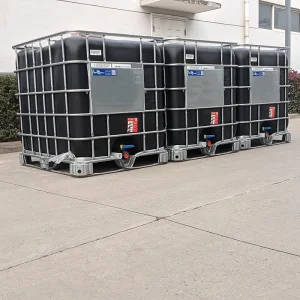
Compliant with UN Regulations for Class 4.3 (Substances which in contact with water emit flammable gases) and Class 4.1 (Flammable solids). Available in 25 kg steel drums with airtight lever-lock rings, vacuum-sealed interior multi-layer polyethylene foil liner bags with argon/nitrogen inerting, and 500 kg / 1000 kg UN-rated antistatic bulk bags (Type C / Type D conductive).
Complete documentation provided for maritime sea freight (IMO IMDG Code) and air cargo (ICAO / IATA DGR). Every shipment is accompanied by a batch Certificate of Analysis (COA), multilingual 16-section Safety Data Sheets (SDS per GHS Rev. 9), Certificate of Origin, and container packing declarations verified by port authorities.
Our aluminum powder grades are registered under EU REACH (Regulation EC No 1907/2006) and comply with RoHS and SVHC guidelines. Full traceability ensures frictionless customs clearance across European, American, Japanese, and Korean industrial seaports.
Continuous R&D investments are driving atomic-scale powder engineering, zero-carbon production routes, and plasma spherical upgrading.
For demanding additive applications, we are deploying RF thermal plasma spheroidization to process irregular aluminum feedstocks. In-flight melting at 10,000K strips surface oxide contaminants and reshapes satellites into ultra-smooth micro-spheres, targeting zero satellite adhesion and tap densities > 1.65 g/cm³.
To reduce corporate Scope 1 & 2 carbon emissions, our new manufacturing plant operates on 100% renewable hydroelectric power. A high-efficiency cryogenic nitrogen condensation system captures and purifies 99.5% of process atomizing gas, cutting energy consumption per metric ton by 34%.
Our engineering laboratory is developing sub-nanometer titania and silica encapsulation on 30-micron aluminum powder via fluidized bed ALD. This provides water-resistant protection in moisture-rich industrial environments while lowering explosive sensitivity without sacrificing reactivity during thermal activation.
Comprehensive technical and commercial clarity directly answered by YANXA metallurgical engineers and export logistics directors.
30 microns (μm) corresponds approximately to 450 to 500 US Standard Mesh. In standard sieve grading, a 30-micron powder passes completely through a 400-mesh (37 μm) screen. Because mechanical screens are prone to blinding at this fineness, we certify all PSD curves using laser diffraction (ISO 13320).
Spherical powder is produced via inert gas atomization; it features high tap density (1.4–1.6 g/cm³), excellent flowability, and low surface area, making it ideal for additive manufacturing, thermal spray, and propellants. Flake powder is mechanically milled with fatty acid lubricants, offering high leafing surface area, high reflectivity, and low density (0.4–0.6 g/cm³), ideal for paints, AAC blocks, and inks.
Every batch is packaged inside heavy-gauge, multi-layer aluminum-plastic barrier bags that undergo vacuum evacuation followed by high-purity argon flushing. The sealed inner bags are encased within UN-certified steel drums with silicone sealing gaskets, preventing humidity ingress, salt fog contamination, and oxidation for over 24 months.
For standard commercial 30-micron spherical powder, our baseline MOQ is 1,000 kg (1 metric ton). For preliminary laboratory validation, powder bed trials, or custom alloy blending, qualified enterprise clients can request a paid 1 kg to 5 kg sample package accompanied by lot-specific COA and SDS documentation.
Spherical unalloyed aluminum powder is classified under HS Code 7603.1000 (Aluminum powders of non-lamellar structure). Lamellar flake aluminum powders fall under HS Code 7603.2000. Alloyed variants (such as Aluminum-Magnesium) are categorized under HS 7603.1090 or applicable chapters depending on target composition.
Yes. Using advanced multi-stage cyclonic air classifiers, we can enforce precise top-cuts (D99 < 45 μm) and remove fine satellite particles (D10 > 15 μm). Custom PSD windows can be tailored to meet your recoater flowability or energetic reaction velocity requirements.
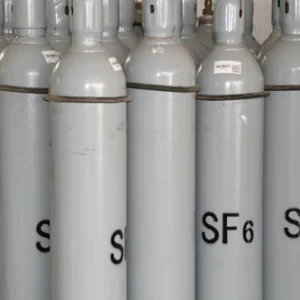
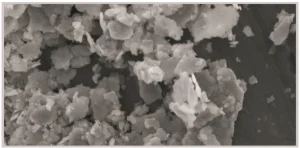
Complete your supply chain integration with our full spectrum of specialized fluorinated gases, liquid rubber polymers, and metallic powders.



Submit your target particle distribution parameters (D10/D50/D90), volume requirements, and destination sea port. Our technical sales engineers respond with official factory quotes and full compliance dossiers within 24 hours.
