

Verified laboratory assay limits, tight particle sizing, and export-compliant dangerous goods packaging delivered direct from our automated atomization plants.



The surface finishing and industrial protective coating sector is navigating a major paradigm shift. Driven by stringent Volatile Organic Compound (VOC) mandates, the phase-out of hexavalent chromium pre-treatments, and expanding demands for hyper-durable architectural finishes, aluminium coating powders have transitioned from basic mechanical pigments to complex, multi-component metallurgical solutions.
In standard electrostatic spray deposition (ESD) and fluidized bed processes, early-generation dry-blend metallic coatings frequently suffered from pigment separation, uneven Faraday cage penetration, and unstable recyclability. As an established wholesale manufacturer, our R&D has engineered thermal-bonding protocols where micronized metallic aluminium flakes (leafing and non-leafing) are chemically and mechanically fused onto polyester, polyurethane, or fluoropolymer resin matrices under inert nitrogen atmospheres. This prevents "picture-framing" defects, eliminates gloss mottling across complex extruded profiles, and ensures stable electrostatic transfer efficiencies above 85% on first-pass applications.
Aluminium powder coatings are formulated across distinct resin architectures depending on thermal, UV, and mechanical friction stresses. Super-durable architectural polyester powders meeting Qualicoat Class 2 and AAMA 2604 performance thresholds leverage carboxylated polyester crosslinked with Primid (hydroxyalkylamide) or TGIC, maintaining gloss retention over 75% after five years of south Florida exposure testing. For ultra-demanding marine and chemical environments, fluoropolymer-based (FEVE/PVDF) powders combined with silane-encapsulated aluminium flakes yield unyielding barrier resistance against chloride ion pitting and acid precipitation.
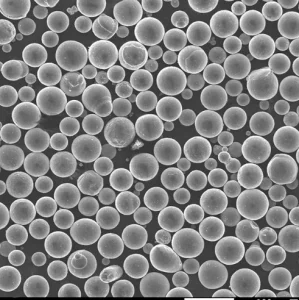
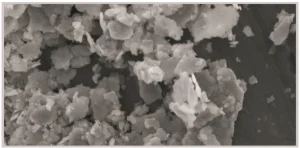
Technical Distinction: Spherical Atomized vs. Flake Geometries: Spherical aluminium particles synthesized via supersonic inert gas atomization optimize film density and aerodynamic fluidization inside automated reciprocator guns. Conversely, lamellar flakes (cornflake and silver-dollar morphology) provide an overlapping barrier that drastically lowers moisture vapor transmission rates (MVTR) while amplifying metallic reflectance.
Elimination of volatile carrier solvents. 100% solid-state dry powder finishing with up to 98% material utilization via closed-loop overspray recovery and cyclone separation systems.
Inorganic silica and polymeric nano-coatings encapsulate individual metallic pigments, preventing degradation from shear friction during pneumatic pumping and eliminating spark risks.
Next-generation powder formulations curing at 150°C–160°C instead of standard 200°C bakes, reducing industrial oven kilowatt-hour consumption by up to 28% for massive structural extrusions.
Specially engineered friction-charging additives enabling deep coating penetration into complex heat sinks, architectural mullions, and automotive chassis assemblies without back-ionization.
Tier-1 industrial buyers, architectural extrusion fabricators, and automotive component OEMs evaluate aluminium coating powders across rigorous quality assurance frameworks. Sourcing decisions hinge not merely on price per metric ton, but on batch-to-batch colorimetric delta E (ΔE), fluidization mechanics, and long-term weathering warranties.
| Product Grade / Matrix | Particle Size (D50) | Specific Gravity | Curing Window | Standard Compliance | FOB Price Benchmark |
|---|---|---|---|---|---|
| Architectural Polyester Bonded Super-durable Primid system |
36 – 42 μm | 1.35 – 1.50 g/cm³ | 180°C × 15 min | Qualicoat Class 2 | $3.80 – $5.20 / kg |
| Epoxy-Polyester Hybrid Metallic Indoor appliances & electrical enclosures |
32 – 38 μm | 1.40 – 1.65 g/cm³ | 170°C × 10 min | ISO 12944 C3 | $2.90 – $3.90 / kg |
| High-Ductility Polyurethane (PU) Automotive alloy wheels & trim |
28 – 35 μm | 1.25 – 1.35 g/cm³ | 190°C × 18 min | AAMA 2605 / GMW | $6.20 – $8.50 / kg |
| Gas-Atomized Spherical Al-Powder Pure 99.8% Al Thermal Spray / AM |
15 – 53 μm | 2.70 g/cm³ (bulk) | N/A (Sinter / Spray) | ASTM B214 / B215 | $5.50 – $7.80 / kg |
| Functional Zinc-Al Flake Blend Sacrificial fastener corrosion protection |
10 – 25 μm | 3.20 – 4.10 g/cm³ | 300°C × 25 min | DIN EN ISO 10683 | $4.60 – $6.40 / kg |
Enterprise procurement checklists require consistent laser diffraction distribution testing (measuring D10, D50, and D90) to eliminate ultra-fine particles below 10 μm—the primary culprit behind gun-tip agglomeration and gun-spitting—while curtailing oversized particles above 75 μm that disrupt smooth surface leveling and film orange-peel values.
Multi-angle spectrophotometry (25°, 45°, 110°) ensuring metallic flop and lightness values stay within ΔE < 0.50 tolerance under varying illuminants (D65, TL84, A).
Formulated with high glass transition temperatures (Tg > 58°C) and anti-caking fumed aluminas to resist tropical transport clumping and ensure steady hopper feed rates.
Zero flaking or micro-delamination (Class 0 per ISO 2409 / 5B per ASTM D3359) after rapid direct and reverse impact loading exceeding 50 kg-cm.
Operating out of high-throughput industrial chemical corridors in China, our advanced manufacturing centers leverage Industry 4.0 automation to combine metallurgical control with unmatched supply chain responsiveness. From molten metal atomization to closed-loop thermoset extrusion, our facilities eliminate manual variance.
Our vertical integration anchors stability against global raw material commodity shocks. By coupling primary bauxite and liquid aluminium smelting directly with inert gas induction atomization furnaces, we maintain an annual production throughput exceeding 25,000 metric tons. Automated loss-in-weight twin-screw feeders regulate the compounding of raw polyesters, pigment stabilizers, and metallic flakes down to 0.05% weight accuracy, guaranteeing flawless homogeneity across 20-ton single-batch productions.
Multi-deck air classifier sieves coupled with ultrasonic resonance eliminate satellite particles and tailing agglomerates, achieving ultra-narrow span ratios (Span = [D90 - D10] / D50 < 1.25).
Computer-monitored thermal bonding vessels control oxygen concentration below 2.5%, ensuring aluminium flakes weld uniformly to the base resin particles without frictional oxidation.
QR-coded barcode systems link every outgoing 20kg moisture-barrier box directly to raw material lot numbers, oven dwell telemetry, and laboratory FTIR chemical fingerprints.
Direct logistical routing to Ningbo and Shanghai deepwater container ports, featuring UN-certified packaging protocols and expedited dangerous-goods maritime clearance.
The international demand for wholesale aluminium coating powders is shaped by regional infrastructure development, industrial reshoring, and the decarbonization of commercial transport fleets.
Strict European REACH and EPD (Environmental Product Declaration) standards prioritize chromate-free pretreatments and Qualicoat Class 3 super-durable bonded metallic powders for commercial facades and landmark architectural curtain walls.
Rising adoption across agricultural equipment, off-road machinery, and electric vehicle battery enclosures where lightweight aluminium components demand both galvanic shielding and electrical insulation.
Massive rolling-stock rail projects, high-rise urban expansion, and 5G telecommunication base station enclosures require scalable, rapid-turnaround metallic powder batches characterized by flawless weatherability.
Intense solar radiation, desert sand abrasion, and high ambient temperatures drive demand for specialized inorganic-pigmented, fluoropolymer-bonded metallic coatings that prevent chalking and surface erosion.
Our precision powders are engineered to perform across diverse industrial substrates and demanding environmental exposures.
Applied onto extruded 6063-T5 aluminium window frames, thermal break profiles, and exterior cladding panels. Withstands mortar contact, acid rain, and solar exposure without color shift.
Provides high-luster silver and chrome effects on cast A356 alloy wheels. Resists brake dust abrasion, hot-temperature cycling, and stone-chipping impacts under harsh road conditions.
Specially formulated thin-film epoxy-aluminiums engineered to deliver high thermal dissipation coefficients while ensuring dielectric breakdown voltages above 5 kV for inverter cabinets.
Heavy-duty zinc-aluminium barrier flake systems safeguarding structural steel pipe brackets, valve bodies, and marine deck equipment against continuous salt fog immersion (ISO 12944 C5-M).
Our pricing policy reflects real-time London Metal Exchange (LME) aluminium indexation, raw resin market dynamics, and order volume scaling. We provide fully unbundled FOB/CIF quotation structures that clarify raw material, processing, bonding, and packaging cost components.
| Tier Structure | Order Volume (Metric Tons) | Standard Super-Durable Polyester | Thermal Bonded Metallic Grade | Payment & Lead Time Terms |
|---|---|---|---|---|
| LCL Trial Tier | 500 kg – 2,000 kg | $4.40 – $4.90 / kg | $5.60 – $6.20 / kg | 100% TT / 7–10 Business Days |
| FCL Standard Tier | 1 × 20' GP (approx. 12–14 MT) | $3.70 – $4.10 / kg | $4.80 – $5.30 / kg | 30% TT, 70% LC / 14 Business Days |
| Contract Volume Tier | Annual Framework (> 50 MT) | $3.20 – $3.60 / kg | $4.20 – $4.60 / kg | Revolving LC / Staggered JIT Dispatch |
*Note: Base pricelist quotations reference LME aluminium spot pricing. Custom color-matching (RAL, NCS, or Pantone swatches), anti-microbial additives, or specialized particle distributions are quoted on a project-specific engineering basis. All prices subject to official formal quotation.
Authoritative insights into particle engineering, application trouble-shooting, storage compliance, and international logistics.
Explore our integrated portfolio of electronic gases, inorganic nitrate salts, liquid synthetic polymers, and calcium compounds manufactured for critical industrial applications.