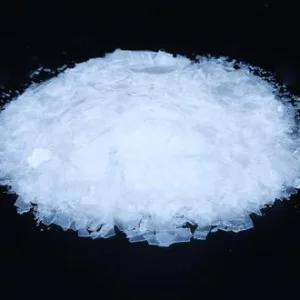
Direct supply from Yanxatech System Industries Limited (YANXA) with rigorous batch traceability, tight particle sizing, and export-compliant hazardous packaging.




Basic copper nitrate (CAS No. 12158-74-6), with the idealized molecular formula Cu₂(OH)₃NO₃ (dicopper trihydroxide nitrate), represents a pivotal inorganic compound bridging transition-metal salt reactivity and crystalline matrix stability.
Occurring naturally as the mineral polymorphs Rouaite (monoclinic, P2₁) and Gerhardtite (orthorhombic, P2₁2₁2₁), commercial synthetic basic copper nitrate manufactured in our factory is tightly controlled for the rouaite crystal lattice. This phase provides thermal predictability, uniform ignition onset, and superior mechanical pressing properties for tablet compacts.
Unlike normal copper(II) nitrate trihydrate [Cu(NO₃)₂·3H₂O], which melts at 114°C and causes catastrophic liquidity in energetic pyrotechnic mixes, basic copper nitrate is non-deliquescent and structurally water-free. It maintains chemical stability up to 220°C, undergoing single-step endothermic-to-exothermic transition cleanly producing high-surface-area cupric oxide (CuO), water vapor, and nitrogen.
Our continuous synthesis reactors strictly regulate trace halogens (Cl ≤ 50 ppm, SO₄ ≤ 100 ppm) and alkali metals (Na ≤ 40 ppm, Fe ≤ 30 ppm). In energetic gas-generant matrices and catalyst formulations, trace halogen poisoning degrades combustion linearity and poisons active catalytic reduction sites, making our ≥99.0% assay purity the industrial benchmark.
| Analytical Parameter | Airbag Inflator Grade (Auto-BCN) | Catalyst Synthesis Grade (Cat-BCN) | Pyrotechnic / Industrial Grade | Methodology / Instrumentation |
|---|---|---|---|---|
| Chemical Formula | Cu₂(OH)₃NO₃ | Cu₂(OH)₃NO₃ | Cu₂(OH)₃NO₃ / [Cu(NO₃)₂·3Cu(OH)₂] | Structural Stoichiometry |
| Assay (as Cu₂(OH)₃NO₃) | ≥ 99.50% | ≥ 99.00% | ≥ 98.50% | EDTA Titrimetric Method |
| Total Copper Content (Cu) | 55.20% – 56.40% | 55.00% – 56.50% | 54.50% – 56.50% | ICP-OES / Electrolytic Gravimetry |
| Chloride (Cl⁻) | ≤ 0.005% (50 ppm) | ≤ 0.010% (100 ppm) | ≤ 0.020% (200 ppm) | Potentiometric Titration |
| Sulfate (SO₄²⁻) | ≤ 0.010% (100 ppm) | ≤ 0.015% (150 ppm) | ≤ 0.030% (300 ppm) | Turbidimetric Analysis |
| Iron (Fe) | ≤ 0.003% (30 ppm) | ≤ 0.005% (50 ppm) | ≤ 0.010% (100 ppm) | AAS / ICP-OES |
| Particle Size Distribution (D50) | 8.0 – 16.0 μm (Customizable) | 15.0 – 35.0 μm | 20.0 – 60.0 μm | Laser Diffraction (Malvern Mastersizer) |
| Moisture (Loss on Drying 105°C) | ≤ 0.20% | ≤ 0.30% | ≤ 0.50% | Halogen Moisture Analyzer |
| Bulk Density | 0.75 – 0.95 g/cm³ | 0.80 – 1.10 g/cm³ | 0.70 – 1.00 g/cm³ | Scott Volumeter Tapped Density |
A rigorous examination of the worldwide basic copper nitrate market across passive automotive safety, low-carbon industrial catalysts, green building preservatives, and international supply chain reorganization.
The global phasing out of sodium azide (NaN₃) and unstable ammonium nitrate propellant formulations by tier-1 automotive suppliers (Autoliv, ZF TRW, Joyson Safety Systems) cemented basic copper nitrate as the worldwide de facto non-azide gas oxidizer. Combined with basic organic fuels (5-aminotetrazole, guanidine nitrate), BCN produces cool, non-toxic nitrogen gas while converting instantly into non-respirable slag-forming molten copper pellets.
Under EU REACH and EPA environmental mandates, industrial consumers have abandoned toxic heavy metal oxidizers (barium chromates, lead compounds). Basic copper nitrate exhibits a benign environmental footprint during combustion and decomposition, ensuring long-term regulatory compliance across the North American, European, and Asia-Pacific manufacturing belts.
As the green hydrogen economy scales, high-performance water-gas shift (WGS) catalysts and methanol synthesis systems increasingly rely on co-precipitated Cu/ZnO/Al₂O₃ matrices derived from basic copper nitrate precursors. Its homogenous crystalline decomposition ensures a narrow pore-size distribution and high copper active-site dispersion on zinc-aluminum oxide carriers.
Raw copper price volatility on the LME (London Metal Exchange) and Shanghai Futures Exchange directly influences wholesale precursor production. Our manufacturing plant combines upstream scrap copper electrolytic refining with automated closed-loop nitric acid absorption, safeguarding continuous supply and price stabilization for overseas long-term contracted buyers.
A technical review of synthetic pathways, reaction kinetics, and crystallizer parameters utilized at our factory to maintain nanometer-scale morphology control.
In our reactor trains, electronic-grade copper wire or electrolytic copper granules are dissolved in high-purity nitric acid to generate an acidic Cu(NO₃)₂ mother liquor. Controlled stoichiometric addition of basic neutralizing agents (high-purity sodium hydroxide or ammonium bicarbonate) is executed under precise pH buffering (pH 4.8 – 5.4) at 65°C – 80°C to selectively crystallize the monoclinic rouaite phase while eliminating basic copper carbonate impurities.
Uncontrolled precipitation yields needle-like aggregates that exhibit terrible flowability in automated tableting presses. Our continuous-stirred tank reactors (CSTR) incorporate ultrasonic cavitation and fluid shearing to cultivate isometric plate-like micro-crystals. Subsequent fluid-energy jet milling and classifying allow us to tailor median diameters (D50) between 8 μm and 45 μm with a steep span index (D90-D10/D50 < 1.2).
Residual moisture in basic copper nitrate can hydrolyze fuels in sealed automotive inflators over 15-year vehicle lifespans. We employ rotary cone vacuum dryers running at 85°C under high vacuum (< 5 mbar) to achieve moisture contents consistently below 0.15%. Anti-caking micronized silica or surface organosilane passivators can be dry-coated uniformly during the blending phase upon technical request.
Comprehensive deployment scenarios demonstrating why basic copper nitrate serves as an indispensable specialty material across mission-critical sectors.
Serving as the dominant non-hygroscopic solid oxidizer, basic copper nitrate is formulated with energetic fuels such as 5-aminotetrazole (5-AT), guanidine nitrate (GN), and nitroguanidine (NQ). Its superior thermal stability prevents vehicle recall hazards caused by phase-change volumetric swell, and during ignition, its high density (2.8 g/cm³) facilitates ultra-compact inflator module architecture.
In low-temperature CO shift reactions, methanol steam reforming, and selective hydrogenation of aldehydes, basic copper nitrate acts as the prime precursor. Calcination of pure Cu₂(OH)₃NO₃ yields a distinct tenorite phase (CuO) characterized by an exceptionally high concentration of surface Jahn-Teller distortion active sites and uniform micro-porosity.
Standard copper carbonates decompose prematurely, while copper chlorides are aggressively hygroscopic. Basic copper nitrate furnishes both high-temperature oxidizing capacity and dense molecular CuCl/CuOH emission bands in the blue spectrum (420–460 nm) when paired with chlorine donors, providing deep chromatic purity for precision fireworks and signal flares.
Replacing toxic chromated copper arsenate (CCA) and alkaline copper quaternary (ACQ) salts, basic copper nitrate particles micro-milled to sub-micron dimensions offer deep timber penetration without high leachability. The nitrate moiety enhances biocide bioavailability while avoiding aggressive corrosion on steel structural screws and fasteners.
In high-density interconnect (HDI) printed circuit boards and nano-copper conductive inks, basic copper nitrate functions as a high-copper-density source capable of low-temperature thermolytic sintering into pure metallic copper patterns under mild forming gas (H₂/N₂) atmospheres without carbonaceous residue.
Utilized as an active agent in advanced broad-spectrum horticultural bactericides and fungicides. Basic copper nitrate exhibits superior adherence to plant foliage compared to copper sulfate, dramatically cutting down runoff loss during precipitation events and reducing heavy metal soil saturation risks.
YANXA delivers integrated supply chain solutions addressing hazardous logistics regulations, price hedging, and comprehensive international compliance.
Basic copper nitrate presents specific oxidizing and hazardous chemical classifications. We provide certified packaging complying with UN 3077 (Class 9) or Class 5.1 (Oxidizing Substances) per IMDG / IATA specifications. Multi-layer foil vacuum lining inside 25kg UN-rated fiber drums or 500kg heavy-duty bulk bags eliminates moisture vapor infiltration during ocean transit.
Every commercial delivery is backed by a fully traceable batch Certificate of Analysis (COA), 16-section GHS Safety Data Sheet (SDS), and Technical Data Sheet (TDS). In-house testing utilizes calibrated PerkinElmer ICP-OES, Rigaku X-ray Diffractometers, and Malvern Laser Particle Analyzers. Independent third-party inspection (SGS, BV, Intertek) is routinely accommodated.
Because metallic copper constitutes ~56% of basic copper nitrate's weight, raw metal spot fluctuations present purchasing risks. We provide flexible commercial models including rolling futures index-linked hedging, multi-month fixed pricing agreements, and safety stock reserves at bonded port facilities across Asia and Europe.
Direct technical and commercial answers addressing specifications, handling, burn rate performance, and factory logistics.
Complete your supply procurement across YANXA's six flagship industrial product families, supported by comprehensive quality documentation and worldwide logistics.


Connect directly with YANXA's chemical synthesis and regulatory logistics team. Submit your target assay, custom particle size requirements, destination port, and annual delivery schedule for an immediate formal quotation and technical data package.