


Verified batch certifications (COA), export packaging compliance, and full traceability direct from modern manufacturing hubs.






A strategic overview of industrial fluorine chemistry, supply constraints, and the expanding semiconductor roadmap.
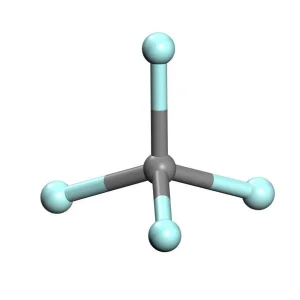
Carbon Tetrafluoride (R-14) stands as the foundational anisotropic plasma etchant for silicon, silicon dioxide (SiO2), and silicon nitride (Si3N4). With the scaling of Gate-All-Around (GAA) and 3D NAND vertical architectures exceeding 200 layers, global CF4 consumption is driven by precision etching selectivities where ppm-level contaminants cause catastrophic wafer defects.
The global shift toward high-efficiency n-type TOPCon and Heterojunction (HJT) solar architectures has multiplied dry plasma etching requirements. Bulk wholesale supply of 4N and 5N grade CF4 ensures uniform edge isolation, anti-reflective coating texturing, and minimal surface recombination velocities across gigawatt-scale production lines.
Operating under CAS 75-73-0, CF4 is recognized for extreme thermodynamic stability, low boiling point (-128.1°C), and non-flammability. It serves as an ultra-low-temperature refrigerant and neutron detector buffer gas, delivering performance where fluorochemical purity dictates instrumentation signal-to-noise ratios.
Vertically consolidated upstream fluorspar reserves combined with advanced cryogenic distillation infrastructure yield unmatched volume scale, batch consistency, and cost resilience.
Direct coupling with domestic hydrofluoric acid synthesizing loops shields global buyers from intermediate pricing shocks. Raw thermal fluorination of carbon compounds is executed under tightly closed reactors with zero raw material bottlenecks.
Synthesized crude gas undergoes multi-stage catalytic scrubbing to strip corrosive fluoride traces (HF < 0.1 ppmv), followed by sub-zero fractional distillation to purge trace O2, N2, CO, and SF6, consistently stabilizing 5N electronic metrics.
High-pressure cylinder filling operations utilize automated evacuation, vacuum baking, and residual gas analysis (RGA) manifold arrays, preventing ambient atmosphere entrapment during wholesale container preparation.
Equipped with trace-level Gas Chromatography-Mass Spectrometry (GC-MS), Fourier-Transform Infrared (FTIR) spectroscopy, and cavity ring-down spectrometers, guaranteeing each lot matches international SEMI specification guidelines.
Comparative analytics and maximum allowable impurity thresholds across standard procurement specifications.
| Analytical Parameter / Impurity Spec | Industrial Grade (3N5 / 99.95%) | Electronic Grade (4N5 / 99.995%) | VLSI / Semiconductor Grade (5N / 99.999%) | Detection Method |
|---|---|---|---|---|
| Carbon Tetrafluoride (CF4) Assay | ≥ 99.95% | ≥ 99.995% | ≥ 99.999% | GC-TCD / Difference |
| Oxygen + Argon (O2 + Ar) | ≤ 50 ppmv | ≤ 5.0 ppmv | ≤ 1.0 ppmv | Trace Gas Chromatography (GC-DID) |
| Nitrogen (N2) | ≤ 150 ppmv | ≤ 15.0 ppmv | ≤ 2.0 ppmv | Gas Chromatography (GC-DID) |
| Moisture (H2O) | ≤ 15 ppmv | ≤ 2.0 ppmv | ≤ 0.5 ppmv | Cavity Ring-Down Spectroscopy (CRDS) |
| Carbon Monoxide (CO) | ≤ 10 ppmv | ≤ 1.0 ppmv | ≤ 0.2 ppmv | Methanizer GC-FID |
| Carbon Dioxide (CO2) | ≤ 20 ppmv | ≤ 2.0 ppmv | ≤ 0.5 ppmv | FTIR / Infrared Absorption |
| Acidity (as HF) | ≤ 1.0 ppmv | ≤ 0.1 ppmv | ≤ 0.05 ppmv | Ion Chromatography (IC) |
| Other Halocarbons (CHF3, C2F6, SF6) | ≤ 100 ppmv | ≤ 10 ppmv | ≤ 2.0 ppmv | GC-MS Screening |
How global fab engineers and industrial material scientists deploy wholesale CF4 cylinders across regulated processing chambers.
Under radiofrequency (RF) plasma discharges, CF4 dissociates into active fluorine radicals (F*) and CFx ions. These species volatilize silicon substrates as gaseous SiF4. Mixed with controlled ratios of O2 or Ar, it creates high etch-rate directional profiles on polysilicon and refractory metal silicides with zero residue.
Chemical Vapor Deposition (PECVD/LPCVD) tool walls accumulate dense parasitic films of SiO2, Si3N4, and tungsten. Wholesale supply of high-flow CF4 ensures efficient in-situ plasma chamber cleaning, vaporizing deposits into exhaust streams and maximizing mean time between cleans (MTBC).
Automotive and aerospace composite manufacturers utilize low-temperature CF4 plasma to fluorinate elastomer and polymer matrices. This treatment substitutes surface hydrogen with fluorine atoms, boosting surface energy, chemical impermeability, and bonding wettability without altering bulk substrate tensile strength.
How multinational supply chain directors navigate environmental compliance, packaging logistics, and supply resilience.
Because Carbon Tetrafluoride possesses a 100-year Global Warming Potential (GWP) of approximately 6,630 and an atmospheric lifetime of 50,000 years, global semiconductor facilities are installing point-of-use thermal and plasma abatement scrubbers, achieving post-etch destruction efficiencies > 99%.
Classified under UN 1982, Class 2.2 (Non-flammable, non-toxic compressed gas), seamless handling requires DOT-3AA and ISO 9809-1 certified high-pressure steel cylinders, Y-cylinders (440L), and multimodal ISO tube trailers with compliant IMDG/IATA dangerous goods declarations.
Global chip foundries across North America, Europe, and East Asia are aggressively expanding direct relationships with established Tier-1 Chinese manufacturers to diversify away from domestic supply bottlenecks and ensure uninterrupted continuous fab operation.
Essential guidance covering packaging, shelf-stability, custom manifolds, and international logistics protocols.
We supply wholesale CF4 in 40L, 47L, and 50L high-pressure steel cylinders (standard CGA 580, CGA 320, or DISS 716 connections for electronic grades). Cylinders are typically filled to working pressures of 13.7 MPa (137 bar) to 15.0 MPa, providing roughly 25 to 30 kg of net product per standard 47L container.
Prior to refilling, all returned or newly manufactured cylinders undergo proprietary chemical passivation, ultra-high vacuum de-gassing at 150°C, and mass spectrometer residual verification. Cylinder inner surfaces are micro-polished to achieve Ra < 0.4 μm, halting surface moisture adsorption during extended sea transit.
Every shipment is accompanied by a batch Certificate of Analysis (COA) specifying trace impurity analysis, GHS-compliant 16-section Safety Data Sheets (SDS), IMDG Container Inspection Declarations, UN-rated Cylinder Packing Certificates, Commercial Invoices, and verifiable Certificates of Origin (CO).
Yes. Our blending facility formulates precision binary and ternary mixtures, such as CF4/O2 (custom oxygen doping for tunable photoresist selectivity) and CF4/Ar, with gravimetric blending tolerances under ±1% and lot-to-lot consistency validation.
Comprehensive portfolio spanning atomized functional powders, modified synthetic elastomers, and high-spec industrial salts.








