Explore our export-ready chemical additives, performance liquid rubber systems, and micron-scale atomized powders validated with batch COA and SDS.




A rigorous examination of powder metallurgy dynamics, circular metallurgy incentives, and global chemical reduction specifications.
Iron dust represents the fundamental building block for structural automotive components, soft magnetic composites (SMC), and sintered self-lubricating bushings. Contemporary direct-drive electric vehicle (EV) architectures drive unprecedented demand for ultra-clean, high-compressibility iron particulates that minimize core hysteresis losses in stator and rotor assemblies.
Zero-Valent Iron (ZVI) micro-dust operates as a redox master key for subterranean water aquifers and industrial wastewater discharge. Its high specific surface area enables reductive dechlorination of toxic trichloroethylene (TCE), selective precipitation of hexavalent chromium (Cr VI), and immobilization of complex organic effluents through advanced Fenton oxidation reactions.
Engineered combustion velocity and precise surface-area-to-mass ratios allow specialized atomized iron dust grades to act as sustained oxygen scavengers in packaging preservation, as well as caloric density boosters in defense formulation pyrotechnics, fireworks visual star compositions, and thermite cutting systems requiring narrow energy release rates.
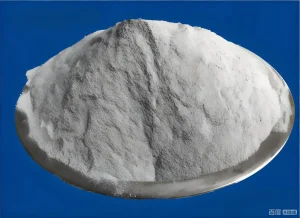
Yanxatech System Industries Limited delivers iron dust manufactured through either sponge iron reduction or high-pressure gas/water atomization to guarantee targeted green strength and apparent density.
| Grade Classification | Primary Fe Assay | Morphology | Apparent Density (g/cm³) | Key Application Sectors |
|---|---|---|---|---|
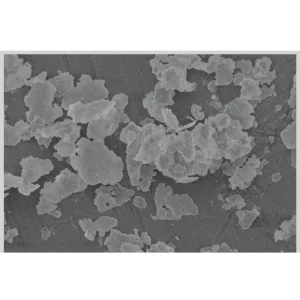
| Reduced Sponge Iron Dust (RS-Fe98) | ≥ 98.2% | Irregular, Porous, Spongy | 2.40 – 2.70 | Friction linings, brake pads, chemical synthesis, ZVI soil remediation |
| Water-Atomized Iron Powder (WA-Fe99) | ≥ 99.3% | Sub-angular to Rounded | 2.80 – 3.10 | Automotive sintered structural parts, diamond tools, welding consumables |
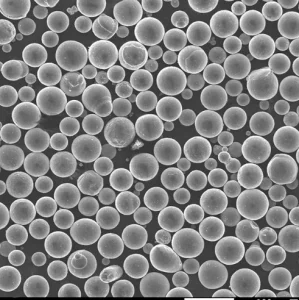
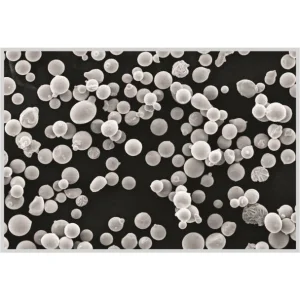
| Inert Gas-Atomized Spherical Dust (GA-Fe99.8) | ≥ 99.8% | Highly Spherical, Satellite-Free | 4.10 – 4.45 | Additive manufacturing (LPBF / DED), soft magnetic cores, MIM |
| Ultra-Fine Carbonyl-Analogue Grade (UF-Fe99.5) | ≥ 99.5% | Micro-Spherical (D50: 3–8 μm) | 3.50 – 3.85 | Radar-absorbent coatings (stealth), EMI shielding, nutritional enrichment |
Navigating the shift toward green hydrogen direct reduced iron (H-DRI) powders and circular metal dust reclamation workflows.
Replacing traditional carbon monoxide or coke reductants with green hydrogen reduction furnaces. This eliminates embedded Scope 1 and Scope 2 carbon footprints, reducing micro-inclusions of sulfur and phosphorus down to parts-per-million levels to achieve unprecedented metallurgical compressibility.
Implementation of acoustic-levitation and in-line laser diffractometry monitors to dynamically tune gas pressure during molten metal breakdown. The result is a hyper-narrow particle size distribution (PSD) with yield optimization exceeding 88% within the target 20–45 μm spectrum.
Pioneering iron dust as a recyclable, non-volatile chemical energy carrier. Finely atomized iron powder is combusted with air at high temperatures to produce heat and iron oxide (rust) without greenhouse gases, followed by clean hydrogen regeneration in closed-loop zero-carbon energy storage networks.
Direct technical answers addressing packing, oxygen limits, shipping parameters, and application compatibility for commercial iron dust.
All wholesale iron dust export shipments are hermetically packed in vacuum-sealed double-layer polyethylene liners with desiccants, housed inside UN-approved steel drums or reinforced woven bulk bags with nitrogen flushing to maintain total oxygen pickup under 0.15% across multi-week maritime transits.
Yes. Utilizing dynamic air classification and precision ultrasonic sieving systems, we customize sieve cuts ranging from sub-325 mesh (<44 μm) up to coarse granular cuts (40–80 mesh), precisely matched to your green strength, flowability (Hall flow rate), and die-compaction requirements.
Every lot undergoes rigorous testing via Inductively Coupled Plasma Optical Emission Spectrometry (ICP-OES) for trace element assays, LECO combustion analyzers for interstitial carbon, sulfur, and oxygen, and Malvern Mastersizer laser diffraction for exact volumetric particle sizing.
Coarser grades (>100 μm) are typically shipped as Non-Hazardous cargo for general freight. However, micro-scale or stabilized pyrophoric variants may be classified under UN 3089 (Metal powder, flammable, Class 4.1) or UN 3178, demanding specialized IMDG certified packaging and declaration.
Engineered to aerospace, semiconductor, pyrotechnic, and advanced manufacturing standards by Yanxatech System Industries Limited.