Wholesale Iron III Nitrate Manufacturers & Factory

Precision-Engineered Ferric Nitrate Nonahydrate [Fe(NO₃)₃·9H₂O] & High-Purity Anhydrous Solutions for Semiconductor CMP, Advanced Catalysis, Industrial Mordants, and Surface Passivation.

Industry Whitepaper

Industrial-Scale Synthesis & Macro-Engineering Solutions

Optimizing ferric ions (Fe³⁺) and nitrate anions (NO₃⁻) kinetics across modern chemical, metallurgical, and electronic operations.

≥ 99.0%
Industrial & Electronic Grade Assay
< 10 ppm
Heavy Metal Contaminant Threshold (Pb/As)
Class 5.1
UN 1466 Standard Compliant Packaging
2,500 MT
Annual Factory Synthesizing Capacity

Controlled Crystallization Technology

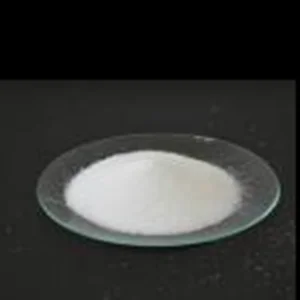
Iron (III) Nitrate Nonahydrate synthesized by Yanxatech undergoes low-temperature, multi-stage evaporation and continuous centrifugal mother-liquor extraction to prevent dehydration and thermal decomposition into basic salts.

  • Formula: Fe(NO₃)₃·9H₂O | CAS: 7782-61-8
  • Low Insolubles: Residual matters < 0.005% w/w
  • Homogeneous Crystal Matrix: Minimal caking

Redox Catalysis & Organic Synthesis

Our ultra-pure ferric nitrate serves as an exceptional selective oxidant in fine chemical synthesis, enabling non-hazardous nitration reactions, dehydrogenation protocols, and clean Clayfen reagent preparation.

  • Montmorillonite Clay Intercalation (Clayfen)
  • Selective oxidation of alcohols and thiols
  • Minimal chloride / sulfate interference

Semiconductor Slurry & CMP Polishing

Formulated for Chemical Mechanical Planarization (CMP) slurries in wafer fabrication. Highly controlled trace metallic cations prevent micro-scratches and junction leakage across sub-14nm process nodes.

  • Ultralow trace sodium, potassium, calcium (< 5 ppm)
  • Precise pH buffering capability in barrier polishing
  • Stable selective planarization for copper & tungsten
Global Commercial Landscape

Localized Applications & Macro Industrial Deployment

How wholesale purchasers across Europe, North America, Southeast Asia, and the Middle East deploy our ferric compounds.

Textile Mordant & Color Fastness

Widely utilized in localized dyeing mills across South Asia and Europe. Ferric ions act as coordination anchors for natural and synthetic dyes, establishing exceptionally durable chelate complexes with fiber matrixes without color shift.

  • High affinity for cellulose, wool, and silk protein chains
  • Environmentally friendly replacement for chrome-based salts
  • Produces lightfast and wash-durable black/brown lakes

Metal Surface Passivation & Etching

Applied extensively in precision aerospace, medical devices, and architectural brass/aluminum etching. The strong, regulated oxidation potential allows uniform metal dissolution without pitting.

  • Chemical milling of stainless steel, copper, and alloys
  • Uniform micro-etching prior to anodizing or bonding
  • Controlled nitrate oxide passivation layer formation

Industrial Odor & Water Treatment

Deployed in municipal and industrial wastewater facilities. Ferric nitrate removes hydrogen sulfide (H₂S) gas via dual pathways: rapid oxidation of sulfide and simultaneous biological denitrification enhancement.

  • Eliminates corrosive biogenic sulfuric acid generation
  • Enhanced settling performance of heavy metal hydroxides
  • Effective flocculation without excessive sludge volumes
Compliance & Reliability

End-to-End Dangerous Goods Logistics & Regulatory Guarantee

Zero-defect export compliance under IMDG, IATA, REACH, and regional hazardous chemical storage directives.

UN-Certified Packaging

Iron (III) Nitrate is classified as Class 5.1 Oxidizing Agent (UN 1466, PG III). We ship in heavy-duty UN-approved 25kg PE-lined woven bags, fiber drums with hermetic moisture barriers, or 1000kg bulk super-sacks.

Comprehensive Documentation

Every shipment is delivered with lot-specific Certificate of Analysis (COA), 16-section SDS in GHS/OSHA format, Technical Data Sheets (TDS), Packing Declarations, and Third-Party Assay verifications (SGS/BV upon request).

Global Seaport Coordination

Seamless door-to-port or CIF delivery from Qingdao, Shanghai, and Tianjin terminals to major hubs worldwide, ensuring strictly managed temperature and desiccated storage conditions aboard sea freight vessels.

R&D Pipeline

Technical Roadmap & Sustainability Horizon (2025–2030)

Pioneering closed-loop, zero-waste synthetic procedures and advancing ultra-low metal ion limits for the next era of industrial manufacturing.

Phase 1: Present

Sub-ppm Ionic Purification

Deploying advanced ion-exchange resin modules to reduce heavy metalloids down to < 0.5 ppm for specialized nano-semiconductor polishing.

Phase 2: 2026-2027

Closed-Loop NOx Recovery

Capturing process exhaust gases and recycling nitric oxides straight back into acid distillation units, reducing production carbon footprint by 38%.

Phase 3: 2028

Anti-Deliquescent Packaging

Engineering moisture-impermeable bioactive composite barriers that eliminate crystalline clumping in extreme tropical shipping climates.

Phase 4: 2029-2030

Catalytic Precursors for Clean H₂

Expanding tailored iron nitrate precursor production for high-surface-area iron oxide electrocatalysts in green hydrogen water-splitting systems.

Engineering Knowledgebase

Frequently Asked Questions for Sourcing & Chemistry Teams

Comprehensive technical clarifications on chemical properties, storage behavior, and wholesale ordering.

What is the difference between Iron (III) Nitrate nonahydrate and anhydrous grade?
Ferric nitrate commonly exists as the nonahydrate form [Fe(NO₃)₃·9H₂O] with a molecular weight of 404.00 g/mol, appearing as pale violet-to-light purple deliquescent crystals with a low melting point (~47.2°C). Anhydrous ferric nitrate cannot be made simply by heating the nonahydrate, as direct thermal dewatering leads to premature decomposition and liberation of toxic nitrogen dioxide (NO₂) fumes along with insoluble basic iron salts. For applications requiring anhydrous parameters, low-temperature non-aqueous synthesis routes or liquid-stabilized formulations are used.
How should bulk wholesale Iron (III) Nitrate be stored to avoid melting or deliquescence?
Due to its low melting point and hygroscopic nature, ferric nitrate nonahydrate must be stored in a dry, well-ventilated location strictly below 30°C (preferably 20–25°C) away from direct sunlight, reducing agents, combustible organic matter, and powerful acids. Containers must remain hermetically sealed with internal PE moisture liners intact until immediate consumption.
What testing protocols verify electronic-grade purity for semiconductor applications?
Our electronic-grade material undergoes Inductively Coupled Plasma Mass Spectrometry (ICP-MS) to quantify trace metal cations (Na, K, Ca, Cu, Ni, Cr) down to sub-ppb thresholds, Ion Chromatography (IC) for trace chlorides and sulfates, and Gravimetric Analysis for acid-insoluble matter. Every production batch is certified against specific customer CMP slurry recipes.
What are the standard international shipping classifications for containerized cargo?
Iron III Nitrate is classified under the United Nations Dangerous Goods framework as UN 1466, Class 5.1 (Oxidizing Substances), Packing Group III. Ocean freight must adhere strictly to the International Maritime Dangerous Goods (IMDG) Code, including DG manifest declarations, proper IMO placarding, and segregation away from Class 4 (flammables) and Class 8 (acids/bases).
Can customized particle sizes or stabilized aqueous solutions be quoted?
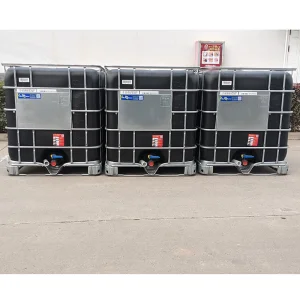
Yes. Beyond standard technical-grade and pure crystalline crystals, our production team accommodates tailored aqueous solutions (such as standardized 45% or 50% w/w liquid ferric nitrate in drums or IBC totes with free nitric acid stabilizers) for clients seeking to bypass on-site crystal dissolution and exothermic heat generation.