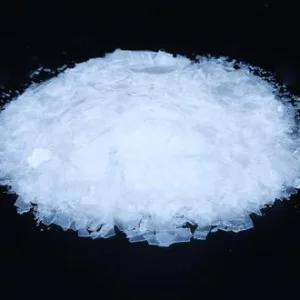
Direct factory supply with certified batch Certificates of Analysis (COA), full technical dossiers, and global multimodal dangerous goods compliance.

A critical chemical intermediate, oxidizer, and precursor driving advanced hydrometallurgy, battery nanomaterials, and catalytic synthesis worldwide.
Characterized by light violet to pale purple deliquescent monoclinic crystals. The nonahydrate form melts at approximately 47.2°C, dissolving readily in water, ethanol, and acetone, yielding an acidic aqueous solution that acts as a powerful, clean oxidizing agent without leaving non-volatile halide residues.
With standard reduction potentials governed by the Fe³⁺/Fe²⁺ couple (+0.771 V vs. SHE) complemented by the oxidative vigor of nitrate anions in acidic media, ferric nitrate provides controlled, predictable reaction kinetics essential for micro-etching printed circuitry and synthetic organic couplings.
Unlike ferric chloride (FeCl₃), which induces severe intergranular stress pitting in stainless steel equipment and contaminates electronic wafer surfaces, iron nitrate eliminates chloride-induced embrittlement, facilitating streamlined water treatment disposal and clean gaseous thermal decomposition to iron oxides (Fe₂O₃).
How next-generation energy storage, high-frequency electronics, and strict municipal ESG criteria are transforming global procurement volumes.
The global electric vehicle and stationary grid storage boom has accelerated demand for battery-grade Fe precursors. Ferric nitrate solutions synthesized through hydro-chemical routes enable homogeneous atomic-scale mixing with phosphate and lithium sources, yielding pristine LiFePO₄ and LiMnxFe1-xPO₄ (LMFP) cathode nanoparticles with enhanced C-rate conductivity.
In sub-7nm node semiconductor manufacturing, ferric nitrate is increasingly deployed in Chemical Mechanical Planarization (CMP) slurries for tungsten (W) plug polishing. Its finely calibrated oxidation kinetics selectively passivate and polish barrier metals without micro-scratching dielectric layers, demanding parts-per-billion (ppb) level heavy metal purification.
Municipal wastewater authorities in Europe and North America are transitioning from alum and chloride precipitants to high-purity iron nitrate. Fe(NO₃)₃ suppresses hydrogen sulfide (H₂S) odors via biological redox pathways while forming dense, rapid-settling ferric phosphate flocs that facilitate circular agricultural fertilizer recovery.
Guaranteed purity ≥ 98.5% for technical grade, ≥ 99.5% for analytical reagent, and ≥ 99.99% for semiconductor grades, with tight limits on free acid and insoluble matter (≤ 0.005%).
Preventing cake formation during transoceanic shipping via vacuum-sealed multi-ply PE inner liners, hermetically heat-sealed foil barriers, and UN-certified palletization.
Rigid trace limitation on copper (Cu), lead (Pb), zinc (Zn), arsenic (As), and sulfate (SO₄²⁻), validated via certified Inductively Coupled Plasma Mass Spectrometry (ICP-MS).
Seamless handling of IMO Class 5.1 (Oxidizing Substances) UN 1466, including multimodal dangerous cargo declarations, customs pre-clearance, and real-time transit tracking.
Integrating continuous DCS synthesis, automated closed-loop crystallization, and circular environmental engineering to guarantee uninterrupted supply.
By substituting old-fashioned open batch vats with enclosed continuous stirred-tank reactors (CSTR) constructed from specialized titanium-stabilized duplex alloys, we prevent secondary contamination, eliminate volatile NOx emissions via integrated SCR scrubbers, and sustain continuous volumetric output unaffected by seasonal atmospheric fluctuations.
Controlling the deliquescent nature of Fe(NO₃)₃·9H₂O requires precise thermodynamic crystallization. Our automated cooling crystallizers utilize computational fluid dynamics (CFD) to govern crystal nucleation rates, producing uniform particle size distribution (PSD) that maximizes flowability and eliminates premature clumping.
Direct pipeline linkage to upstream industrial nitric acid synthesis and dedicated bulk iron processing units insulates our factory from raw material spot volatility. Global buyers secure long-term index pricing contracts, eliminating unexpected supply bottlenecks and budget spikes.
From microelectronic circuit etching to heavy industrial petrochemical catalysts, explore how wholesale iron nitrate delivers process optimization.
In high-density interconnect (HDI) printed circuit board manufacturing, ferric nitrate formulations etch copper lead frames and silver coatings cleanly. The absence of chloride ions protects titanium processing baths from galvanic erosion and ensures razor-sharp line edge definitions (< 25 μm) without lateral undercutting.
Petrochemical plants utilize iron nitrate impregnated onto high-surface-area silica or zeolite supports for selective oxidation of aromatic hydrocarbons, Fenton-like advanced oxidation processes (AOPs), and the catalytic reduction of industrial NOx emissions, delivering high turnover frequencies (TOF) at reduced operational temperatures.
Serving as a historic yet technically modernized mordant in textile processing, ferric nitrate permanently complexes dye molecules to natural and synthetic fibers. Furthermore, controlled hydrolysis yields high-chroma transparent iron oxide pigments used in high-durability automotive clear coats and UV-absorbing architectural coatings.
Rigorous multi-element batch qualification confirmed via Inductively Coupled Plasma Optical Emission Spectrometry (ICP-OES).
| Analytical Parameter | Standard Commercial Grade | YANXA Technical / Catalyst Grade | YANXA Electronic / Reagent Grade | Test Standard (ASTM / GB) |
|---|---|---|---|---|
| Assay [Fe(NO₃)₃·9H₂O] | ≥ 98.0 % | ≥ 98.5 – 99.2 % | ≥ 99.5 – 100.2 % | Redox Titration / ICP |
| Iron (Fe) Content | ≥ 13.5 % | ≥ 13.7 % | ≥ 13.8 % | Stoichiometric Calculation |
| Insoluble Matter in H₂O | ≤ 0.05 % | ≤ 0.01 % | ≤ 0.003 % | Gravimetric Filtration |
| Chloride (Cl⁻) | ≤ 0.01 % | ≤ 0.002 % | ≤ 0.0005 % (5 ppm) | Potentiometric Titration |
| Sulfate (SO₄²⁻) | ≤ 0.05 % | ≤ 0.01 % | ≤ 0.002 % | Turbidimetric Analysis |
| Heavy Metals (as Pb) | ≤ 0.005 % (50 ppm) | ≤ 0.001 % (10 ppm) | ≤ 0.0002 % (2 ppm) | ICP-MS |
| Copper (Cu) | ≤ 0.005 % | ≤ 0.001 % | ≤ 0.0005 % (5 ppm) | ICP-OES |
| Free Acid (as HNO₃) | ≤ 0.8 % | ≤ 0.3 % | ≤ 0.1 % | Acid-Base Titration |
| Physical Morphology | Crystalline lumps | Free-flowing light purple crystals | Uniform high-flow monoclinic crystals | Optical Microscopy / PSD |
Full compliance with UN Model Regulations, IMDG Code for sea freight, and regional chemical registrations.
Ferric nitrate is strictly classified under UN 1466, Hazard Class 5.1 (Oxidizing Substances), Packing Group III. We provide UN-certified heavy-duty fiber drums (25kg/50kg), poly-woven bags with multi-layered moisture-blocking polyethylene inner liners, and customized anti-static 1000kg bulk bags (FIBCs).
Every commercial order is accompanied by a manufacturer batch-specific Certificate of Analysis (COA), 16-section Globally Harmonized System Safety Data Sheets (GHS SDS) in multiple languages, Technical Data Sheets (TDS), and non-animal/non-GMO declarations where required by local jurisdictions.
Because the nonahydrate form exhibits a low melting threshold (47.2°C), shipments passing through equatorial sea routes are monitored via smart data loggers and scheduled with priority under-deck vessel stowage to safeguard against thermal liquification and preserve free-flowing properties upon arrival.
Authoritative insights straight from our senior chemical engineers and export compliance directors.
Integrated chemical supply lines engineered to streamline procurement workflows for international manufacturing enterprises.




Direct access to plant chemists, batch validation reports, and export compliance specialists. Contact Yanxatech System Industries Limited today for custom assay quotations, safety dossiers, and trial sample logistics.