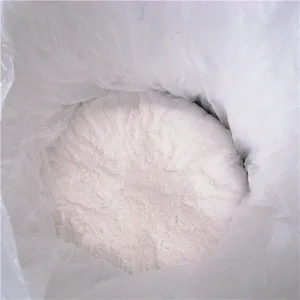
Direct supply from Yanxatech System Industries Limited. Engineered for high performance in aerospace metallurgy, fine chemical synthesis, and critical semiconductor manufacturing.
Analyzing powder atomization dynamics, industrial manufacturing transitions, and supply chain integrity across North America, Europe, and Asia-Pacific.
The global metal powder industry has evolved from conventional press-and-sinter powder metallurgy into high-specification spherical atomization. Driven by selective laser melting (SLM), electron beam powder bed fusion (E-PBF), and direct energy deposition (DED), high-sphericity Al-based, Mg-based, and customized reactive alloy powders are experiencing an accelerating compound annual growth rate across international industrial markets.
Advanced aerospace and biomedical applications require unprecedented metallurgical clean-sheet metrics. Secondary interstitial contamination (Oxygen, Nitrogen, Carbon, Hydrogen) during the melt atomization process drastically impairs fatigue life and fracture toughness of finished parts. Yanxatech addresses this through vacuum induction melting and ultra-pure protective argon blanket gasification.
Navigating global procurement requires adherence to stringent environmental regulations and dangerous goods handling. Reactive metallic materials (including aluminum magnesium alloys and functional oxidizer nitrates) require UN-certified Class 4.3 or Class 5.1 shipping approvals, IMDG/IATA compliant documentation, and REACH/GHS registered Safety Data Sheets across customs borders.
Examining the engineering breakthroughs in gas atomization, particle classification, and surface engineering shaping next-generation industrial manufacturing.
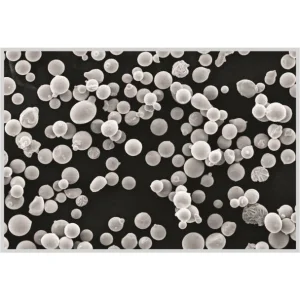
Traditional water atomization yields irregular particle shapes that struggle in modern laser powder bed fusion (LPBF). The migration toward supersonic gas atomization using high-pressure inert argon and nitrogen allows tight control over shear forces, yielding near-perfect spherical morphology with minimum satellite formation. In addition, plasma rotating electrode processes (PREP) are increasingly employed for defect-intolerant reactive formulations.
Aerodynamic classification and cyclonic separation allow narrow Gaussian PSD curves, minimizing sub-15μm ultrafines that cause powder smoking and laser scattering during manufacturing.
Industrial demand is rapidly transitioning away from legacy baseline aluminum alloys (such as AlSi10Mg) toward high-performance structural systems. Modern automotive light-weighting, thermal dissipation systems, and aerospace components demand advanced scandium-modified aluminum alloys, high-ductility aluminum-magnesium blends, and corrosion-resistant zinc-aluminum formulations.
These engineered compositions balance elevated-temperature mechanical strength with optimized melt-pool surface tension, eliminating hot-cracking phenomena in high-energy additive cycles.
| Alloy Powder Family | Predominant Processing Mode | Typical Granulometry (PSD) | Primary Industrial Use Case | Key Performance Attribute |
|---|---|---|---|---|
| Al-Mg Binary Alloy Series | Inert Gas Atomization (Ar/N2) | 15–53 μm / 45–105 μm | Energetics, Pyrotechnics, Thermal Spray | High chemical reactivity & balanced oxidation index |
| Spheroid Al-Based Matrix | Vacuum Gas Atomization (VIGA) | 20–63 μm | Additive Manufacturing (LPBF/SLM) | Superior flowability & low interstitial oxygen (<0.08%) |
| Zinc-Aluminum (Zn-Al) Powders | Gas Atomization & Air Sizing | 30–150 μm | Corrosion Protection & Cold Spray | Sacrificial anodic protection with enhanced hardness |
| Custom Functional Metal Powders | Inert Gas Induction Atomization | Custom mesh (100–500 mesh) | Powder Metallurgy, Friction Materials | Customized alloy ratios with high green strength |
Bridging specialized metallurgical material performance with downstream manufacturing across aerospace, electronics, energetic synthesis, and polymer engineering.
Thin-walled structural brackets, heat exchangers, and aerodynamic assemblies rely heavily on spherical atomized Al-based powders. Delivering remarkable strength-to-weight ratios and high thermal conductivities, our alloys allow engineers to consolidate multi-part welded assemblies into single, topology-optimized 3D printed monolithic components that reduce weight without compromising safety margins.
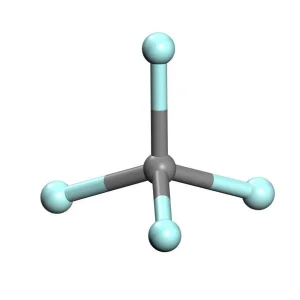
Precision manufacturing in microelectronics requires ultra-high purity specialty gases alongside thermal interface materials. High purity Argon (Ar), Krypton (Kr), and Carbon Tetrafluoride (CF4) are deployed in critical wafer dry etching and vacuum passivation. Complementing these, our ultra-fine inorganic salts and aluminum powders facilitate high-density electronic thermal substrates and dielectric encapsulants.
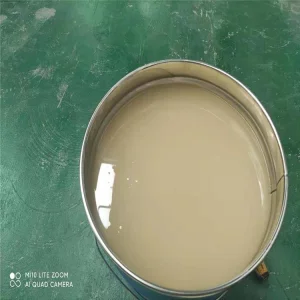
Beyond metallurgy, Yanxatech engineers synergistic chemical matrices. Hydroxyl-terminated liquid polybutadiene (HTPB/HTBS/HTBN) systems serve as critical binders in rubber formulation, high-performance elastomeric coatings, and propulsion binder matrices. Combined with high-purity inorganic nitrates and custom aluminum-magnesium reactive powders, we provide comprehensive chemical solutions for energy-dense formulations.
Authoritative answers addressing quality verification, logistical dangerous goods protocols, powder morphology, and custom production inquiries.
Spherical morphology produced via vacuum inert gas atomization (VIGA) ensures superior packing density, high apparent density, and smooth Hall flow rates (<30 s/50g). This guarantees consistent layer thickness during re-coater blade sweeps in LPBF/SLM, eliminating porosity and layer delamination that typically occur with irregular, water-atomized powders.
Every commercial production batch is accompanied by a traceable Certificate of Analysis (COA) detailing ICP-OES chemical composition, LECO interstitial gas levels (O, N, H, C), laser diffraction particle size distribution (D10, D50, D90), and tap/apparent density metrics. Technical Data Sheets (TDS) and multilingual GHS-compliant SDS are supplied standard.
Al-Mg and fine aluminum powders fall under UN Class 4.3 (Dangerous When Wet) or Class 4.1 (Flammable Solids). Yanxatech packs powders inside UN-certified steel drums sealed under protective argon gas blankets with moisture-barrier liners. All sea (IMDG) and air (IATA) shipments include complete dangerous goods declarations and proper hazmat customs placards.
Yes. We regularly formulate tailored alloy ratios (such as custom aluminum-magnesium, zinc-aluminum, or modified light-metal intermetallics). Our air classification facilities can tailor particle cut-offs (e.g., 0-25μm, 15-53μm, 45-105μm, or specific mesh classifications) to match individual client melting setups or energetic dispersion requirements.
Explore our wholesale specialty materials catalog, including spherical Al-based alloys, functional liquid rubbers, and high-purity inorganic nitrates.