


Explore our core industrial product spectrum. Engineered under rigorous quality control standards with full lot traceability, comprehensive batch COA, and custom size-fraction grading.


A rigorous examination of atomization kinetics, microstructural control, satellite elimination, and macro industrial procurement considerations for critical aerospace, automotive, and additive manufacturing operations.
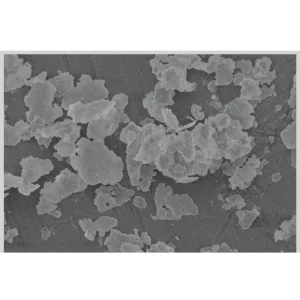
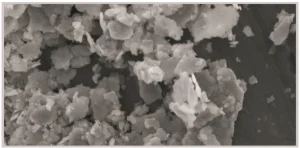
In modern metallurgical physics, the functional performance of aluminum powder hinges definitively upon particle morphology. Traditional mechanical milling, ball milling, or air atomization methods yield irregular, flake-like, or nodular particulate geometries characterized by severe internal void defects, uncontrolled surface oxide layers (Al₂O₃ > 0.6%), and high inter-particle friction angles. For advanced industrial systems—such as Selective Laser Melting (SLM), Electron Beam Powder Bed Fusion (E-PBF), solid propellant boosters, and ultra-fine conductive metallization pastes—such irregular powders exhibit erratic flow rates, poor tap density, and catastrophic build defects.
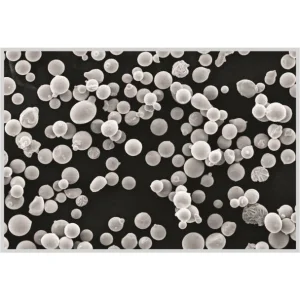
As a global wholesale spherical aluminum powder manufacturer and direct factory conglomerate, our industrial facility utilizes vertical supersonic inert gas atomization (VIGA). By melting virgin A00-grade aluminum ingots (purity ≥99.7% or customized high-purity 4N aluminum) inside a closed vacuum-induction chamber and forcing the liquid stream through a proprietary Laval close-coupled nozzle using high-velocity argon or nitrogen gas jets (Mach 2.2 to 2.8), we disintegrate molten metal ligaments into microscopic spherical droplets. Under pristine inert atmospheres, droplet surface tension dominates over turbulent shear, creating near-perfect sphericity with an aspect ratio of less than 1.08 prior to rapid solidification at cooling rates exceeding 10⁵ K/s.
| Atomization Method | Sphericity (%) | Oxygen Content (wt%) | Hall Flow Rate (s/50g) | Satellite Particles | Primary Industrial Use |
|---|---|---|---|---|---|
| Inert Gas Atomization (VIGA - Argon) | > 98.2% | 0.08 – 0.14% | 24 – 28 s | Extremely Low | Additive Manufacturing (LPBF/DED), Defense Systems |
| Inert Gas Atomization (Nitrogen) | > 96.5% | 0.12 – 0.20% | 28 – 34 s | Low | Photovoltaic Pastes, Thermal Interface Pastes |
| Plasma Rotating Electrode (PREP) | > 99.5% | < 0.08% | 20 – 24 s | Virtually Zero | High-Stress Aerospace Critical Rotors (High Cost) |
| Standard Air Atomization (Conventional) | < 65.0% (Nodular) | 0.45 – 1.20% | No Flow (Clumping) | High agglomeration | Refractories, Aerated Autoclaved Concrete (AAC) |
Comprehensive strategic intelligence mapping the convergence of metal 3D printing, advanced rocket propulsion, electronic packaging, and renewable energy infrastructure.
Traditional casting alloys (AlSi10Mg) are increasingly supplemented by high-entropy and scandium/zirconium-modified aluminum alloy powders (e.g., Al-Mg-Sc-Zr). These formulations demand hyper-spherical morphologies to ensure smooth layer recoating in 30–60 µm laser beds without recoater blade streaking or un-melted porous voids.
As the global solar cell market pivots from conventional PERC to N-type TOPCon and Heterojunction (HJT) architectures, front- and rear-side silver-aluminum and pure aluminum conductive pastes necessitate ultra-fine spherical powders (D50: 1.5–3.8 µm). High sphericity ensures sharp line-width screen printing (<18 µm) with maximized aspect ratio.
Modern space launch systems utilize spherical aluminum powder as a high-density metallic fuel additive. Spherical morphology increases solid loading (up to 88% total solids) when combined with hydroxyl-terminated polymers (HTPB/HTBN) and hydroxyl-terminated liquid rubbers, optimizing rheological casting while maximizing specific impulse (Isp).
Eliminating defective satellite grains, maintaining ultra-narrow particle size classifications, and complying with international hazardous materials shipping standards.
For demanding electronics, rocket fuel, and thermal coating sectors, air-jet milling is unviable due to high ignition risk. Our plant deploys hermetically sealed nitrogen/argon cyclonic classifiers coupled with ultrasonic multi-frequency sieves. This delivers tight cuts such as 1–5 µm, 5–15 µm, 15–45 µm, 15–53 µm, and 45–105 µm with zero air exposure, preventing oxidation runaway.
Every industrial batch is tested via laser diffraction (Malvern Mastersizer 3000) for D10, D50, and D90 parameters. Interstitial gaseous impurities are quantified through LECO ONH836 elemental analyzers. Trace metallic elements (Fe, Si, Cu, Zn) are verified via Inductively Coupled Plasma Optical Emission Spectrometry (ICP-OES) to ensure conformity with aerospace AMS specs.
Spherical aluminum powder (UN 1396, Hazard Class 4.3, Dangerous When Wet) demands extreme moisture isolation. Our automated packaging cell evacuates heavy-gauge steel drums, inserts moisture-barrier foil liners, purges with high-purity argon (Kr/Ar levels verified), and hermetically seals with desiccants under a negative dew point (< -45°C), ensuring 24-month warehouse shelf-stability.
Our R&D pipeline is scaling fluoro-polymer, nano-silica, and organosilane vapor deposition coatings on spherical aluminum kernels. These nanometer-thin passivating shells mitigate premature ambient oxidation while allowing full energetic reactivity or high laser absorption (reducing the high 90%+ reflectivity of raw aluminum during 1064nm fiber laser melting).
Supplying complete formulation matrices for solid fuel rocketry, heavy-duty anti-corrosion, electrical GIS equipment, and advanced aerospace composite bonding.
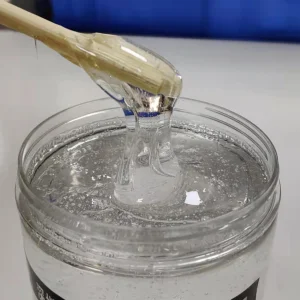
High-energy systems require precise coordination between metallic fuels and reactive liquid binders. Our spherical aluminum powders pair synergistically with specialized polymers, including Hydroxyl-Terminated Butyronitrile Rubber (HTBN) and Maleic Anhydride Grafted Polybutadiene (MLPB), delivering zero-void composite propellants with superior elongation and high thermal stability.
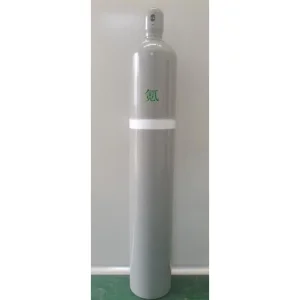
The elimination of porosity in metal atomization and laser melting requires high-purity protective gas blankets. We supply semiconductor and metallurgical grade compressed gases, such as Ultra-Pure Argon (Ar), High-Purity Krypton (Kr), and High-Purity Xenon (Xe), enabling closed-loop atomization plants to control interstitial defect rates.
Beyond spherical configurations, marine coating engineers and automotive fastener treaters rely on our complementary Flake Zn-Al Alloy Powders and Pure Zinc Flakes. In cold-spray or zinc-rich silicate primers, these provide cathodic galvanic protection with lamellar barrier stacking, resisting 1,500+ hours of ASTM B117 salt spray.
Full-scale export capacity delivering verified COA specifications, export-ready UN packaging, and end-to-end global logistical compliance directly to your destination port.

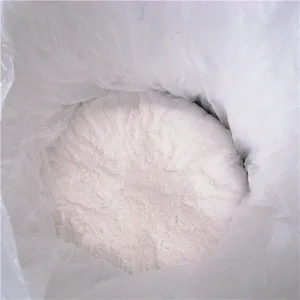


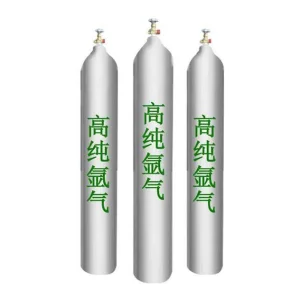
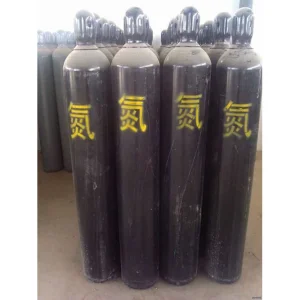
Authoritative technical clarifications regarding minimum order quantities, sizing customizations, dangerous goods logistics, passivity dynamics, and shelf-life guarantees.
Air atomization relies on ambient compressed air at elevated temperatures, generating non-spherical, nodular, or teardrop-shaped particles with an uncontrolled primary oxide crust exceeding 0.6–1.5 wt% Al₂O₃. In contrast, our vacuum inert gas atomization (VIGA) platform employs ultra-pure pressurized nitrogen or argon gas (purity >99.999%). This produces spherical powder with sphericity >98%, aspect ratios <1.08, minimal satellite attachments, and ultra-low internal oxygen levels (<0.12 wt%), which is vital for high-density laser welding and high-viscosity propellant solids loading.
Yes. We routinely produce tailored PSD cuts matched to specific additive manufacturing OEM systems (e.g., EOS, SLM Solutions, Renishaw, BLT). Standard additive cuts include 15–53 µm (D10 ≥18 µm, D50: 32–38 µm, D90 ≤55 µm) and 20–63 µm. For Directed Energy Deposition (DED) and thermal cold spray, we supply 45–105 µm. For solar conductive metallization, we supply ultra-fine 1–5 µm and 3–8 µm fractions verified by Malvern Mastersizer 3000 laser diffraction.
Fine spherical aluminum powder is classified under UN Model Regulations as UN 1396, Hazard Class 4.3 (Substances which, in contact with water, emit flammable gases), Packing Group II. We are fully equipped for global oceanic (IMDG Code) and air transport (IATA-DGR). All shipments are packed in heavy-duty UN-approved steel drums (typically 25 kg, 50 kg, or 100 kg net capacity) featuring airtight clamp-ring closures, hermetic inner foil bags under inert gas, and full maritime Dangerous Goods Declarations (DGD).
Our spherical aluminum powders are packed in an automated cleanroom dry atmosphere with a continuous dew point below -45°C. The powders are sealed within multi-layer aluminum-plastic barrier liners backfilled with dry nitrogen or argon before drum sealing. Under unopened warehouse storage at 15–30°C and relative humidity below 50%, our products maintain chemical assay integrity, active aluminum content (≥99.5%), and free-flowing properties for a minimum of 24 months.
Every industrial release is accompanied by an auditable, lot-specific Certificate of Analysis (COA) containing: (1) Full elemental chemistry via ICP-OES; (2) Total interstitial Oxygen, Nitrogen, and Hydrogen levels via LECO analyzers; (3) Complete laser diffraction particle size curve (D10, D50, D90, and Span); (4) Apparent and tap density per ASTM B212/B527; (5) Hall flowability index per ASTM B213; and (6) High-resolution Scanning Electron Microscopy (SEM) morphology micrographs confirming zero-satellite status.
