Directly sourced materials engineered under ISO 9001:2015 traceability with certified lot purity, controlled morphology, and rigorous physical parameter verification.




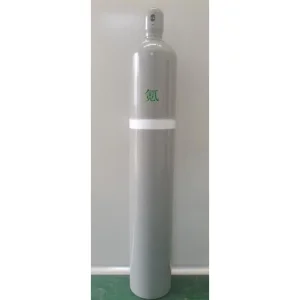
From virgin electrolytic primary smelters to multi-axis inert gas atomization towers: understanding China's dominant cost advantage, capacity growth, and purity metrics in global advanced metallurgy.
China commands extensive backward integration across the aluminum value chain. By capturing direct molten metal transfer from regional smelting hubs into close-coupled gas atomization furnaces in Henan, Shandong, and Ningxia, Chinese producers bypass energy-intensive secondary remelting cycles, directly lowering embodied carbon and cutting unit fabrication costs by 18% to 27% relative to European and North American atomizers.
Aluminum powder costs are tethered to dual variables: base metal ingot indices (Shanghai Futures Exchange SHFE vs London Metal Exchange LME) and high-purity inert shielding gas overhead (liquid argon and helium). Chinese manufacturers capitalize on localized cryogenic air-separation plants (ASUs), compressing inert-atmosphere atomization expenses and providing institutional procurement teams with exceptionally resilient baseline pricing.
Modern powder metallurgical buyers require strict compliance with international standards including ASTM B213, ASTM B214, and ISO 4497. Chinese precision suppliers utilize automated cyclone classification, inert ultrasonic screening, and vacuum packaging to maintain oxygen pick-up below 150 ppm, preventing inter-dendritic oxidation and ensuring dense structural properties in Laser Powder Bed Fusion (LPBF).
Empirical benchmark pricelist calculated on bulk container orders (FOB Qingdao / Shanghai / Tianjin). Actual quotations fluctuate according to the live SHFE/LME daily mean and volume tiers.
| Alloy Grade | Atomization Method | Standard Particle Size (PSD) | Key Chemistry (wt%) | Indicative Price (USD/MT, FOB) | Production Status |
|---|---|---|---|---|---|
| AlSi10Mg (Additv-AM) | Vacuum Inert Gas (VIGA) | 15–53 μm (D50: 38 μm) | Si: 9.0–11.0, Mg: 0.20–0.45, Al: Bal. | $14,200 – $17,800 | High Batch Flow |
| AlSi7Mg0.6 (A357) | Inert Gas Atomization | 20–63 μm (D50: 42 μm) | Si: 6.5–7.5, Mg: 0.45–0.70, Al: Bal. | $15,500 – $18,900 | In Production |
| Al-Mg 50:50 (Energetic) | Mechanical Spheroidized | 45–150 μm (100–325 Mesh) | Mg: 48.0–52.0, Al: 48.0–52.0 | $7,800 – $9,600 | Stock Available |
| Al-Zn-Mg-Cu (7075 AM) | Supersonic Gas Atomized | 15–45 μm (D50: 32 μm) | Zn: 5.1–6.1, Mg: 2.1–2.9, Cu: 1.2–2.0 | $22,000 – $26,500 | Pre-Order Verified |
| Flake Zn-Al Alloy | Wet Ball Milling / Attrition | D50: 12–18 μm (Aspect > 25:1) | Zn: 80–90, Al: 10–20 | $6,200 – $7,900 | Bulk Ready |
| Scalmalloy Alternative | Argon Atomization + Sc/Zr | 15–53 μm (D50: 36 μm) | Mg: 4.0–4.9, Sc: 0.6–0.8, Zr: 0.2–0.5 | $48,000 – $62,000 | Custom Smelt |
| Industrial Pure Al (99.8%) | Centrifugal / Air Atomized | 45–100 μm (D50: 75 μm) | Al ≥ 99.8%, Fe ≤ 0.12%, Si ≤ 0.08% | $3,950 – $4,600 | Continuous Stream |
* Disclaimer: Indicative pricelist reflective of spot volumes ≥ 5 metric tons. Includes sealed argon packaging in 25kg steel UN-certified drums. Freight insurance, customs clearance, and dangerous goods surcharge handled transparently per project incoterms.
Engineering spherical morphology, controlling interstitial contaminants, and eliminating satellite defects through next-generation gas atomization architecture.
High-frequency induction melting under vacuum or controlled argon blanket. Degassing with rotary impellers using ultra-pure Ar/Cl2 blends reduces soluble hydrogen below 0.12 cm³/100g and purges oxide dross.
Molten aluminum descends through a calibrated ceramic tundish nozzle into a supersonic convergent-divergent gas die. High-velocity argon gas streams shear the molten metal stream into sub-millimeter droplets at Mach 2.2.
Droplets undergo ultra-fast cooling at rates of 10⁴ to 10⁶ K/s inside a 12-meter vertical cooling chamber. Ultra-rapid quenching suppresses secondary phase segregation, yielding fine dendrite microstructures.
Fluidized cyclonic classifiers and multi-deck ultrasonic sieves fractionate the charge into tight laser-diffraction cuts (15–53 μm, 20–63 μm, etc.). Automated packaging into UN-approved nitrogen-purged drums guarantees zero moisture ingress.
Additive manufacturing using aluminum alloys (notably AlSi10Mg and high-strength 7000/2000 series) is highly susceptible to keyholing, balling, and hydrogen-induced gas porosity. The engineering team controls four pivotal metallurgical thresholds:
Using de-swirl gas rings and optimized spray distance, satellite particle attachment is curtailed. Roundness coefficients exceed 0.92, ensuring uniform recoater blade spreading without powder dragging or clumping.
High apparent packing density (> 1.45 g/cm³ for AlSi10Mg) and consistent flowability through Carney/Hall funnels (ASTM B213) yield uniform bulk densities across large build plates (500x500mm+).
A controlled 3–5 nm passive Al2O3 layer is engineered in an oxygen-dosed cooling tail. This prevents spontaneous thermal combustion while avoiding un-melted oxide inclusions in laser powder pools.
Deploying tailored alloy compositions, optimized sieve spectra, and physical properties across mission-critical aerospace, automotive, additive, and chemical systems.
Spherical AlSi10Mg and Scalmalloy alternatives serve as high-strength-to-weight structural pillars for LPBF-printed satellite brackets, rocket propellant turbopump manifolds, and internal heat exchanger lattices. Exceptional fatigue limits and high thermal conductivity (> 130 W/m·K) allow dramatic topological mass reduction of up to 45% compared to wrought CNC parts.
Automotive OEMs incorporate atomized aluminum alloy powders in high-pressure sintering, thermal interface composites, and cold-spray structural bonding. Flake Zn-Al systems formulate ultra-thin, hexavalent chromium-free anti-corrosion barrier coatings (Dacromet/Geomet processes) on EV chassis fasteners, resisting > 1,500 hours of neutral salt spray testing.
Strict particle distribution cuts (15–53 μm for LPBF; 45–105 μm for Directed Energy Deposition) yield consistent laser absorption, minimizing volatile zinc and magnesium vaporization loss. Spheroidal geometry ensures steady recoater spread rates and uniform bulk layer consolidation at layer thicknesses from 30 to 80 microns.
Aluminum-magnesium alloy powders (such as 50:50 Al-Mg ratios) deliver explosive burning velocities and extreme thermal energy densities for defense propellants, industrial civil explosives, and illumination formulations. Controlled specific surface area (BET) balances rapid ignition thresholds with storage stability under UN Hazard Class 4.3 transport regulations.
Supersonic cold spray technology exploits coarse spherical alloy powders to repair damaged aluminum cast components, aircraft skins, and marine bulkheads without creating a heat-affected zone (HAZ). Low oxygen concentrations (< 0.15%) ensure atomic-level metallic bonding without cracking or internal embrittlement.
Utilized in copper-infiltrated heat spreaders, conductive composite pastes, and microwave shielding housings. Micro-alloyed atomized powders enable exceptional heat dissipation alongside low coefficient of thermal expansion (CTE) matching silicon die substrates in high-power IGBT inverter modules.
How Chinese manufacturers streamline chemical dangerous goods exports, ensure long-term alloy batch repeatability, and navigate turbulent maritime container regulations.
Every shipment is supported by complete traceability paperwork: batch-specific Certificate of Analysis (COA) containing direct ICP-OES elemental analysis, LECO interstitial gas determination (O, N, H), laser PSD distribution graphs, UN-certified Dangerous Goods declarations, and GHS-compliant 16-section Safety Data Sheets (SDS).
Metal powders carrying flammable solid (Class 4.1) or water-reactive (Class 4.3) classifications require audited packaging integrity. We utilize hermetically sealed 25kg/50kg galvanized iron drums with nitrogen headspace, palletized with desiccants and non-conductive shrink wrap, certified for IMDG ocean freight and compliant with IATA air-freight limits.
To hedge volatile base ingot price shocks on the LME and SHFE, institutional buyers can execute 6- to 12-month fixed-spread tolling agreements. Furthermore, circular economy programs enable clean, reclaimed AM powder blend-backs and virgin lot refresh programs that lower customer operational scrap rates to near zero.
In-depth technical and logistics answers resolving buyer qualification questions regarding particle analysis, quality control, shipping regulations, and pricing structures.
Aluminum powder pricing incorporates three primary elements: (1) The daily mean metal ingot price sourced from SMM (Shanghai Metals Market) or LME; (2) The atomization conversion fee covering inert gas volume (Argon/Nitrogen), energy consumption, and tundish wear; and (3) The narrow-band screening yield loss (e.g. producing an ultrafine 15–53 μm laser cut leaves coarser fractions that must be recycled). Custom or low-volume alloys incorporate higher initial atomization setup fees.
For Laser Powder Bed Fusion (LPBF / SLM), the typical industry cut is 15–53 μm, with a median particle diameter (D50) held strictly between 35–42 μm and fines below 10 μm suppressed below 3% by volume to avoid recoater drag. For Electron Beam Powder Bed Fusion (E-PBF) and Directed Energy Deposition (DED), coarser fractions of 45–105 μm or 53–150 μm are preferred to guarantee steady carrier gas feeding and eliminate smoke interference.
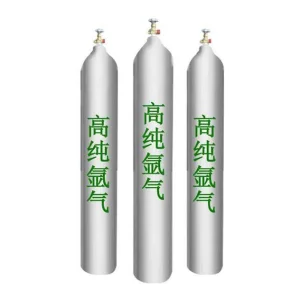
All atomization processes occur inside sealed, evacuated chambers pressurized with Grade 5N (99.999% purity) liquid argon. The resulting powder is classified, sieved, and packed under a closed-circuit inert atmosphere. Every batch undergoes rigorous LECO inert gas fusion testing (ASTM E1019) to confirm total oxygen remains under 150 ppm and moisture below 0.05% before releasing the final inspection documentation.
Yes. In addition to mass-production multi-ton towers, pilot atomization systems with vacuum induction melting (VIM) capacities of 50 kg to 200 kg support experimental R&D compositions—including scandium-modified Al-Mg-Sc-Zr alloys, copper-rich 2xxx alloys, and high-entropy metal composites. Pilot runs include full morphological imaging via SEM and powder diffraction characterization.
Fine aluminum and aluminum-magnesium powders are regulated under the UN Recommendations on the Transport of Dangerous Goods as Class 4.1 (flammable solid) or Class 4.3 (substances which in contact with water emit flammable gases). Shipments are secured in UN-approved steel drums with tamper-proof clamp-rings, interior conductive antistatic liners, and inert desiccant pouches. Maritime transport complies strictly with IMDG code stowage criteria away from heat and bulkheads.
When stored in original, unopened steel drums under ambient warehouse temperatures (15–25°C) and relative humidity below 45%, spherical atomized aluminum powders retain stable chemical and physical properties for 24 months. Once opened, containers should be purged with high-purity dry argon or nitrogen prior to resealing to prevent moisture condensation and gradual oxide layer thickening.
High-purity industrial gases, functional polymers, and specialized atomized powders ready for international delivery with verified batch certification.