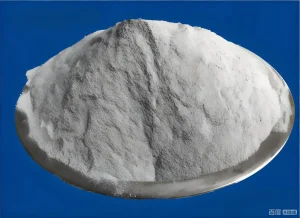
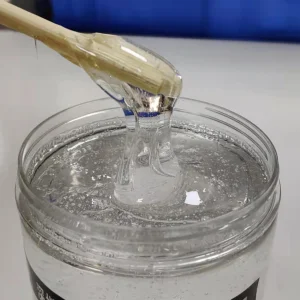
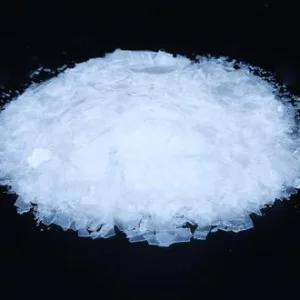
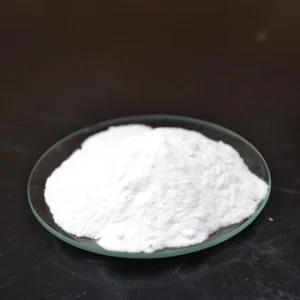
Direct supply portfolio featuring certified specialty gases, customized atomized powders, and liquid elastomers with ISO 9001 lot traceability.
A comprehensive examination of phase equilibrium, concentration dynamics, international procurement safety, and energetic binder formulation.
Ammonium nitrate in water (CAS 6484-52-2 aqueous blend) demonstrates extreme solubility variations correlated directly with temperature. At hot-melt concentrations (70%–88% AN by weight), operating temperatures must be rigidly held between 65°C and 105°C to avoid spontaneous crystallization and "salting out". As a premier China manufacturer, YANXA uses advanced anti-nucleation stabilizers to preserve aqueous clarity and flow mechanics under cross-border logistic cycles.
Bulk solid prilled ammonium nitrate entails stringent global warehousing restrictions due to self-confinement and phase transitions (notably the Phase IV to Phase III volume shift at 32.3°C). Formulating ammonium nitrate in aqueous matrices desensitizes the oxidizer matrix significantly. Bulk aqueous solutions (under 80% concentration) operate in non-detonable hydraulic fluid zones under standard ambient shipping envelopes, providing a lower-risk supply route for civil emulsion production.
Industrial performance in catalytic synthesis, pyrotechnic ignition, and emulsion explosive compounding demands strict limits on transition metal impurities. Copper, chromium, nickel, and unbuffered chloride ions catalyze uncontrolled autocatalytic thermal decomposition of the NH4+ and NO3- ions. YANXA enforces strict raw material refining protocols ensuring heavy metals remain below 5 ppm and chlorides under 10 ppm.
Addressing supply vulnerabilities across civil infrastructure, industrial mining, advanced agricultural synthesis, and electronics manufacturing.
Global open-cast mining and tunneling firms are shifting from solid porous prills (ANFO) toward Water-in-Oil (W/O) bulk emulsion explosives. Our liquid ammonium nitrate in water acts as the high-potency internal aqueous oxidizer phase, emulsified with fuel oil and functional surfactants (such as PIBSA). This architecture offers superior water resistance in submerged boreholes and lowered post-blast nitrogen oxide (NOx) emissions.
Synthesizing solid propellants and pyrotechnic charges demands high compatibility between oxidizers and elastomeric binders. YANXA provides complementary functional binders, such as Carboxyl-Terminated Nitrile Butadiene Rubber (CTBN) and Amino-Terminated Nitrile Butadiene Rubber (ATBN), enabling R&D teams to balance burn rates, elastomeric flexibility, and shock sensitivity.
The electronic and medical gas sectors demand high-purity ammonium nitrate precursors to generate nitrous oxide (N2O) through thermal decomposition (NH4NO3 -> N2O + 2H2O). Contaminants like sulfates, chlorides, or organic carbon yield hazardous by-products such as toxic NO, NO2, or nitric acid vapor. Our refined liquid solution feeds decomposition towers evenly, extending catalyst lifespan.
Standard reference values for industrial procurement evaluation. Final parameters are certified via lot-specific Certificate of Analysis (COA).
| Analytical Parameter | Standard ANS Liquor (Liquid) | High-Concentration Hot Liquor | Porous Solid Prill (ANFO Grade) | Testing Protocol |
|---|---|---|---|---|
| Ammonium Nitrate Assay (wt%) | 60.0% – 64.0% | 80.0% – 84.0% | ≥ 99.0% (dry basis) | Potentiometric Titration |
| Physical State @ 25°C | Clear, colorless liquid | Requires trace heat (>75°C) | Solid spherical prills | Visual / Refractometry |
| pH Value (10% Solution) | 4.5 – 6.0 | 4.5 – 5.8 | 4.5 – 6.0 | Direct pH Probe |
| Insoluble Matter / Particulates | ≤ 0.005% (50 ppm) | ≤ 0.008% (80 ppm) | ≤ 0.05% | Gravimetric Filtration (0.45μm) |
| Chloride Content (Cl-) | ≤ 8 ppm | ≤ 10 ppm | ≤ 50 ppm | Ion Chromatography |
| UN Classification | UN 2426 (Class 5.1 Oxidizer) | UN 2426 (Liquid Hot) | UN 1942 (Class 5.1 Solid) | UN Transport of Dangerous Goods |
Mitigating cross-border risks via certified dangerous goods handling, international supply chain monitoring, and technical support.
Liquid ammonium nitrate mixtures are transported strictly under international maritime dangerous goods (IMDG) codes. YANXA utilizes high-grade, passivated 316L stainless steel ISO tank containers outfitted with steam heating coils and pressure-relief valves for concentrated liquors, as well as fluorinated intermediate bulk containers (IBCs) and UN-rated 200L composite drums for stabilized ambient solutions.
Thermal runaways occur when unbuffered acidic ammonium nitrate solutions contact reactive metals or combustible impurities. YANXA integrates proprietary phosphate buffers and pH stabilization packages into our liquid blends, preventing spontaneous acidification throughout maritime transport and warm port transit.
Cross-border procurement demands rigorous document alignment. Every consignment leaves our facility accompanied by multi-jurisdictional Safety Data Sheets (compliant with 29 CFR 1910.1200 and EU REACH), accredited third-party batch analyses (SGS, CIQ, or BV verification), dangerous goods manifests, and certificates of origin to expedite customs clearance.
Investing in decarbonized chemical synthesis, dynamic process control, and low-carbon green ammonia integration.
Integration of renewable hydrogen-derived electrolytic ammonia into the nitric acid neutralization loop, significantly lowering Scope 1 & 2 embedded carbon emissions.
Deployment of advanced non-ionic crystallization suppressant additives, permitting stable 75% liquid solution transport under sub-zero (<0°C) ambient shipping conditions.
Installation of high-frequency inline ICP-MS and spectrophotometric sensing systems across all production headers to provide sub-ppm lot-level quality records.
Industrial scale closed-loop regeneration protocols engineered to capture and repurpose nitrate residues from advanced hydrometallurgical leaching processes.
Actionable guidance for plant managers, procurement executives, and chemical formulation engineers.
Complete product spectrum covering specialty inorganic salts, reactive metal formulations, and performance additives.