


Engineered for mission-critical metallurgical, polymer compounding, and semiconductor applications. Explore our primary certified product lines.

Grade: 5N, 5.5N, 6N ultra-pure inert gas for advanced plasma processing and aerospace propulsion systems.

Medium vinyl terminated hydroxyl polybutadiene for composite binders, elastomeric coatings, and potting agents.

Customized metal and multi-element alloy powders atomized for sintering, thermal spray, and powder metallurgy.

Amino-terminated reactive liquid polymer engineered for toughening thermoset epoxies and structural adhesives.

Carboxyl-terminated elastomer providing superior peel strength, impact resistance, and crack attenuation.

Protective inert atmosphere gas for metallurgical atomization, chemical purging, and heat treatment furnaces.

Ultra-trace impurity carrier and cooling medium for semiconductor fabrication and specialized laser sintering.

Fine-precipitated ceramic and industrial grade TCP serving as anti-caking agent, catalyst support, and stabilizer.
From gas turbines and hypersonic aerospace skins to extreme wear-resistant mining drill heads, chromium metal powder represents an indispensable strategic element in modern surface engineering and advanced alloy manufacturing.
In high-temperature and extreme wear regimes, monolithic base metals inevitably suffer from catastrophic oxidation, frictional erosion, and intergranular corrosion. The introduction of micron-tailored chromium powder for metal fabrication establishes a thermodynamic defense mechanism. When alloyed or deposited onto base substrates, chromium rapidly reacts with ambient oxygen to generate a continuous, self-healing, adherent film of chromia (Cr2O3). This nanostructured oxide passivation layer acts as an absolute physical barrier, inhibiting further oxygen diffusion and resisting aggressive chemical attacks from sulfurous, chloric, and molten glass environments at service temperatures surpassing 1050°C.
As a Tier-1 Chinese chemical and metallurgical manufacturer with infrastructure operational since 2008, our production protocols are engineered to resolve critical metallurgy failure points: particle segregation, irregular interstitial gas pickup, and non-metallic inclusion contamination. We provide targeted particle morphology solutions spanning high-frequency air-milled irregular powders, deoxidized vacuum-degassed powders, and gas-atomized spherical micro-spheres engineered for automated additive manufacturing feeds.
Formulated for HVOF, APS, and flame spray systems. Delivers dense coatings with porosity < 1%, achieving Vickers microhardness exceeding HV0.3 850–1100 in turbomachinery shaft and valve seal seats.
Acts as an active wetting agent and carbide-forming promoter in Cu-Fe-Co diamond saw blade matrices, chemically anchoring synthetic diamonds and preventing premature pull-out during granite or reinforced concrete cutting.
Direct raw material for vacuum induction melting (VIM) of Ni-Cr, Co-Cr, and Fe-Cr-Al heating alloys, alongside planar and rotatable sputtering targets for PVD physical vapor deposition in semiconductor optics.
An objective analytical review of smelting routes, global chromium feedstock flows, and cost-efficiency optimization for international enterprise buyers.
The global pure chromium supply chain relies on two distinct extractive metallurgy routes: Aluminothermic Reduction and Electrolytic Deposition. Western manufacturing facilities in Europe and North America face mounting structural headwinds, including soaring industrial electricity tariffs, strict localized environmental quotas on hexavalent chromium electrolyte handling, and aging furnace infrastructure. Consequently, over 70% of the world's merchant refined pure metallic chromium powder capacity is anchored within China's modern metallurgical clusters.
As a verified Chinese manufacturer, our plant bridges the gap between raw chromite ore sourcing (predominantly premium South African and Zimbabwean metallurgical concentrates) and refined fine powders. By operating integrated closed-loop roasting, crushing, electrolytic purification, and inert gas jet milling lines under a single roof, we eliminate intermediate tolling markups, shielding global buyers from spot-market price volatility while guaranteeing uncompromised metallurgical traceability.
| Commercial Grade | Primary Production Method | Typical Purity (Cr Min) | Oxygen (O) Max | Carbon (C) Max | Primary Industrial Use Cases |
|---|---|---|---|---|---|
| Grade A-Cr995-E (Electrolytic Ultra-Pure) | Electrolytic Refining + Hydrogen Deoxidation | 99.95% | ≤ 1800 ppm | ≤ 0.010% | Semiconductor PVD Sputtering Targets, Biomedical CoCr Implants, Aerospace Single-Crystal Blades |
| Grade B-Cr992-E (Electrolytic Standard) | Direct Electrolytic Flake Mechanical Jet Milling | 99.50% | ≤ 2500 ppm | ≤ 0.015% | Laser Cladding, PTA Welding Consumables, High-Velocity Oxygen Fuel (HVOF) Blends |
| Grade T-Cr990-A (Aluminothermic High-Grade) | Cr2O3 + Al Powder Exothermic Smelting | 99.20% | ≤ 3500 ppm | ≤ 0.030% | Cemented Carbides, Diamond Saw Blade Matrices, Hardfacing Flux-Cored Welding Wires |
| Grade S-Cr995-AM (Spherical Additive Grade) | Electrode Induction Gas Atomization (EIGA) | 99.70% | ≤ 800 ppm | ≤ 0.008% | Laser Powder Bed Fusion (LPBF), Direct Energy Deposition (DED), Metal Injection Molding (MIM) |
Standard off-the-shelf powders often cause nozzle clogs, erratic melt pools, and porosity. We engineer tailored grain morphologies and particle size distributions (PSD) matched to your equipment specs.
In 3D metal printing, irregular powders create friction within the recoater system, resulting in uneven layer beds and critical density flaws. Our gas-atomized spherical chromium powder features a sphericity index > 0.92, Hall flow rate < 18.5 s/50g (ASTM B213), and tap density > 4.6 g/cm³. Optimized across standard 15–53 μm and 45–105 μm distributions, it guarantees consistent flow and dense laser absorption for aerospace heat-exchanger prototyping.
Combating molten metal erosion and aggressive friction requires tailored chromium-carbide and metallic chromium composites (e.g., Cr3C2-NiCr). Operating with precisely classified -200/+325 mesh (45–75 μm) and -325/+500 mesh (25–45 μm) sizing, our powders guarantee zero localized overheating inside HVOF spray guns, preserving high deposition efficiency and yielding dense, micro-crack-free protective overlays.
In WC-Co cemented carbide inserts and mining rock-drilling cutters, submicron and micro-sized chromium powder is introduced as a grain growth inhibitor (GGI). During liquid-phase sintering at 1400°C, the chromium dissolves into the cobalt binder phase, forming ultra-thin intergranular films that pin tungsten carbide grain boundaries, elevating transverse rupture strength (TRS) while preventing abnormal grain coarsening.
Customized mesh fractions (such as -60 mesh, -80 mesh, and -100 mesh) with high apparent density are blended into flux-cored wire formulations and stick electrode coatings. The controlled low levels of residual aluminum, lead, bismuth, and tin suppress hot-cracking tendencies during weld solidification, providing long-lasting abrasion resistance for cement clinker crushers and earthmoving buckets.
Rigorous testing instrumentation, full lot traceability, and seasoned DG maritime dangerous cargo logistics guarantees zero customs holdups and zero production downtime.
Procuring metal powders from overseas requires uncompromising analytical transparency. At our factory testing center, every single lot of chromium powder undergoes exhaustive physical and chemical evaluation. Our laboratory is equipped with state-of-the-art testing equipment: Glow Discharge Mass Spectrometry (GD-MS) and ICP-OES for ppm-level metallic trace impurity profiles; LECO ONH-836 and LECO CS-844 inert gas fusion analyzers for interstitial Oxygen, Nitrogen, Carbon, and Sulfur verification; and Malvern Mastersizer 3000 laser diffraction analyzers with dry powder dispersion units to verify D10, D50, and D90 particle distribution curves.
Every shipment is accompanied by a mill Certificate of Analysis (COA) specifying exact LECO gases and ICP trace metals. Material Safety Data Sheets (SDS) are strictly updated in 16-section UN GHS format. Third-party independent verification (SGS, Alfred H. Knight, or Alex Stewart International) is readily coordinated prior to container loading at Tianjin, Qingdao, or Shanghai ports.
Our pure metallic chromium powder is fully compliant with EU REACH (Regulation EC No 1907/2006) for metallic zero-valent chromium (Cr(0)), entirely free of hexavalent chromium (Cr VI) contaminants. Products are systematically tested to ensure strict conformance with RoHS Directive 2011/65/EU and US TSCA compliance for seamless customs clearance across the EU, the Americas, and APAC.
Fine metallic powders require specialized safety packaging. We supply steel drums (25 kg, 50 kg, or 100 kg) with hermetically heat-sealed anti-static inner polyethylene bags, vacuum nitrogen backfilled to eliminate moisture and prevent oxidation during long sea transits. Fully certified for IMDG Code (Maritime Dangerous Goods) Class 4.1 flammability protocols where mandated.
Investing in advanced pyrometallurgical and hydrometallurgical innovations to address decarburization, hydrogen reduction, and next-tier additive manufacturing.
Transitioning traditional aluminothermic slag processing to zero-carbon direct hydrogen gas reduction. By purging carbon-based reducing agents entirely, this pathway slashes Scope 1 industrial emissions while dropping residual carbon contents down to a record-breaking < 0.005% (50 ppm), ideal for next-gen nuclear fusion reactor structural steels.
Commissioning dedicated Electrode Induction Gas Atomization (EIGA) towers running ceramic-free crucibleless melting under ultra-pure Argon atmospheres. This setup prevents ceramic refractory inclusions while bringing total interstitial oxygen below 400 ppm, enabling high-yield spherical Cr powders tailored for refractory high-entropy alloys (RHEAs).
Developing pre-alloyed composite powders combining Cr-Co-Ni-Fe-Mo multi-principal element configurations. Designed to push the boundary of yield strength and ductility trade-offs in cryogenic aerospace applications and high-radiation fission containment valves.
Direct answers to core queries raised by materials scientists, metallurgical engineers, and international procurement managers.
Complete your industrial sourcing with our certified specialty chemicals, advanced synthetic polyethers, specialized nitrates, and dielectric gases.

Specialized synthetic polyether for polyurethane elastomer syntheses, flexible foams, and structural adhesives.

Hydroxyl-terminated butadiene-acrylonitrile polymer imparting low-temperature flexibility and impact resistance.
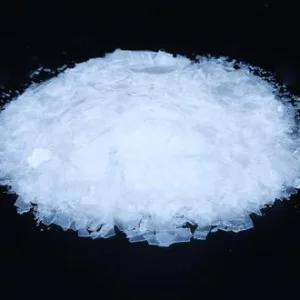
High-purity industrial and pharma-grade PEG polymer binder, lubricant, and wetting agent across metallurgy and processing.

Engineered long-chain polyether raw intermediate yielding robust mechanical strength and chemical stability.

Pure chemical-grade copper salt precursor for catalyst production, pyrotechnics, and specialized surface treatments.

Reactive liquid copolymer modifier for tire tread enhancement, sealant compounding, and waterproof coatings.
Precipitated crystalline chemical salt used in dental formulations, laboratory reagents, and optical crystal glass.

Electronic & electrical grade dielectric insulating gas (up to 5N purity) for GIS high-voltage switchgear installations.
