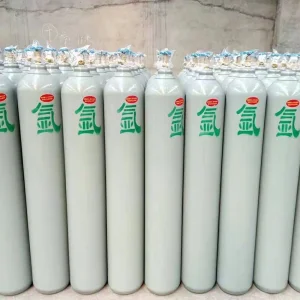
Explore specification-governed chemical additives, engineered specialty gases, and advanced inorganic precursors matched to global industrial testing frameworks.
Strategic analysis of synthesis mechanisms, coproduct precipitation kinetics, and critical parameter thresholds for precision manufacturing and procurement operations.
Copper Nitrate (Cu(NO₃)₂·3H₂O and Cu(NO₃)₂·6H₂O) represents the quintessential soluble cupric cation source. When reacted in strictly buffered aqueous media with industrial caustic soda (Sodium Hydroxide, NaOH), controlled nucleation occurs:
Deviations in base addition rate or thermal flux instantly induce dehydration of unstable cupric hydroxide into cupric oxide (CuO) particulates, demanding strict digital titrations.
Sodium Hydroxide acts as both a nucleophilic reagent and alkaline pH arbiter. In electronic micro-etching and catalyst production, grade selection between solid flakes (99%), micro-pearls (99%), and concentrated diaphragm/membrane lye (32%/50%) dictates ultimate impurity profiles.
Trace sodium carbonate (Na₂CO₃), iron (Fe), and sodium chloride (NaCl) contamination directly impacts crystal lattice spacing and secondary crystallization yields.
Procuring these compounds together provides unique processing advantages. In wet synthesis, co-locating Cu(NO₃)₂ and NaOH deliveries reduces logistical disconnects in catalyst preparation, automotive exhaust wash-coats, and pyrotechnic oxidizer formulations.
Yanxatech establishes integrated lot batching ensuring matching ionic strength and dissolution enthalpies across bulk procurement contracts.
Unraveling the cost advantages, energy infrastructure, and continuous chemical synthesis loops that establish Chinese manufacturing as the bedrock of global chemical procurement.
China operates the world’s most extensive copper smelting and cathode refining ecosystem (delivering >45% of refined global output). Direct access to LME/SHFE-registered Grade A copper cathode ($Cu \ge 99.9935\%$) and co-located industrial nitric acid plants eliminates domestic transit overheads.
This closed-loop raw material pipeline protects buyers against severe spot metal price volatilities through formula-driven pricing tied to benchmark indexes.
Chinese Sodium Hydroxide production relies on modern zero-gap ion-exchange membrane chlor-alkali cells. Major manufacturing zones in Shandong, Jiangsu, and Inner Mongolia leverage low-cost power grids, brine well integration, and co-generation steam grids.
These massive economies of scale lower energy-per-ton conversion costs, buffering global procurement budgets against wild inflationary freight or fuel surcharges.
Unlike third-party brokerage rings, primary Chinese chemical factories formulate enterprise quotations with absolute transparency. Quotes isolate raw metal costs, conversion indices, palletization, DG packing fees, and ocean freight.
This transparent ledger structure enables multi-national procurement teams to hedge copper prices via forward contracts while locking fixed conversion and freight rates.
| Chemical Product & Grade | Primary Assay (%) | Heavy Metals (Pb, As, Cd) | Chloride / Sulfate Limits | Standard Export Form | UN Dangerous Goods Class |
|---|---|---|---|---|---|
| Copper Nitrate Trihydrate (Tech Grade) | ≥ 99.0% | ≤ 20 ppm max | Cl ≤ 0.003%, SO₄ ≤ 0.01% | Deep Blue Prill / Crystalline | Class 5.1 (UN 1477) |
| Copper Nitrate Trihydrate (Electronic Grade) | ≥ 99.8% | ≤ 5 ppm max | Cl ≤ 0.0005%, SO₄ ≤ 0.002% | Anti-Caking Crystalline | Class 5.1 (UN 1477) |
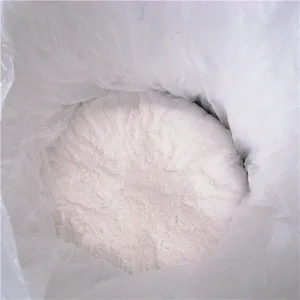
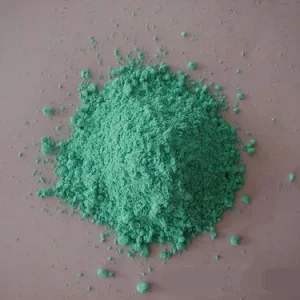
| Basic Cupric Nitrate (Catalyst Grade) | ≥ 57.5% (as Cu) | ≤ 15 ppm combined | Low Halogen Profile | Microfine Green Powder | Class 5.1 (UN 1477) |
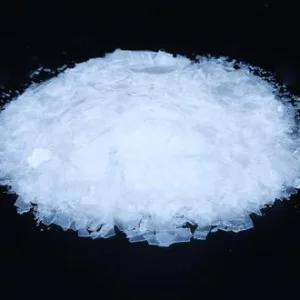
| Sodium Hydroxide Flakes (Membrane 99%) | ≥ 99.2% | ≤ 3 ppm (as Pb) | NaCl ≤ 0.025% | White Deliquescent Flakes | Class 8 (UN 1823) |
| Sodium Hydroxide Pearls (Prills 99%) | ≥ 99.4% | ≤ 2 ppm (as Pb) | NaCl ≤ 0.015% | Free-Flowing Uniform Pearls | Class 8 (UN 1823) |
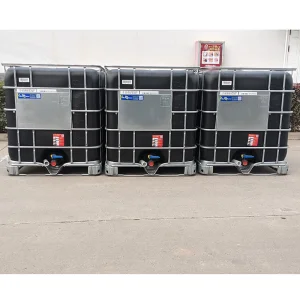
| Caustic Soda Liquid Solution (32% - 50%) | 32.0% – 50.5% | ≤ 2 ppm | NaCl ≤ 0.010% | Bulk ISO Tank / IBC Drums | Class 8 (UN 1824) |
From advanced catalytic converters to microelectronics interconnects, explore how copper nitrate and caustic soda are leveraged in high-stakes manufacturing.
Copper nitrate acts as the prime precursor for coprecipitated Cu/ZnO/Al₂O₃ catalysts utilized globally in industrial methanol synthesis, low-temperature water-gas shift (WGS) reactions, and fatty alcohol hydrogenations.
Precipitation using high-purity Sodium Hydroxide guarantees high specific copper surface area (Cu-SSA > 25 m²/g) after calcination and hydrogen activation.
In printed circuit board fabrication, electroplating bath makeups demand copper nitrate devoid of chloride impurities to ensure ultra-dense, void-free copper filling in micro-vias and high-aspect through-holes.
Simultaneously, caustic soda solutions serve as photoresist strippers and alkaline chemical mechanical polishing (CMP) slurry conditioners.
High-grade basic cupric nitrate and hydroxide precipitates yield light-fast blue and green inorganic pigments, pyrotechnic color intensifiers, and antique patination formulas for architecture and luxury metal hardware.
Sodium hydroxide bath rinses clean substrates, passivating surfaces and removing organic machining residues prior to chemical film deposition.
Industrial pickling and hydrometallurgical processing rinsewaters require stoichiometric neutralization. Membrane caustic soda neutralizes strong mineral acids while triggering selective precipitation of cupric ions.
Maintaining tight caustic dosing achieves ultra-low copper discharge thresholds (< 0.5 mg/L), keeping heavy manufacturing plants in full EPA/EU compliance.
Exporting oxidizers and corrosive alkalis mandates rigid adherence to international maritime law, regional registrations, and sealed protective barrier packaging.
Copper Nitrate is classified under UN 1477 (Class 5.1 Oxidizing Solid), while Sodium Hydroxide falls under UN 1823 (Class 8 Corrosive Solid) or UN 1824 (Class 8 Liquid). Under the International Maritime Dangerous Goods (IMDG) Code, these two classes must adhere to stringent physical barrier segregation.
Yanxatech coordinates container stowage manifests, ensuring cross-incompatible chemicals are never co-loaded in unsegregated spaces, preventing costly maritime port detentions.
Every lot dispatched includes multi-language GHS-compliant Safety Data Sheets (SDS), technical datasheets, and batch-specific Certificates of Analysis (COA) mapped against ISO 9001 standards.
For European and North American buyers, support dossiers facilitate EU REACH compliance, TSCA active listing confirmations, and independent third-party quality verification through recognized agencies (SGS, Intertek, or BV).
Both Cu(NO₃)₂ and solid NaOH exhibit intense hygroscopic and deliquescent properties. Exposure to ambient air induces rapid liquefaction and caking. Our export packaging implements multi-barrier isolation:
How decarbonization, circular economy directives, and micro-scale process analytical technology are redefining chemical manufacturing in China.
Under China's dual-carbon policy, leading chlor-alkali producers are pairing brine electrolysis directly with dedicated solar photovoltaic and wind installations. Green hydrogen coproducts are scrubbed and redirected into zero-emission steam generation, measurably decreasing the Scope 1 and Scope 2 carbon footprint per metric ton of exported caustic soda.
Advanced Chinese copper nitrate production lines are incorporating closed-loop hydrometallurgical recycling. High-purity copper scrap from microelectronics etching processes is re-dissolved using automated stoichiometric control, significantly reducing energy expenditure compared to virgin copper ore beneficiation while maintaining ultra-pure assay integrity.
Automated Process Analytical Technology (PAT) employing Raman spectroscopy, laser particle sizing, and digital titration sensors continuously measures crystallization kinetics in copper nitrate reactors. Instantaneous feedback algorithms adjust crystallization cooling rates, eliminating batch-to-batch particle variance and preventing crystal agglomeration.
Comprehensive answers regarding crystallization parameters, quality auditing, container load planning, and price hedging mechanisms.
Access our extended range of engineered specialty polymers, liquid rubbers, atomized alloy powders, and inorganic salts engineered to exacting international standards.